What if your monthly bank statement could tell a story of discipline, intention, and abundance? At Readers Books Club, home to over one million subscribers on YouTube and one of India’s most-loved book communities, we believe that financial freedom is not just about numbers. It is about mindset, habits, and the stories we carry inside us about money.
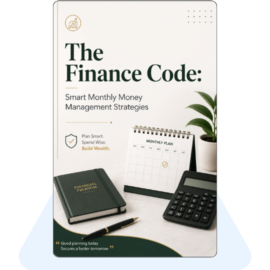
In this blog post, we decode The Finance Code: the smart monthly money management strategies that real people use to build wealth, reduce stress, and create a life of genuine freedom. Whether you are a student, a working professional, an entrepreneur, or someone just beginning their journey into personal finance, the strategies below will help you transform the way you think about and manage your money every single month.
And as your trusted life coach and guide Amiett Kumar always says, the outer world of money reflects the inner world of beliefs. Let’s rewire both.
This blog is part of the Readers Books Club series on self-growth, spirituality, law of attraction, and mindful living. Subscribe to our YouTube channel for video walkthroughs of every concept covered here.
1. The Money Mindset Reset: Where Finance Meets Spirituality
Before we talk budgets and savings accounts, we need to talk about something deeper: your money story.
Most people were never taught to have a healthy relationship with money. Instead, they inherited beliefs from their parents, their culture, and their environment. Beliefs like “money is the root of all evil”, or “we are not the kind of people who become rich”, or “money doesn’t grow on trees”. These beliefs, often hidden in the subconscious mind, silently sabotage every financial decision you make.
This is where spirituality, meditation, and the law of attraction enter the financial conversation in a powerful way.
The Law of Attraction and Money
The law of attraction teaches us that what we focus on expands. If your internal dialogue is constantly rooted in scarcity (“I can’t afford this” or “I’ll never have enough”), then your external financial reality will mirror those thoughts.
Amiett Kumar, celebrated life coach and the creative force behind Readers’ Books Club, has guided thousands of people through this inner transformation. His approach combines deep reading, mindfulness, and the principles of the law of attraction to help individuals unlock their true financial potential.
The first step in the finance code is therefore not opening a savings account. It is opening your mind.
Daily Money Meditation Practice
A simple five-minute morning meditation focused on abundance can rewire your subconscious beliefs over time. Here is how to begin:
- Sit comfortably in a quiet space, eyes closed, breathing slowly.
- Visualise clearly what financial freedom looks and feels like for you.
- Affirm intentionally: “I am worthy of abundance. Money flows to me easily and joyfully.”
- Feel gratitude for what you already have before asking for more.
- Release attachment to the outcome and trust the process.
This is not wishful thinking. This is neurological reprogramming. Studies in neuroscience confirm that meditation changes the brain’s neural pathways, making it easier to take positive, aligned action in your financial life.
Watch Amiett Kumar’s full session on money mindset and meditation on the Readers Books Club YouTube channel – over 1 million subscribers and counting!
2. The Monthly Money Map: Building Your Personal Finance Blueprint
Once your mindset is aligned, it is time to build practical structure. Think of your Monthly Money Map as your financial GPS it tells you where you are, where you want to go, and the best route to get there.
Step 1: Know Your Numbers
The single most powerful thing you can do this month is sit down and truly know your numbers. Most people have a vague sense of their income and expenses but have never actually mapped it out. This lack of clarity creates anxiety, poor decisions, and unnecessary financial stress.
Write down clearly:
- Total monthly income (salary, freelance, rental, dividends, etc.)
- Fixed expenses (rent, EMIs, insurance, subscriptions)
- Variable expenses (groceries, dining out, shopping, entertainment)
- Savings and investments (SIPs, fixed deposits, emergency fund contributions)
- Debt repayments (credit cards, personal loans, education loans)
Once you see your actual numbers, something magical happens: you stop fearing money and start managing it.
Step 2: Apply the 50-30-20 Rule (With a Spiritual Twist)
The 50-30-20 rule is a classic personal finance framework, but at Readers Books Club, we give it a mindful, intentional spin:
- 50% for Needs: housing, food, transport, utilities, health
- 30% for Wants: experiences, books, hobbies, dining, travel
- 20% for Growth: savings, investments, learning, and giving back
Notice we include books and learning in ‘Wants’. At Readers’ Books Club, we genuinely believe that reading great books is one of the highest-return investments you can make. When Amiett Kumar recommends books on wealth, spirituality, the law of attraction, and personal development, he is not just offering entertainment. He is handing you a toolkit for life transformation.
Step 3: Pay Yourself First
One of the most powerful shifts in personal finance is moving from “I will save what’s left over” to “I save first and live on what’s left.” This is called paying yourself first, and it is the backbone of every wealthy person’s financial strategy.
The moment your salary hits your account, automate a transfer to your savings or investment account. Treat it like a non-negotiable bill. Over time, you will not even miss the money, and your wealth will grow quietly in the background.
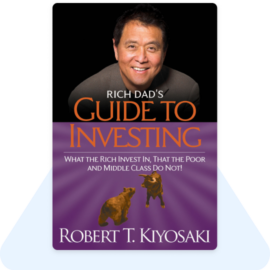
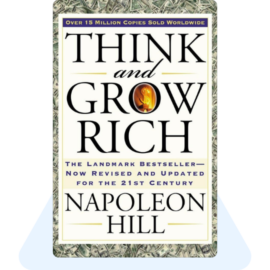
Book Recommendations: Rich Dad Poor Dad by Robert Kiyosaki | The Psychology of Money by Morgan Housel | Think and Grow Rich by Napoleon Hill. Find our full reading list on www.readersbooksclub.com
3. Smart Saving Strategies for Every Month
Saving money is not about deprivation. It is about intentional choices made by someone who knows what they are building towards. Here are smart, practical saving strategies you can implement this month:
The 24-Hour Rule for Spending
Before making any non-essential purchase above a certain amount (set your own threshold, perhaps Rs. 1,000 or Rs. 5,000), wait 24 hours. You will be amazed how many impulse purchases simply dissolve when you give yourself time to reflect. This single habit can save you thousands every month.
The No-Spend Weekend Challenge
Once a month, commit to a no-spend weekend. No shopping, no dining out, no paid entertainment. Cook at home, visit a park, read a book from your shelf, listen to the Readers Books Club podcast, meditate, and journal. Not only does this save money, but it reconnects you with the simple joys of life that no purchase can replicate.
Automate Your Savings with SIPs
A Systematic Investment Plan (SIP) in a mutual fund is arguably the smartest thing a working Indian can do with even a small surplus each month. Starting with as little as Rs. 500 per month and increasing it as your income grows, a SIP harnesses the power of compounding to build significant wealth over time.
Amiett Kumar often emphasises in his coaching sessions that the law of attraction works best when supported by practical, consistent action. A SIP is exactly that consistent, disciplined, patient action that compounds into abundance.
Create a ‘Dream Fund’ Alongside Emergency Fund
Most financial advice tells you to build an emergency fund (three to six months of expenses in a liquid account). Absolutely do that. But also create a dream fund, a separate account where you deposit a small amount each month towards something that truly excites you: a trip to Japan, starting your own business, buying your first home, or funding higher education.
The Dream Fund is not frivolous. It is deeply motivational. When your savings have a vivid, emotional purpose, you are far more likely to stick to them.
4. The Debt Code: Breaking Free, Month by Month
Debt is perhaps the most emotionally heavy topic in personal finance. Many people feel shame, guilt, or hopelessness around their debt. But at Readers Books Club, we approach this topic with the same compassion and clarity that great books teach us.
Debt is not a character flaw. It is a financial situation that can be addressed with a clear strategy and consistent effort.
The Avalanche vs. Snowball Method
There are two popular strategies for paying off debt:
- Avalanche Method: Pay the minimum on all debts, then put every extra rupee towards the highest interest rate debt first. Mathematically optimal saves you the most money in interest.
- Snowball Method: Pay minimum on all debts, then put every extra rupee towards the smallest balance first. Psychologically powerful, the quick wins build momentum and motivation.
Choose the method that best matches your personality. The best debt strategy is the one you will actually stick to. Life coach Amiett Kumar often says in his sessions, “Progress is more important than perfection. Every debt payment is a vote for your future freedom.”
Debt Meditation: Releasing Financial Shame
Alongside your practical debt strategy, try this meditation practice: Close your eyes, take five deep breaths, and visualise yourself completely debt-free. Feel the lightness, the relief, the gratitude. Then mentally bless and acknowledge every debt for what it provided: a home, an education, a business, a difficult period survived. This does not celebrate debt; it releases the shame around it, which is the first step towards resolving it with clarity rather than panic.
Podcast Tip: Listen to our Readers Books Club podcast episode on ‘Debt Freedom and Emotional Wealth’ featuring Amiett Kumar’s deep dive into the psychology of debt and the spiritual principles of release and renewal.
5. Investing With Intention: Building Wealth Month by Month
Saving protects your present. Investing builds your future. Every month, no matter how small the amount, investing something is an act of faith in yourself and in the power of compounding.
Books as Investments: The Readers Books Club Philosophy
Amiett Kumar and the entire Readers’ Books Club community hold a deeply held belief: the greatest investment you can make is in knowledge. A single book can shift a perspective, introduce a strategy, or plant a seed that grows into something extraordinary.
Books on personal finance, law of attraction, spirituality, entrepreneurship, and self-development consistently appear in the reading lists of the world’s most successful people. Warren Buffett reads several hours every day. Bill Gates takes reading holidays. Elon Musk credits books with teaching him rocket science.
You do not need to be a billionaire to read like one. Our curated reading lists at Readers Books Club are designed to give every subscriber access to world-class knowledge.
Types of Investments to Consider Monthly
- Equity Mutual Funds via SIP: High long-term returns, good for wealth creation
- Public Provident Fund (PPF): Tax-free, guaranteed, long-term savings
- National Pension Scheme (NPS): Retirement-focused with tax benefits
- Gold (Digital or SGBs): Inflation hedge, culturally significant in India
- Real Estate (REITs for small investors): Exposure to property without large capital
- Stock Market (for the knowledgeable): Higher risk, higher reward, requires research
Diversification across these categories, even with small amounts each month, builds a resilient portfolio over time.
The Law of Attraction in Investing
Every investment you make is a declaration to the universe: I believe in my future. I expect abundance. I am committed to my growth.
The law of attraction does not mean you close your eyes and expect money to appear. It means you align your beliefs, your emotions, and your actions with the outcome you desire. Investing monthly consistently, patiently, and with gratitude is one of the most powerful law of attraction practices you can adopt.
6. The Income Code: Growing What Comes In
Managing money well is powerful. But multiplying your income is transformational. Here are ways to grow your monthly income alongside managing it wisely:
Build a Second Income Stream
- Freelancing or consulting in your area of expertise
- Content creation: YouTube, blogs, podcasts (yes, like Readers’ Books Club!)
- Online courses or digital products built around your knowledge
- Rental income from property or equipment
- Dividend income from stock investments
- Affiliate marketing promoting books, tools, and services you genuinely love
Readers Books Club began as a passion for books and grew into a community of over one million subscribers on YouTube. Amiett Kumar’s journey is a living example of how following your calling with discipline and consistency can create both impact and income.
Upskill Monthly: Invest in Yourself
Every month, commit to learning one new skill or deepening one existing expertise. This could be through books (always our first recommendation!), online courses, coaching sessions, workshops, or podcasts. Over a year, that’s twelve new skills, a compounding return on your most valuable asset: yourself.
Life coaching, as Amiett Kumar practises it, is fundamentally about unlocking human potential. Many of his clients have reported breakthrough moments where a single insight from a coaching session or a book changed the entire trajectory of their financial and personal lives.
Book Recommendations: The $100 Startup by Chris Guillebeau | Multiple Streams of Income by Robert G. Allen | The 4-Hour Workweek by Tim Ferriss. All reviewed on www.readersbooksclub.com.
7. Monthly Money Rituals: Small Habits, Enormous Results
The Finance Code is not a one-time event. It is a set of monthly rituals that, practised consistently, transform your financial life over time. Here are the key rituals to build:
The Monthly Money Review (30 Minutes)
On the last Sunday of every month, sit down with your finances. Review your spending vs. your budget. Celebrate what went well. Identify what needs adjustment. Set intentions for the coming month. This single habit creates more financial awareness than any app or tool.
The Weekly Finance Check-In (10 Minutes)
Every Sunday morning, quickly review the week’s transactions. Are you on track? Any surprise expenses? Any areas to tighten? This keeps you conscious and prevents end-of-month shock.
The Daily Gratitude-Abundance Practice (5 Minutes)
Each morning, write down three things you are grateful for financially, even small things like a free meal, a discount found, or a bill paid on time. Gratitude activates the abundance frequency. The law of attraction responds to gratitude more powerfully than to any other emotion.
The Monthly Book Ritual
Read at least one book each month in the areas of personal finance, self-development, spirituality, law of attraction, or life coaching. Use the Readers’ Books Club curated reading lists, watch Amiett Kumar’s reviews on YouTube, or listen to our podcast to choose your next great read.
Reading is not a luxury. It is the most underrated financial strategy available to you. Every great idea, every system, and every mindset shift that has ever created wealth in someone’s life started with a thought, and many of those thoughts came from books.
8. Spirituality and Money: The Missing Link
Money is energy. This is not a metaphor; it is a functional truth about how currency works in the world. Money flows where it is respected, where it is invited, and where it is put to purposeful use.
Spirituality and money are not opposites. Many of the world’s greatest spiritual teachers also understood the practical reality of financial abundance. The Bhagavad Gita speaks of performing one’s duty without attachment to outcomes. This principle, applied to finance, becomes do your financial work diligently, invest wisely, and release anxiety about the outcome.
Tithing and Giving: The Spiritual Multiplier
Many spiritual traditions and wealthy individuals practise giving as a non-negotiable part of their financial life. Whether you call it tithing, daan, charity, or simply giving back, allocating even 1-2% of your monthly income to causes you believe in creates a powerful energetic cycle of abundance.
When you give freely, you signal to your subconscious (and to the universe) that you live in abundance, not in scarcity. This belief in abundance makes further abundance possible. Amiett Kumar, through his life coaching work and the Readers’ Books Club community, has championed this principle consistently.
Meditation for Financial Clarity
Beyond the morning abundance meditation mentioned earlier, a weekly 20-minute meditation specifically designed to bring clarity to your financial decisions is immensely valuable. Sit quietly, ask your inner wisdom a single financial question, and simply observe what arises. Often, the answers we seek are already within us, obscured by noise and busyness.
Meditation is not just for monks and yogis. It is a practical tool for anyone seeking clarity in any area of life, including their financial life.
9. The Readers Books Club Reading List: Your Finance Library
At Readers’ Books Club, books are at the heart of everything we do. Here is our essential reading list for anyone ready to crack their personal finance code:
On Money Mindset & Psychology
- The Psychology of Money by Morgan Housel
- Rich Dad Poor Dad by Robert T. Kiyosaki
- Think and Grow Rich by Napoleon Hill
- The Millionaire Next Door by Thomas J. Stanley
On Law of Attraction & Abundance
- The Secret by Rhonda Byrne
- Ask and It Is Given by Esther and Jerry Hicks
- You Are a Badass at Making Money by Jen Sincero
- The Science of Getting Rich by Wallace D. Wattles
On Practical Financial Management
- The Total Money Makeover by Dave Ramsey
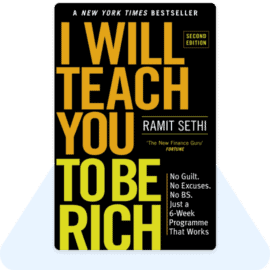
- I Will Teach You to Be Rich by Ramit Sethi
- The Automatic Millionaire by David Bach
- Your Money or Your Life by Vicki Robin
On Spirituality & Life Coaching
- The Power of Now by Eckhart Tolle
- The Four Agreements by Don Miguel Ruiz
- Atomic Habits by James Clear
- Man’s Search for Meaning by Viktor Frankl
All of these books have been reviewed, discussed, and explored in depth on the Readers’ Books Club YouTube channel. Visit www.readersbooksclub.com for blog summaries, podcast episodes, and full video reviews.
10. Your 30-Day Finance Code Challenge
Knowledge without action is just information. So we end The Finance Code with a practical, transformative 30-Day Challenge:
- Day 1-5: Write down every single expense. Do not judge, just observe.
- Day 6-7: Create your Monthly Money Map using the 50-30-20 framework.
- Day 8: Open or review your savings account. Set up an automatic transfer.
- Day 9: Research and start a SIP, even Rs. 500 per month.
- Day 10-14: Begin a daily 5-minute morning abundance meditation.
- Day 15: List all your debts. Choose the Avalanche or Snowball method.
- Day 16-20: Apply the 24-hour rule to every non-essential purchase.
- Day 21: Have a No-Spend Day. Use the time to read or listen to a podcast.
- Day 22-25: Identify one new income stream you could begin building.
- Day 26-28: Write your dream fund goal. Open a dedicated account for it.
- Day 29: Give something. Donate to a cause or help someone in need.
- Day 30: Do your monthly money review. Celebrate your progress. Set next month’s intentions.
Share your 30-Day Finance Code journey with us! Tag Readers Books Club on social media and use #TheFinanceCode. We would love to celebrate your wins with our community of over one million book lovers!
Conclusion: You Are the Author of Your Financial Story
The Finance Code is not a secret known only to the wealthy. It is a combination of the right mindset, the right habits, the right knowledge, and the right consistent action applied month after month, year after year.
At Readers’ Books Club, we believe that books change lives. And the book of your financial life is still being written. Every monthly budget, every saved rupee, every meditation session, every book you read, every coaching conversation you have with Amiett Kumar or mentors like him – these are all pages in your story.
The law of attraction reminds us, ‘You are always moving towards something. The question is whether that something is chosen by you or assigned to you by default. Choose abundance. Choose intentionality. Choose growth.
And choose to keep reading because the most powerful financial tool ever created is still a great book.
Join the Movement: Subscribe to Readers Books Club on YouTube | Follow Amiett Kumar for life coaching insights | Explore our blog, podcast, and book reviews at www.readersbooksclub.com | Because readers lead. And leaders read.
About the Author
Amiett Kumar is the founder of Readers Books Club, a life coach, motivational speaker, and spiritual guide with a community of over one million YouTube subscribers. Through books, meditation, law of attraction teachings, and one-on-one coaching, Amiett has helped thousands of people across India and the world transform their inner and outer lives. Visit www.readersbooksclub.com to connect with his work.
Contents