Introduction: What If You Are Not the Entire Problem?
Imagine two versions of the same Monday morning. In the first, your phone is beside your pillow. Before getting up, you check messages, watch three short videos, and notice an urgent work notification. Your planned morning walk disappears. You tell yourself that tomorrow you will have more discipline. In the second version, your phone charged overnight in the living room. Walking shoes wait beside the door, and a friend expects you downstairs at seven. You still feel sleepy. Yet you go outside almost automatically. Your personality has not changed overnight. The situation has.
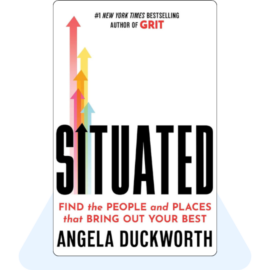
That contrast captures the essential question behind Angela Duckworth’s Situated: Find the People and Places That Bring Out Your Best. Why do we repeatedly treat every abandoned resolution as a character flaw when our surroundings can quietly influence what we notice, think, feel, and do? The book challenges the familiar advice to simply become stronger. It invites us to redesign the conditions within which strength must operate. That is a practical message for anyone who struggles with focus, habit formation, self-discipline, motivation, or personal growth.
This situated summary is for readers who love self-improvement books but want lessons they can actually apply. We will explore the book’s main argument, the four elements of an effective situation, its relationship to Duckworth’s earlier work Grit, and its implications for work, learning, relationships, fitness, and leadership. We will also consider what the argument cannot solve. A better desk cannot cure discrimination; a supportive friend cannot replace access to healthcare. Environment matters deeply without explaining everything.
Readers Books Club connects books to everyday life through accessible summaries, discussions, podcasts, and videos. Here the goal is similar: turn a thoughtful psychology book into questions that are useful the moment you close the page. You do not need a mansion, a powerful network, or an expensive productivity app to begin. Sometimes the first intervention is moving a charger, rearranging a shelf, requesting a weekly check-in, or choosing a calmer room. Sometimes meaningful change does require resources or help that are not immediately available. Both truths belong in an honest discussion.
The promise of this Angela Duckworth book summary is not that changing your environment guarantees extraordinary achievement. It is that changing an obstacle-filled situation may improve your chances of acting on your intentions. Instead of beginning with the accusation, ‘Why am I so lazy?’, begin with a more interesting investigation: ‘What does this situation make easy, and what does it make unnecessarily difficult?’ That question is the doorway into the book.
About Situated and Its Author
Situated: Find the People and Places That Bring Out Your Best was published by Scribner on September 1, 2026. The hardcover contains 352 pages, and its ISBN is 9781668005941. The publisher describes it as an instant New York Times bestseller. Angela Duckworth is a psychologist and University of Pennsylvania professor whose earlier book, Grit: The Power of Passion and Perseverance, examined the importance of sustained passion and effort. Her new book does not discard persistence; it asks what persistence needs around it to become effective.
Duckworth’s official book materials organise the practical message around four broad features of our surroundings: personal space, peers, mentors, and culture. These do not simply mean interior design or networking. They refer to the physical items we can reach, the people whose behaviour becomes normal to us, those who guide our development, and the shared expectations embedded in workplaces, neighbourhoods, schools, and communities. Together they form the conditions under which good intentions either become easier or repeatedly meet friction.
The author also discusses a progression from situation to thoughts to response. Circumstances shape what comes to mind, and those thoughts influence emotion and behaviour. We can sometimes intervene at the final moment, but intervening earlier may reduce the number of difficult moments we have to fight through. This is not a claim that every response can be predicted from the room you occupy. It is a useful way to locate possible points of change before the struggle becomes intense.
Why has Situated attracted interest among readers of psychology of success and personal development books? Its premise addresses a common tension. We celebrate talent and perseverance yet often ignore coaches, colleagues, family support, neighbourhood, opportunities, and ordinary objects. A successful person may appear exceptionally disciplined because the structure surrounding their day reduces distractions and rewards consistency. Another person may expend tremendous effort simply reaching the starting line. Seeing those differences can make self-improvement more realistic and more compassionate.
A note on accuracy: this article is an original thematic summary and commentary based on the publisher’s description, the author’s official excerpt and tools, and independent reviews. It is not a reproduced chapter-by-chapter text or a substitute for reading the full book. Examples explicitly presented as Readers Books Club exercises are our editorial applications rather than methods claimed to appear word-for-word in the book.
The Big Idea: Grit Is Important, but Grit Is Not Enough
Grit became influential because it drew attention to an overlooked ingredient of achievement: staying with worthwhile goals through difficulty. The popular interpretation sometimes shranks that idea into push harder. Situated expands the discussion. Continuing to work matters, but the environment determines how much resistance that work meets. Imagine two students preparing for the same exam. One has a quiet desk, reliable internet, encouraging classmates, and a teacher who answers questions. The other has a shared room, family responsibilities, a failing connection, and no one to clarify difficult concepts. Describing their outcomes as a simple difference in ambition would hide an important part of the story.
Duckworth’s shift does not mean that people are passive products of circumstance. A central concept is situational agency: the capacity, where possible, to select or shape surroundings so they support what we care about. Agency can mean choosing the location of a task, building a relationship, requesting different working arrangements, or deciding which routine to protect. Crucially, it can also mean recognising limits and asking others for help. Individual choice exists inside economic, social, and institutional conditions that may expand or restrict the choices available.
A useful distinction is between working on yourself and working on the setting. If you repeatedly fail to write because notifications interrupt every five minutes, you could spend months criticising your attention span. Or you could silence the notifications, create a writing-only browser profile, and begin at a desk away from household traffic. Neither strategy guarantees a masterpiece. The environmental strategy simply removes avoidable friction so your existing effort has a clearer path.
Think about the reverse. If you want to scroll less, but every idle moment places a colourful app one tap away, repeated temptation is built into the day. If you want to read more books, yet your books are hidden in a cupboard while the television remote sits on the sofa, you have designed an accidental competition. The most convenient activity often wins. A small change in convenience can create a noticeable difference without requiring a heroic personality transformation.
The takeaway is not avoid hard things. Real growth involves challenge, feedback, patience, and sometimes discomfort. The takeaway is ‘stop adding unnecessary difficulty to hard things. A runner still needs to run. Having safe shoes, an accessible route, and companions can make that effort easier to repeat. The same principle applies to studying, savings, creative work, meditation, and difficult conversations. Better conditions do not replace the journey; they can make participation in the journey more possible.
The Three-Box Model: Situation, Thoughts, and Response
One of the book’s useful organising ideas is a three-part chain. First there is a situation: the people, objects, physical conditions, and expectations present. Second come your thoughts or interpretations of what is happening. Third come responses, including feelings and actions. Consider a person who wants to eat more balanced meals after work. If there is no prepared food and a delivery app is open, fatigue may lead to the thought that cooking is impossible tonight. Ordering becomes the immediate response. A different first box – washed vegetables, an easy recipe, or a planned meal with family – may produce different thoughts and actions.
The three boxes do not operate like a rigid machine. People interpret circumstances differently, and habits, health, culture, and previous experience all matter. Still, the model gives us three places to intervene. At the response stage, we might try to resist an impulse. At the thinking stage, we might reframe an assumption: ‘I can prepare a simple meal rather than a perfect one.’ At the situation stage, we could make the needed ingredients available before the stressful hour arrives. The earlier intervention may be less exhausting because it reduces the frequency of the final struggle.
Consider a workplace example. You hope to contribute more in team meetings, but meetings move quickly, and confident colleagues dominate. The response might be silence; the thought might be ‘I will sound foolish.’ Individual confidence-building has value, but the situation itself can change. A manager can circulate questions in advance, ask each person for input, and allow written responses. The improvement is not merely one shy employee learning to speak louder. The structure begins supporting broader participation.
This model also prevents a common mistake in manifestation and mindset content: treating every difficulty as evidence of a defective thought. Thoughts influence choices, but external conditions are real. Meditation can help someone notice stress and pause before reacting; it does not automatically provide childcare, a respectful employer, or safe housing. An affirmation might remind a student that learning is possible, while scheduled study time and accessible guidance make that belief easier to enact. These approaches can complement each other without pretending that beliefs control all external outcomes.
Try a simple three-box notebook exercise. Describe one recurring behaviour neutrally, such as checking your phone during deep work. List what happened immediately before it, the thought that accompanied it, and your response. Then ask which part you could change with the least cost. Perhaps a separate timer removes the excuse to keep the phone nearby. Perhaps you need a less stressful workload, not another app blocker. When observation replaces self-attack, solutions become more specific.
Element One: Design a Personal Space That Helps You
The first practical element is personal space: the physical objects and immediate arrangements that shape the next choice. A room quietly offers suggestions. A water bottle suggests drinking water. A visible guitar invites practice. An open messaging tab invites interruption. None of these objects commands you, but each changes the ease, visibility, and timing of an action. Situated encourages readers to pay attention to this apparently ordinary level of influence before spending all their energy on motivational speeches.
Start with the principle of making a desired behaviour convenient and an unwanted behaviour less automatic. If you want to read every evening, place a book where you normally put your phone. If you want to exercise, prepare comfortable clothes and a realistic plan the night before. If you want better focus and concentration, close unrelated tabs, put a notebook within reach, and choose a specific starting task. A fifteen-minute setup session can save repeated decisions later. The reward is not that you never feel resistance; it is that you face fewer avoidable obstacles.
Digital space counts too. The phone in your pocket is a powerful part of your immediate environment. Notifications, default home-screen apps, autoplay, and the placement of social platforms can determine what captures attention between planned tasks. Instead of declaring a dramatic dopamine detox, try designing one useful boundary. Keep nonessential alerts off during a focus block. Put a reading app on the first screen and entertainment apps in a folder. Charge the device away from the bed if that arrangement is safe and practical. A sustainable adjustment is often more informative than a punishing rule you abandon by Thursday.
Consider a reader who wants to finish twelve books in a year. Buying twelve books is not a reading system. A comfortable lamp, a visible current book, a regular twenty-minute window, and a place to record interesting ideas are more relevant to daily behaviour. Even this system needs flexibility. Parents, shift workers, and people sharing crowded homes may not have a private reading nook. An audiobook on a commute, a library visit, or a short lunchtime reading block may be the feasible version. The goal is to work with the real environment, not a perfect Instagram photograph of one.
Personal space can support emotional habits as well. Someone learning meditation may benefit from a consistent chair, comfortable posture, and a gentle reminder on their calendar. A person building financial habits might keep a simple spending log easy to open and remove saved payment details from sites that encourage impulsive purchases. The practical question remains constant: what is the next action, and how could its surroundings make it more likely to happen? A changed shelf cannot build a life by itself, but it can make tomorrow’s first good decision less complicated.
Element Two: Peers Make behaviours Feel Normal
The second element is peers. We absorb information about what is possible and normal from people around us. A running group can make a short morning jog feel ordinary. A reading circle can make finishing a chapter and discussing it feel enjoyable. Colleagues who protect focus time can normalise uninterrupted work, while colleagues who celebrate midnight emails can make overwork appear necessary. None of this means friends control your destiny. It means social expectations are part of the situation in which personal choices occur.
Duckworth’s emphasis on peers encourages readers to look beyond simplistic advice to avoid negative people. Relationships are complex. A beloved friend may not share your exercise goal, yet still offer kindness and loyalty. A highly ambitious group may push professional achievement while making rest or honesty feel unsafe. The useful question is not ‘Which people are winners?’ It is ‘Which relationships support this specific value, and can I contribute support in return? ‘ Healthy peer influence has room for difference, not just imitation.
Imagine someone trying to study for a competitive examination. Alone, they might stop after an exhausting day. With two peers who meet twice weekly, share difficult questions, and discuss setbacks without embarrassment, study becomes easier to resume. The group creates a predictable appointment and reduces the loneliness of sustained effort. But a group that only compares scores might increase anxiety. Social structure must be judged by what it actually does, not by the impressive biographies of its members.
A practical peer strategy starts small. Invite a friend to exchange a brief weekly progress message. Join a book discussion where ideas matter more than finishing first. Attend a local class or online community with clear expectations and respectful moderation. If you are interested in meditation or spirituality, a supportive practice group may help create consistency, while personal beliefs remain your own. Readers Books Club readers could even choose one non-fiction title each month and talk about one behaviour they tested, rather than merely collecting recommendations.
Remember reciprocity. If someone helps you build discipline, ask what you can do for their goals. If a friend needs emotional support, do not treat them as a productivity instrument. Strong communities offer both accountability and belonging. When the group gives permission to admit difficulty, members may be more willing to seek help early. That makes peers valuable not only for achievement but for resilience, learning, and a more humane definition of progress.
Element Three: Mentors Expand Your View of What Is Possible
Peers accompany us; mentors may show us routes we have not seen. The third element in Situated is mentorship. A mentor can offer feedback, demonstrate a skill, point out opportunities, and help a newcomer understand an unfamiliar field. For a student without professional connections, even one supportive teacher can clarify which applications or qualifications matter. For a new manager, an experienced colleague can explain how to run conversations that are both direct and respectful. Mentorship changes the information available within a situation.
The popular picture of a mentor is a famous person who takes a personal interest in your life. That is possible, but unnecessarily narrow. Mentorship may involve a librarian, senior colleague, craft instructor, coach, supervisor, or community organiser. It can begin with a single helpful conversation and develop gradually. The important feature is guidance connected to a real need. A well-chosen question often produces more value than a vague request for someone to ‘mentor me.
Suppose you want to become a confident public speaker. Watching inspirational videos might increase enthusiasm, but specific feedback is what reveals whether you are speaking too quickly or hiding your main point. A mentor can observe a short rehearsal and offer two changes to try. Suddenly the goal becomes less mysterious. The learner still practises, but practice now has direction. The same is true for writing, entrepreneurship, financial literacy, and even learning how to read difficult books with greater understanding.
Mentorship should never require surrendering judgement. A life coach or manifestation coach may support reflection and goal-setting, but credentials, methods, boundaries, and claims deserve scrutiny. A good guide welcomes questions and does not promise guaranteed wealth, healing, or control over other people’s choices. Similarly, a workplace mentor should respect confidentiality and avoid exploiting dependence. The purpose of guidance is to strengthen the learner’s agency, not replace it with obedience.
An accessible mentorship exercise is to identify one skill you need in the next ninety days. Find someone who has demonstrated that skill, then ask one focused question: ‘What is the mistake beginners make when doing this?’ or ‘Would you be willing to review this one-page draft?’ Thank the person, act on the advice if suitable, and report back briefly. If access to experienced people is limited, interviews, credible books, structured courses, and open educational resources can supply partial guidance. They are not identical to personal mentorship, but they can widen the set of options you see.
Element Four: Culture Is the Water Around Everyday Decisions
Culture, the fourth element, refers to the shared rules and expectations of a group or place. Some cultures make asking for feedback ordinary. Others punish mistakes so harshly that people hide problems. Some workplaces encourage lunch breaks and reasonable hours. Others reward constant availability. Some neighbourhoods make walking safe and convenient; others force residents to cross dangerous roads. Culture is broader than a motivational poster. It lives in repeated behaviour, rewards, routines, and available choices.
A person may be diligent in one setting and disengaged in another because the two environments ask very different things of them. A creative employee in a team that welcomes experimentation might propose ideas freely. The same employee in a team that mocks unfinished thoughts may become silent. Neither version reveals a permanent personality verdict. To understand performance, ask what the surrounding system invites, protects, rewards, and discourages.
This is where ‘change your environment, change your life’ needs nuance. Moving cities or changing jobs may transform opportunities, but those decisions involve money, family ties, disability access, housing, and uncertainty. It would be irresponsible to tell every dissatisfied person to relocate. Culture can sometimes be changed from within: a team can establish meeting agreements, a school can create peer tutoring, or a household can set device-free meal times. When a harmful environment cannot be fixed, leaving may be appropriate, but it should not be presented as a universally easy option.
The author highlights prominent achievers to illustrate how surrounding cultures amplify effort. The lesson is not to imitate a celebrity’s exact geography or schedule. It is to notice the ecosystem supporting their practice: people who share standards, coaches who identify weaknesses, and places that make necessary repetition possible. A young musician may benefit more from an affordable local rehearsal group than from moving to an expensive arts district without resources. The best situation is relative to the person, goal, and constraints.
To assess your culture, write down what ‘people like us’ tend to do in your current setting. Do people ask for help or pretend to know everything? Do they celebrate learning or only flawless results? Are breaks treated as responsible or weak? Are kindness and inclusion practised, or merely advertised? Then identify one norm you could help change. A culture is made by many people, but a small repeated behaviour – welcoming questions or respecting focused hours – can start to shift its everyday signals.
Why Willpower Feels Exhausting: Intervene Earlier
Many self-improvement books promise to strengthen your willpower. Situated asks whether you should rely on it so heavily in the first place. Imagine trying to resist an attractive distraction twenty times in a single afternoon. Even if you succeed nineteen times, you may judge yourself by the twentieth. A better design removes some of those confrontations before they arrive. The phone is elsewhere, the next task is written down, and your colleague knows you are unavailable for thirty minutes. The plan addresses the upstream situation rather than betting everything on a dramatic moment of resistance.
This aligns with the wider research conversation about choice architecture: the way options are arranged can influence behaviour without eliminating freedom of choice. Research reviews find that such interventions can change decisions in multiple domains, although their size and persistence depend on context. A default savings contribution, for instance, may help more people begin saving, but it cannot solve an income shortage. Similarly, putting fruit in view may make a healthy snack easier to choose, but it cannot resolve food insecurity. Evidence supports situational tools, not magical guarantees.
A temptation plan can therefore be wonderfully unglamorous. Name one predictable trigger, reduce access at that moment, and prepare an acceptable alternative. For late-night scrolling, choose a bedtime charging station and a paperback. For impulsive online shopping, remove stored card details and create a waiting period before nonessential purchases. For delayed exercise, decide the location and minimum duration before morning. For anxious social media checking, schedule a short intentional check-in rather than repeatedly opening the app whenever you feel uncertain.
It is important not to confuse strategic ease with avoidance. If a skill requires difficult feedback, designing your life to avoid all criticism will prevent growth. If you want stronger relationships, leaving every uncomfortable conversation is not the same as establishing healthy boundaries. Environmental design works best when it removes needless barriers but preserves the useful challenge central to the goal. The writer still has to write; the student still has to reason; the friend still has to listen.
Try replacing ‘I need more discipline’ with a specific sentence: ‘When I return home tired, I need dinner preparation to require fewer decisions.’ Then design accordingly. The statement is not an excuse. It makes the problem measurable. Instead of fighting your humanity, create a practical system that anticipates it. Over time, your motivation may become more reliable because less energy disappears into repeated self-negotiation.
From Personal Change to Situational Responsibility
The book’s implications do not stop with personal productivity. If situations influence behaviour, anyone who designs situations carries responsibility. Parents create routines, teachers organize classrooms, managers distribute work, platforms design interfaces, and civic leaders shape the infrastructure people navigate. A leader who lectures employees about resilience while scheduling impossible deadlines ignores their own influence over the environment. A school that demands concentration but offers no quiet study area may be asking students to overcome avoidable barriers every day.
Situational responsibility changes the question from ‘How can I make them try harder? to ‘What conditions would allow them to do their best? For parents, this might mean predictable homework time, emotional safety, access to materials, and age-appropriate independence. For teachers, it could involve clearer instructions, a chance to revise work, and structured peer support. For managers, it might mean realistic priorities, protected focus periods, and a culture where asking for clarification is not treated as failure.
The ethical dimension matters. Designing a situation can support autonomy, or it can manipulate people for someone else’s benefit. An employer who hides breaks or uses confusing incentives is shaping behaviour too, but not in the worker’s interest. A social platform that engineers endless scrolling demonstrates that environment design is not automatically benevolent. Good interventions should be transparent, proportionate, respectful, and open to feedback from the people affected. Their success should be measured by real wellbeing and opportunity, not by compliance alone.
Consider a team whose meetings regularly leave junior employees unheard. Rather than teaching each junior employee to become more aggressive, the manager can distribute an agenda in advance and invite contributions in turn. That small situational change distributes speaking opportunities more fairly. It may not resolve every hierarchy, but it removes a structural obstacle. Likewise, a reading community can include accessible formats, flexible schedules, and discussion prompts that welcome beginners. The community’s design determines who can participate, not only how enthusiastic participants are.
Situational responsibility also widens compassion. When someone struggles, ask what they are carrying before prescribing another habit tracker. Their environment might include bereavement, caregiving, disability, inadequate pay, or unsafe conditions. Personal initiative is real, but it is not unlimited. The most useful reading of Situated combines agency with humility: change what is accessible, advocate for better systems where possible, and resist blaming people for barriers beyond their control.
How Meditation and Spirituality Connect, Without Confusing the Claims
Readers Books Club readers who enjoy meditation, spirituality, manifestation, and law of attraction may notice a familiar theme in Situated: attention and intention are easier to sustain when daily life supports them. A person may visualise a calm morning and repeat an affirmation about consistency, yet leave notifications on, go to bed too late, and schedule ten competing tasks before breakfast. Internal practices and external arrangements are not enemies. A short meditation can help clarify an intention; the schedule and physical space can give that intention somewhere to go.
Here is a grounded example. Suppose you want a ten-minute daily meditation practice. First, choose a realistic time that fits your responsibilities. Second, place a cushion or chair where you can sit comfortably. Third, save a trusted meditation recording in an easy-to-access location. Fourth, ask a supportive person not to interrupt that brief interval when possible. Finally, accept that some days you may only manage three minutes. The environment helps you return without turning mindfulness into another source of shame.
For people interested in manifestation, a practical interpretation is to connect a desired future to present behaviour. Visualisation can help you picture the process of preparing for an interview, studying consistently, or having a respectful conversation. Affirmations may serve as reminders of values when they feel credible to you. But the law of attraction is a spiritual or personal-development belief, not a scientific guarantee that thoughts alone produce money, relationships, or external events. Situated offers a more testable question: which circumstances would support actions relevant to your goal?
Consider someone hoping for a career change. Meditation might help them notice fear without immediately surrendering to it. Journaling could clarify preferred work. A mentor might identify missing skills. A practical environment could include a weekly application window, a quiet interview space, and peers willing to review a résumé. No single element guarantees employment, because hiring depends on external decisions and economic conditions. Together, however, the elements form a meaningful plan that combines inner steadiness with practical preparation.
Amiett Kumar and Readers Books Club are relevant as names within a wider audience interested in books and personal-development conversations, but this summary does not attribute Duckworth’s research to any coach or claim that she endorses a particular manifestation programme. If you encounter promotional phrases such as ‘India’s best life coach’ or ‘top manifestation coach, treat them as marketing claims rather than verified rankings. The useful connection here is thematic: thoughtful reflection can guide action, while thoughtful situation design makes action easier to repeat.
Seven Practical Lessons You Can Apply This Week
Lesson one: replace a vague character verdict with an observable description. ‘I am undisciplined’ offers almost no instruction. I usually stop reading when the television goes on at nine’ reveals a trigger. Precise descriptions create options: move reading earlier, use headphones if appropriate, or choose another room. This is an exercise inspired by the book’s approach, not an official diagnostic test.
Lesson two: reduce friction for the behaviour you actually want. Put the notebook where you work. Create a recurring calendar block. Prepare the ingredients before you are hungry. Save an accessible version of the book you intend to finish. Do not add ten new systems at once. One change should be easy enough to maintain when you are tired, busy, or discouraged. If it depends on an ideal day, it is probably too fragile.
Lesson three: increase the friction around a distraction without creating unnecessary punishment. Disable a notification category, log out of a shopping site, or keep the phone out of reach during an important conversation. Be careful with rules that disrupt legitimate needs, such as emergency contact. You are designing a supportive boundary, not attempting to prove that discomfort is virtuous.
Lesson four: choose a peer relationship with reciprocal accountability. Tell a friend what you are trying, and invite them to share a goal of their own. Agree on a specific, brief check-in. Discuss what helped and what interfered, not only whether the target was met. A useful peer relationship reduces isolation and creates learning. It should not become surveillance or a contest over who suffers more for success.
Lesson five: ask for focused guidance. Identify one area where expertise would prevent repeated mistakes. Prepare a clear question and a small piece of work someone can review. If direct mentorship is unavailable, look for trustworthy instructional material and communities with respectful moderation. Avoid confusing an online personality’s confidence with expertise in every subject. Good guidance is specific, accountable, and willing to acknowledge uncertainty.
Lesson six: examine the culture you inhabit. Notice what your household, workplace, and online groups reward. You might spend time with people who make healthy boundaries feel embarrassing or with people who treat learning as a lifelong habit. Adjust participation where possible and help establish better norms. One respectful meeting practice or a regular community reading hour can be a meaningful culture change.
Lesson seven: evaluate your experiment honestly. After seven days, ask whether the new situation improved the behaviour and whether the cost was reasonable. Maybe moving your phone helped, but an evening reading target conflicted with childcare. Keep the effective part and redesign the rest. Real personal growth is iterative. The aim is not to follow a perfect system forever; it is to create conditions that remain workable as life changes.
Common Mistakes When You Try to Change Your Environment
The first mistake is believing that buying things equals changing behaviour. A premium planner, standing desk, gym membership, or stack of self-help books can be useful, but purchasing an object is not the same as building a routine. Before buying, identify the specific obstacle. If your trouble is unclear priorities, an expensive desk may not solve it. If you lack a safe exercise space, however, access to a suitable facility may genuinely matter. Match the resource to the mechanism.
The second mistake is expecting a perfect environment. Every household has interruptions; every office has constraints; every community contains people with different needs. If your plan works only when you sleep perfectly, feel motivated, and receive no unexpected requests, it is a fantasy. Include a smaller fallback. On a difficult day, reading two pages may preserve continuity. On a stressful day, preparing tomorrow’s workspace may be enough. Flexible routines can survive circumstances that rigid routines cannot.
The third mistake is choosing peers only for status. A group of celebrated achievers may be inspiring but unkind, competitive, or unavailable. A quiet friend who reliably listens and shares useful feedback may offer more relevant support. Evaluate relationships through mutual respect and actual behaviour. Similarly, a mentor’s fame does not guarantee competence in your specific challenge. Credibility and ethical boundaries matter more than impressive branding.
The fourth mistake is using environment design to avoid essential inner work. If every disagreement is attributed to an ‘unsupportive situation, you may overlook your own communication habits. If you change jobs repeatedly without examining recurring patterns, some difficulties may travel with you. The goal is not to deny self-reflection, therapy, or skill-building. It is to combine them with an honest assessment of context. Sometimes the thought needs attention, sometimes the room does, and sometimes both do.
The fifth mistake is ignoring unequal access. It is easier to recommend a peaceful home office to someone with spare space than to someone sharing a single room. It is easier to move to a better neighbourhood when moving expenses are affordable. Do not turn a useful concept into a new reason to blame disadvantaged people. If you are designing environments for others, include their constraints in the conversation and address structural barriers wherever possible.
Finally, do not measure every part of life by achievement. Friendship, contemplation, play, rest, and spirituality are not valuable only because they increase productivity. A well-designed life should leave room for relationships and choices that are meaningful in themselves. Situated is useful when it helps you align surroundings with your values, not when it turns every interaction into a technique for extracting higher performance.
A Balanced Assessment: What Situated Explains and What It Leaves Open
Situated offers a compelling correction to one-sided stories of success. It directs attention to the objects, relationships, guidance, and cultures that make sustained effort possible. Its approach is especially useful for people caught in repetitive cycles of self-criticism: they may discover that a recurring failure is partly a recurring design problem. The book also has an important social implication. If context shapes behaviour, leaders and institutions should examine the conditions they create rather than asking individuals to compensate endlessly.
Independent reviewers have highlighted both its practical value and its limits. Publishers Weekly notes the range of accessible examples and applications to relationships, work, studying, and digital distraction. Kirkus observes that some proposed changes, such as relocation or selection of particular school districts, assume resources many readers do not possess. A New Yorker review raises another challenge: the desire to continually engineer surroundings may leave too little room for examining whether our goals are actually worth pursuing. These criticisms are useful because they stop the book from becoming a single explanation for every problem.
There is also a scientific distinction between a plausible mechanism and a guaranteed personal outcome. Research on choice architecture shows that changing how options are presented can influence behaviour, but effects vary across settings and may not persist automatically. The environment can be a powerful lever without being an all-purpose cure. Some goals require treatment, institutional reform, sustained education, stable income, or collective action. A supportive room and a thoughtful mentor may help an individual navigate those systems, but they cannot replace them.
The healthiest interpretation, therefore, has three parts. First, acknowledge the setting before blaming the person. Second, change what is genuinely within reach, including asking for help and contributing to better conditions for others. Third, keep examining your values: becoming more efficient at pursuing the wrong goal is not necessarily progress. If an achievement requires sacrificing health, integrity, or close relationships, you may need to rethink the goal as well as its environment.
For Readers Books Club, this makes Situated a rich subject for a book-summary discussion rather than a slogan. Readers can agree with the value of designing surroundings while questioning the scope of individual choice. They can appreciate habit formation tools without turning people into productivity projects. The book’s most durable contribution may be the shift from moral judgement to situational curiosity: when behaviour repeatedly fails, investigate the context with the same seriousness you give motivation.
Contents