A practical guide to boundaries, relationships, self-trust, emotional freedom and personal growth
Introduction: Why Two Simple Words Became a Global Conversation
You have probably had a moment when another person’s behaviour took over your entire day. A friend did not reply. A colleague judged your idea. A partner acted distant. A family member made a choice you disagreed with. Suddenly, your attention moved away from your own life and into a mental courtroom: Why did they do that? How do I make them understand? What should I say so they change? What if they think badly of me?
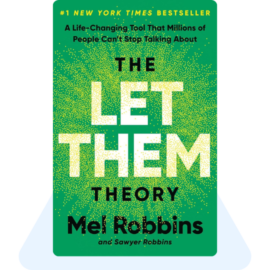
Mel Robbins’ The Let Them Theory is built around a deceptively simple response to this exhausting pattern. Instead of spending your energy trying to manage other people’s reactions, opinions, decisions, timelines, and emotions, you learn to say, Let Them. Then comes the part that makes the idea more than passive acceptance: Let Me. Let them be who they are, and let me decide how I want to respond, what I will tolerate, where I will invest my energy, and what kind of life I want to build.
That two-part structure is the reason the concept has spread so widely. It gives language to a problem almost everyone recognises: we lose peace when we confuse control with influence. We cannot command another adult to value us, choose us, agree with us, invite us, change for us, or react the way we hoped. We can communicate, request, influence, model, and set boundaries. But the final choice is theirs. The Let Them Theory asks us to stop fighting that fact and use the energy we recover to take responsibility for ourselves.
This Readers Books Club summary explains the central ideas of The Let Them Theory in practical, easy-to-read language. It is written for readers interested in books, self-improvement, relationships, meditation, spirituality, coaching, the Law of Attraction, and personal growth. It also connects the book’s ideas with the larger Readers Books Club philosophy associated with Amiett Kumar: knowledge matters most when it can be implemented in daily life.
The goal is not to become cold, detached, or indifferent. The goal is to care without controlling, love without over-functioning, communicate without forcing, and protect your peace without expecting the world to become perfectly cooperative. That distinction is where the book becomes useful.
What Is The Let Them Theory? The Two-Part Framework
The official description of the book presents The Let Them Theory as a step-by-step tool for reducing the impact of other people’s opinions, drama, and judgement on your life. The idea is easy to remember because it has two parts.
Part one is Let Them. When someone chooses something you cannot control, let them. Let them disagree. Let them misunderstand. Let them have a bad mood. Let them decline the invitation. Let them make the decision. Let them reveal what they value through their behaviour. This is not approval. It is recognition of reality.
Part two is Let Me. This is the return to agency. Let me decide whether I want to continue the relationship. Let me communicate clearly. Let me walk away. Let me ask for what I need. Let me focus on my goals. Let me process the emotion instead of demanding that another person remove it for me. Let me choose a response I can respect later.
The second part matters because ‘Let Them’ without ‘Let Me’ could become resignation. You might tolerate disrespect, ignore your needs, or remain passive. The framework is not designed to make you smaller. It is designed to stop you from spending your power in places where you have none, so you can use it where you do.
In simple terms, Let Them separates what belongs to other people from what belongs to you. Let me remind you that your life still requires decisions. Peace does not come from controlling the environment; it comes from becoming clearer about your own response.
| Remember This Let Them = accept what is outside your control. Let Me = take responsibility for what is inside your control. |
Lesson 1: Stop Spending Your Life Managing Other Adults
Many people are exhausted not because their own life is impossible, but because they are mentally managing several other adults at the same time. They monitor moods, anticipate reactions, rewrite messages repeatedly, explain themselves too much, rescue people from consequences, and try to make everyone comfortable before making a personal choice.
The Let Them Theory challenges this habit directly. Other adults are allowed to have reactions. If you make a healthy decision and someone is disappointed, that disappointment does not automatically mean the decision is wrong. If you stop rescuing a capable person and they become frustrated, the frustration may simply be part of them taking responsibility.
This lesson is especially important for people-pleasers. People-pleasing often looks kind from the outside, but inside it can be a strategy for controlling other people’s perception: if I do enough, say enough, fix enough, and give enough, maybe no one will reject or criticise me. The cost is that your own needs become negotiable while everyone else’s feelings become urgent.
A practical Let Them question is: Am I trying to support this person, or am I trying to control how they feel about me? The first can be generous. The second usually creates anxiety.
Try this today. Notice one situation where you are rehearsing how to make someone respond differently. Say, ‘Let them have their reaction.’ Then ask, ‘Let me decide what is honest, kind, and aligned with my values.’ This shifts you from emotional management to self-respect.
Lesson 2: Other People’s Opinions Are Information, Not Instructions
Fear of judgement can quietly control major life decisions. People stay in careers they dislike, hide creative work, avoid difficult conversations, and shrink personal goals because they are imagining what others might say. The Let Them Theory gives a blunt alternative: let them think what they think.
This does not mean feedback is useless. Mature people listen to evidence, expertise, and constructive criticism. But feedback becomes dangerous when every opinion is treated like authority. A parent’s fear, a friend’s preference, a stranger’s comment, or a social media reaction may reveal something about them without defining what you should do.
The skill is discernment. Ask: Does this person understand my goal? Do they have relevant experience? Are they offering evidence or simply expressing taste? Is this feedback consistent with my values and long-term direction? The answer determines how much weight the opinion deserves.
For readers interested in spirituality or the Law of Attraction, this lesson connects to alignment in a grounded way. If you constantly shape your behaviour around external approval, your attention is not truly aligned with your stated goal. You are aligned with avoiding judgement. That mismatch drains confidence.
A useful affirmation is not ‘Nobody judges me.’ That is unrealistic. A better statement is: ‘People are free to have opinions, and I am free to make thoughtful choices.’ That sentence preserves reality and agency at the same time.
Lesson 3: Rejection Gives You Information You Need
Rejection hurts because it touches belonging, identity, and hope. The natural reaction is to chase clarity: Why did they not invite me? Why did the client say no? Why did the person I liked pull away? Why did the opportunity go to somebody else? We often try to reduce uncertainty by forcing more explanation or trying harder to win approval.
The Let Them approach is different. If they do not choose you, let them. That does not mean rejection is pleasant. It means you stop turning one person’s choice into a long campaign to prove your worth.
Rejection can reveal fit. A friendship that repeatedly excludes you may not have the reciprocity you want. A potential partner who avoids commitment may be showing you their current capacity. A client who does not value the offer may not be the right client. This information can save years of trying to turn someone into the person you hoped they would become.
Then comes Let Me. Let me grieve. Let me learn. Let me improve where improvement is genuinely needed. Let me invest in people and places where mutuality exists. Let me build the next opportunity instead of endlessly appealing to the last decision.
This is one of the book’s most liberating ideas because it changes rejection from a verdict into data. The pain may remain for a while, but the need to control the outcome begins to loosen.
Lesson 4: Comparison Becomes Weaker When You Return to Your Own Life
Comparison is rarely just about someone else having more. It is about what their success appears to say about your timing, ability, attractiveness, income, relationship, parenting, career, or future. Social media magnifies this because you can compare yourself with hundreds of people before breakfast.
The Let Them Theory does not require you to pretend you never feel envy. Instead, let other people have their success. Let them celebrate. Let them be ahead in an area. Let them choose a lifestyle you do not understand. Let them receive attention. Their path is theirs.
Then ask: Let me identify what this reaction is teaching me. Sometimes envy points to a neglected desire. Maybe someone’s freedom reminds you that you want more autonomy. Someone’s fitness reminds you that you miss feeling strong. Someone’s business growth reminds you that you have postponed your own idea. When comparison is treated as information, it can become direction rather than self-punishment.
Readers Books Club readers who enjoy self-help books often collect many strategies for success. The risk is measuring yourself against the author, influencer, entrepreneur, or coach instead of implementing one relevant lesson. Comparison consumes energy that action could use.
A practical rule is: admire, extract, and act. Admire what is useful. Extract one lesson. Act on it in your own context. Then stop watching someone else’s scoreboard.
Lesson 5: Boundaries Control Your Behaviour, Not Theirs
One of the most common misunderstandings about boundaries is treating them as instructions for other people. ‘You are not allowed to talk to me like that’ may express a preference, but it does not physically control another person. A real boundary focuses on what you will do when a behaviour occurs.
This fits naturally with Let Them and Let Me. Let them choose how they speak. Let me decide whether I stay in the conversation. Let them repeatedly arrive late. Let me decide how long I wait. Let them bring up a topic I have said I will not discuss. Let me end the conversation or leave.
This does not remove the need for communication. Healthy relationships require clear requests, agreements, negotiation, and repair. But a request is different from control. You can say what you need and still accept that the other person may decline. At that point, your responsibility is to decide what the answer means for you.
Boundaries often feel uncomfortable because they remove the fantasy that the other person must change before you can feel safe. You may discover that your power is in changing access, time, proximity, or participation.
A life coach or relationship coach can sometimes help a person turn vague frustration into specific boundaries. Coaching is most useful here when it clarifies behaviour: What exactly happens? What do you need? What will you do if the pattern continues? Clarity reduces drama.
| Boundary Example Instead of “You must stop speaking to me that way,” try: “If the conversation becomes insulting, I will end it and we can continue later.” |
Lesson 6: Adult Friendships Change – Stop Forcing Old Versions to Survive
Adult friendships change for ordinary reasons: location, work, marriage, children, health, caregiving, new interests, changing values, and simple shifts in energy. Yet people often interpret distance as a personal indictment. They overanalyse slower replies, changed plans, and new social circles.
The Let Them Theory offers a less controlling view. Let friendships reveal their current shape. Let people move closer or farther. Let them have seasons when their attention is elsewhere. Let them show you whether they initiate, support, and make space for you.
Then Let Me becomes important. Let me reach out if I value the friendship. Let me make a plan instead of waiting to be invited. Let me ask directly if something feels wrong. Let me accept when the relationship has changed. Let me make new friends rather than demanding that one old friendship provide every form of connection.
This lesson can be difficult because nostalgia makes us loyal to the history of a relationship even when the present is different. You may be attached to what a friendship used to be. The theory encourages you to respond to current behaviour rather than potential or memory.
Peace in friendship does not require zero disappointment. It requires less mind-reading and more observation, communication, and self-respect.
Lesson 7: Love Improves When You Stop Trying to Remodel the Person
Romantic relationships create ideal conditions for control because the stakes feel high. We want reassurance, consistency, growth, affection, commitment, communication, and shared direction. Those needs can be legitimate. The problem begins when love becomes a project to remake another adult.
The Let Them Theory asks you to separate communication from control. Tell the person what matters to you. Ask for what you need. Listen to what they say. Then watch what they repeatedly do. Let them reveal their priorities and capacity.
This can be painful when you realise you are not in a relationship with potential. You are in a relationship with the person who is actually present. If someone keeps showing you that they do not want the kind of commitment you want, your task is not to force desire into them. Your task is to decide what you will do with the information.
Let Me may mean staying and accepting a difference. It may mean requesting a change and giving it time. It may mean counselling. It may mean leaving. The theory does not make the decision for you. It removes the false option of controlling another person into becoming a perfect match.
This is where finding peace becomes more than a slogan. Peace may require choosing reality over fantasy.
Lesson 8: You Cannot Force Change, but You Can Change the Dynamic
The book also addresses a paradox: people often want to motivate a partner, friend, family member, child, colleague, or team member to change. We assume more reminders, pressure, arguments, criticism, or rescue will produce progress. Sometimes the opposite happens. Pressure increases resistance, dependence, or conflict.
Let Them does not mean that influence is impossible. It means influence is different from control. You can model behaviour, communicate consequences, offer resources, ask questions, set expectations in roles where that is appropriate, and create conditions that support change. What you cannot do is perform the internal work for another person.
The Let Me side asks you to focus on your contribution to the dynamic. Am I enabling? Am I rescuing? Am I arguing every time? Am I repeating advice the person has already rejected? Am I taking responsibility for outcomes that are not mine?
This principle is highly relevant in leadership and coaching. A coach can ask powerful questions and create accountability. A leader can clarify expectations and consequences. A parent can create structure. But no skilled professional can manufacture another person’s willingness.
The healthier goal is not ‘How do I make them change?’ It is ‘How do I show up clearly, stop enabling what is not working, and allow reality to teach what my pressure cannot?’
Lesson 9: Helping Someone Is Different From Carrying Them
Compassion becomes exhausting when it turns into over-functioning. You may repeatedly solve another adult’s problems, lend money without limits, make calls they could not make, explain away their behaviour, or rescue them from consequences because watching them struggle feels unbearable.
The Let Them Theory encourages a more mature form of support. Let them struggle when struggle is part of learning. Let them make a decision you would not make. Let them feel disappointment. Let them ask for help. Let them take the next step.
Then ask: Let me decide what support I can offer without abandoning myself. Maybe you can listen for twenty minutes but not every night for two hours. Maybe you can share a resource but not complete the task. Maybe you can help once but not repeatedly absorb the financial cost.
This distinction is particularly important for carers, helpers, coaches, and people with a strong identity around being needed. Sometimes helping becomes a way to avoid our own life. We feel useful when solving someone else’s emergency, while our own goals remain untouched.
Healthy support respects the other person’s agency. You are not required to become indifferent; you are invited to stop confusing love with control.
Lesson 10: Let People Have Their Feelings
A surprising amount of conflict comes from trying to control another person’s emotion. We explain too much because we cannot tolerate their disappointment. We become defensive because we cannot tolerate their anger. We apologise for reasonable needs because we cannot tolerate their discomfort.
The Let Them Theory gives permission to let emotions exist. Someone can be upset with your decision, and you can still listen calmly. Someone can dislike your boundary, and the boundary can still be appropriate. Someone can feel disappointed without you immediately fixing the feeling.
This requires emotional regulation. If every negative reaction feels like danger, you will rush to change yourself or the other person. A simple meditation practice can help create a pause. Notice the physical reaction: tight chest, fast thoughts, urge to explain. Breathe slowly, name the feeling, and wait before responding.
Meditation is not about becoming emotionless. It is about increasing the space between stimulus and response. That makes it a natural companion to Let Me: let me feel what is happening without handing the steering wheel to the first impulse.
The most respectful response to another adult may sometimes be listening instead of persuading. Their feeling is real even when you disagree with their interpretation.
Lesson 11: Stop Waiting for Permission to Prioritise Your Own Happiness
Many people unconsciously believe they can prioritise themselves only after everyone else approves. They will take the trip if the family understands. They will change careers if friends agree. They will rest when no one needs them. They will set the boundary when the other person accepts it without complaint.
That standard makes self-respect impossible because it gives other people veto power over your life. Let Them means accepting that someone may not understand your choice. Let me mean still making a thoughtful decision.
Prioritizing your happiness is not the same as ignoring responsibility. Adults have commitments, dependents, contracts, financial realities, and consequences. The point is not selfishness. It is refusing to make universal approval a requirement for every healthy decision.
This idea connects with spirituality in an important way. Many spiritual traditions emphasise inner alignment, conscience, responsibility, and the discipline to act according to values rather than ego or social pressure. The Let Them Theory can be used as a practical reminder to return to that inner compass.
Ask yourself: If nobody applauded this choice, would it still be right for me? If the answer is yes after honest reflection, approval may be optional.
Lesson 12: Your Goals Need Your Energy More Than Other People’s Drama Does
Every hour spent mentally managing someone else is an hour not spent building your own life. That is why The Let Them Theory is not only a relationship book. It is also a focus and ambition book.
Think about a goal you say matters: writing a book, improving health, creating a business, studying, saving money, developing a skill, meditating, building a relationship, or changing careers. Then compare the time invested in that goal with the time invested in other people’s opinions, messages, social media, conflict, and imagined reactions.
Let Them frees attention. Let the critic criticise. Let the competitor move fast. Let the relative question your plan. Let the internet have opinions. Then let me return to the work.
For readers interested in the Law of Attraction, this is a practical version of focus. Manifestation is sometimes reduced to thinking about a desired result. But attention becomes more powerful when paired with consistent behaviour. Visualise the goal if that helps you clarify it. Use affirmation to reinforce identity. Then use Let Me to take the next action under your control.
A grounded affirmation might be: ‘I release what I cannot control and invest my energy in the actions that move my life forward.’ The usefulness comes from what you do after saying it.
The Difference Between Letting Go and Giving Up
A common objection is that ‘Let Them’ sounds passive. What if someone is behaving badly? What if a team is underperforming? What if a relationship needs repair? What if a child needs guidance? What if injustice is happening?
The answer is that letting go of control is not the same as giving up responsibility. In a workplace, a manager still sets expectations and consequences. In parenting, adults still create safety and structure. In relationships, people still communicate needs. In society, people still advocate, organise, vote, report harm, and act.
The principle applies to the part you cannot control: another person’s internal choice. You can create a consequence, but you cannot make them value it. You can offer a conversation, but you cannot make them be honest. You can provide guidance, but you cannot learn the lesson on their behalf.
This distinction protects the theory from becoming avoidance. Sometimes the correct Let Me action is difficult: confront, report, leave, document, say no, seek professional help, or end access. Peace is not always quiet. Sometimes peace is what becomes possible after you take clear action.
A useful test is: Have I stopped trying to control them, or have I stopped taking responsibility for myself? The first is Let Them. The second may be avoidance.
The Let Them Theory and Meditation: Practising the Pause
The theory becomes easier when you can notice the moment control begins. That moment may feel like tension, urgency, repetitive thinking, anger, jealousy, fear, or the impulse to send a long message immediately. Meditation helps because it trains observation before reaction.
Try a five-minute Let Them meditation. Sit comfortably. Bring to mind one situation you are trying to control. Name what belongs to them: their opinion, decision, timing, emotion, or behaviour. Silently say, ‘Let them.’ Then name what belongs to you: your response, boundary, next action, attention, and values. Silently say, ‘Let me.’
Notice any resistance. You may think, ‘But they should understand.’ That thought is information. Return to the distinction: should is an expectation; control is a fact. You can communicate the expectation, but the response remains theirs.
This practice is not meant to suppress anger or grief. It helps organise responsibility. The nervous system often becomes calmer when the mind stops trying to solve an unsolvable control problem.
For Readers Books Club audiences interested in meditation and spirituality, this creates a bridge between a modern self-help framework and the older practice of releasing attachment to what cannot be commanded.
| 3-Minute Practice Breathe naturally. Name what belongs to them. Say “Let Them.” Name what belongs to you. Say “Let Me.” Choose one calm action before you move. |
The Let Them Theory and the Law of Attraction: A Grounded Connection
The Law of Attraction is often discussed in terms of focus, belief, emotion, and intention. The Let Them Theory can connect to that conversation if we keep the interpretation practical and responsible.
You may say you want a peaceful relationship while spending your attention trying to force another person’s behaviour. You may say you want career growth while delaying action because relatives might judge you. You may say you want confidence while monitoring whether everyone approves. In each case, your stated intention and your actual attention are moving in different directions.
Let them reduce attention leakage. Let Me redirects focus toward what you can practise: skills, communication, consistency, boundaries, health, creative work, and decision-making. This does not guarantee a particular external outcome. Other people and circumstances still have their own variables. But it makes your behaviour more aligned with your intention.
Visualisation can support this. Instead of visualising other people finally behaving exactly as you want, visualise yourself responding with clarity. See yourself receiving criticism without collapsing, asking directly for what you need, leaving a situation that violates a boundary, or returning to your work after comparison appears.
This is a healthier manifestation practice because the object of change is your own response, not someone else’s autonomy.
How Coaching and a Life Coach Can Use the Framework
The Let Them Theory fits naturally into coaching because clients frequently arrive with goals that depend on another person changing. ‘I need my boss to appreciate me.’ ‘I need my partner to communicate.’ ‘I need my family to support my decision.’ ‘I need my team to be motivated.’
A responsible life coach can help separate influence from control. What conversation can you initiate? What request can you make? What skill can you improve? What boundary can you set? What outcome is not yours to command? This turns vague frustration into action.
The framework can also expose over-responsibility. High performers often believe they must keep everyone happy. Leaders believe they must remove every difficulty. Parents believe discomfort means they are failing. Coaches themselves can believe a client’s progress proves their worth. Let Them allows others to retain ownership of their side of the process.
Amiett Kumar and Readers Books Club often present books as practical tools rather than decoration. The same principle applies here. Reading the phrase ‘Let Them’ is easy. Using it when you are rejected, criticised, excluded, or disappointed is the actual practice.
Coaching is valuable when it turns the theory into measurable behaviour: one boundary, one conversation, one decision, one habit, one weekly review.
A Simple 5-Step Let Them / Let Me Practice
Step 1: Name the trigger. Write exactly what happened without interpretation. Example: ‘My friend did not reply for two days.’ Avoid adding ‘because they do not respect me’ unless you actually know that.
Step 2: Separate control. Ask what belongs to them. Their timing, priorities, opinion, mood, decision, and response usually belong to them.
Step 3: Say Let Them. This is the acceptance step. It prevents you from pretending you can command the missing piece.
Step 4: Say Let Me. List your available actions. You can send one clear message, ask a question, make a different plan, set a boundary, wait, redirect attention, or leave.
Step 5: Choose the action that protects both dignity and reality. Do not choose the action that gives the fastest emotional relief if it creates a worse pattern later.
This exercise works because it transforms rumination into decision-making. You stop asking, ‘How do I make them?’ and begin asking, ‘What will I do?’
A 7-Day Let Them Challenge
Day 1 – Notice control language. Catch phrases such as ‘They should,’ ‘They need to,’ ‘Why can’t they just,’ and ‘How do I make them?’ Write down three examples.
Day 2 – Practise with opinions. Do one small thing you genuinely value without asking for unnecessary approval. Let people have their opinions.
Day 3 – Practise with communication. Make one clear request instead of hinting, over-explaining, or expecting mind-reading. Then let the other person answer honestly.
Day 4 – Practise with boundaries. Identify one repeated situation where you focus on changing the other person. Replace it with a boundary based on your behaviour.
Day 5 – Practise with comparison. When comparison appears, ask what desire it reveals. Turn the energy into one action toward your own goal.
Day 6 – Practise with emotion. Let someone be disappointed, annoyed, or different without immediately fixing the feeling. Listen if appropriate. Regulate yourself before responding.
Day 7 – Review. What became easier when you stopped controlling? Where did Let Them become avoidance? What did Let Me ask you to do that you were resisting? Choose one practice to continue for thirty days.
Who Should Read The Let Them Theory?
This book is especially relevant for people who spend large amounts of mental energy on other people’s choices. If you overthink messages, fear disappointing others, feel responsible for everyone’s mood, struggle with comparison, repeatedly chase unavailable people, or become exhausted trying to motivate adults who do not want to change, the framework will feel immediately recognisable.
It is also useful for leaders, coaches, parents, entrepreneurs, creators, and professionals whose roles involve influence without total control. The more responsibility you have, the more important it becomes to distinguish what you can shape from what another person must own.
Readers who enjoy books such as Atomic Habits, The Courage to Be Disliked, Set Boundaries, Find Peace, Four Thousand Weeks, or relationship and psychology books may appreciate the same practical emphasis on reclaiming agency.
The book may be less satisfying if you want a complex philosophical system. Its strength is simplicity and repetition: a memorable tool applied to common life situations. Whether that simplicity feels powerful or obvious will depend on how much you actually practise it.
As with most self-help books, the value is not in agreeing with every sentence. The value is identifying which patterns describe your life and testing the tool in real situations.
What The Let Them Theory Does Not Mean
It does not mean tolerate abuse. Safety requires action, support, documentation, professional help, or leaving when appropriate.
It does not mean never communicate. People cannot meet needs you refuse to express. Clear requests remain important.
It does not mean feedback never matters. Wise people distinguish relevant feedback from random opinion.
It does not mean becoming selfish. You can care deeply while respecting another person’s responsibility.
It does not mean stop influencing. Leadership, parenting, teaching, negotiation, and coaching all involve influence. The theory simply recognises that influence has limits.
It does not mean emotions disappear. Rejection can still hurt. Letting go of control does not instantly remove grief, anger, or fear.
It does not mean every relationship should continue. Sometimes letting people reveal themselves gives you the clarity to leave.
10 Real-Life Situations Where Let Them / Let Me Changes the Outcome
1. You are not invited. Let them make their guest list. Let me decide whether I want to ask about the distance, invest elsewhere, or make my own plan instead of spending the weekend monitoring social media.
2. Your family criticizes a career change. Let them worry or disagree. Let me research the financial reality, create a transition plan, and decide based on evidence rather than pressure.
3. A colleague takes credit. Let them choose their behaviour. Let me document my work, communicate professionally, clarify ownership, and involve the appropriate manager if the pattern continues.
4. A partner needs space. Let them ask for space. Let me respect the request while deciding what level of communication and certainty I need in the relationship.
5. A friend repeatedly cancels. Let them cancel. Let me stop building important plans around unreliable behaviour and invite people who reciprocate.
6. Someone criticizes your content online. Let them comment. Let me distinguish useful feedback from provocation, moderate where necessary, and return to creating.
7. A team member resists change. Let them have concerns. Let me explain the purpose, listen, set expectations, and allow consequences rather than arguing endlessly.
8. An adult child makes a choice you dislike. Let them own an age-appropriate decision. Let me communicate love, offer perspective once, and stop using anxiety as a reason to control.
9. Your competitor succeeds. Let them win. Let me study what is useful, improve my own offer, and stop converting their progress into evidence that I have failed.
10. Someone never apologises. Let them avoid responsibility if that is what they choose. Let me decide whether I need an apology to continue the relationship, whether behaviour has changed, and what boundary protects me now.
These examples show why the theory is practical rather than passive. In every case, the first half accepts reality. The second half requires a decision. That second decision is where self-respect, responsibility, and peace become visible in behaviour.
Frequently Asked Questions
What is the main idea of The Let Them Theory? The core idea is to stop trying to control other people’s opinions, behaviour, emotions, and decisions. ‘Let Them’ acknowledges what is outside your control, while ‘Let Me’ redirects attention to your own response and choices.
What is the difference between Let Them and Let Me? Let Them is acceptance of another person’s autonomy. Let Me is a personal responsibility. The first releases control; the second restores agency.
Does Let Them mean I should tolerate disrespect? No. You can let someone choose their behaviour while choosing your boundary, distance, consequence, or exit.
Can The Let Them Theory help with overthinking? It can give overthinking a decision framework. When rumination is focused on controlling another person, separating their responsibility from yours can reduce repetitive problem-solving that has no actionable answer.
Is The Let Them Theory useful for relationships? Yes, particularly for expectations, boundaries, rejection, communication, friendship changes, and the tendency to fall in love with another person’s potential rather than their current behaviour.
How does the theory connect with meditation? Meditation can help you notice the urge to control or react before acting on it. The theory then gives that practical question: What belongs to them, and what belongs to me?
How does it connect with the Law of Attraction? In a grounded interpretation, it helps redirect attention from controlling other people toward your own goals, habits, choices, and responses. It should not be used to claim control over another person’s free will.
Is this a good book for coaches or a life coach? The framework is useful in coaching because it separates client agency, coach influence, boundaries, and personal responsibility. It can help turn complaints about others into actions the client can actually take.
Should I read the full book after this summary? If the framework describes a recurring pattern in your life, the full book provides more applications and context than any summary can. Use this Readers Books Club article to decide whether the topic matches your current needs.
Final Thoughts: Peace Begins Where Control Ends
The Let Them Theory succeeds because it gives a short name to a very old human struggle. We want other people to be easier to understand, easier to influence, easier to love, easier to predict, and easier to convince. We want them to validate our decisions, meet our expectations, and remove our uncertainty.
Much of that desire is understandable. Relationships matter. Belonging matters. Cooperation matters. But peace becomes fragile when it depends on controlling another person’s internal world.
Let Them is the release: let people reveal who they are. Let them have opinions. Let them make choices. Let them feel what they feel. Let them say no. Let them change. Let them leave. Let them disagree.
Let Me is the return: let me communicate. Let me choose. Let me create boundaries. Let me grieve. Let me grow. Let me make new plans. Let me focus on my work. Let me decide what kind of relationship I accept. Let me build a life that does not require universal permission.
That is the practical reason this book fits Readers Books Club. It is not valuable because the phrase is clever. It is valuable because the phrase is usable. The next time you feel your attention disappearing into someone else’s behaviour, you have a two-step question ready: Let Them. Then, most importantly, let me.
Contents