7 Best Books to Improve Focus and Attention Span in 2026

Why Your Focus Feels Broken (and How the Right Books Can Fix It)
You pick up your phone to check one message. Forty minutes later, you have watched six reels, replied to three group chats, and forgotten what you wanted to do in the first place. Sound familiar? You are not lazy, and you are not broken. You are living in an attention economy that is designed to keep you scrolling.
The good news is that focus is a skill, and like every skill, it can be rebuilt. One of the most powerful, low-cost and time-tested ways to rebuild it is to read books that train your mind to slow down, concentrate and think deeply. Reading a great book is a daily workout for your attention span. It asks you to stay with one idea for pages, then chapters, then hours. Every time you do that, your brain gets a little stronger at resisting distraction.
That is exactly why we created this guide: the 7 best books to improve focus and attention span in 2026.
In this blog, you will discover:
- Seven carefully chosen self improvement books that tackle focus from different angles: deep work, habits, meditation, environment design, digital detox and the subconscious mind
- The big idea behind each book, in simple language, plus the one lesson you can use today
- Who each book is best for, so you can pick your first read without confusion
- A simple 30-day plan to turn these ideas into real personal growth and lasting mindset transformation
- Bonus book picks, a quick comparison table and answers to common questions
A quick word from Readers Books Club
If you are new here, welcome! Readers Books Club is a community built around one simple belief: the right book at the right time can change your life. Founded in 2019 by Amiett Kumar, the channel shares easy-to-understand book summaries on self-help, spirituality, the law of attraction, personal finance and motivation through YouTube videos and podcasts. Amiett Kumar brings a background in corporate training, NLP and law of attraction workshops, which is why our book discussions are never just theory. They are always about what you can actually do with the ideas.
Over a million subscribers now watch and listen to Readers Books Club, and one question is on almost every reader’s mind: “How do I stop getting distracted and actually finish a book?”
This blog is our answer. Grab a cup of tea, switch your phone to silent, and let us begin.
Pro tip: Read this blog in one sitting without switching tabs. Consider it your first small focus exercise.
Why Focus and Attention Span Matter More Than Ever in 2026
In 2026, your attention is the most valuable thing you own, and almost everything around you is competing to take it. Notifications, short videos, endless feeds, and AI-powered recommendations are all engineered to pull you away from whatever you are doing. Research by attention scientist Gloria Mark suggests that the average time people stay on a single screen before switching has fallen to roughly 47 seconds. Even worse, studies on interruptions show it can take more than 20 minutes to fully return to a task after being distracted.
When your attention is scattered, everything suffers: your work, your relationships, your sleep, your confidence, and even your dreams. That is why focus is not just a productivity trick. It is the foundation of personal growth.
Focus is a mindset, not just a habit
Most people try to fix their attention with apps, timers, and willpower alone. These tools help, but they only work on the surface. Real change begins with your mindset. If you believe “I can never concentrate,” your brain will quietly prove you right. This is where self-belief comes in. When you start to see focus as a trainable skill, your behaviour follows your new belief.
This is also why so many life coach and coaching programs begin with beliefs before tactics. A coach will often ask, “What story are you telling yourself about your attention?” Books can ask you that same question, privately and patiently, at your own pace.
Your subconscious mind is running the show
Psychologists often say that a large part of our daily behaviour runs on autopilot. Picking up the phone the moment you feel bored, opening social media when work gets hard, snacking when you are stressed: these are not conscious decisions. They are patterns stored in your subconscious mind. To improve your focus, you need to rewrite those patterns, and that takes both knowledge and repetition. Good self improvement books give you both.
Change your environment, change your focus
Your surroundings quietly shape what you do. A phone on your desk, a messy workspace or a television always switched on will beat your willpower almost every time. That is why one of the smartest strategies you will learn in the books below is to change your environment. When you design your space to make focus easy and distraction hard, you stop relying on motivation and start relying on systems.
Meditation and spirituality: the quiet training ground
Finally, there is a deeper layer. Meditation and spirituality have taught for thousands of years what modern neuroscience is now confirming: attention can be trained. Sitting quietly and returning your mind to the present moment, again and again, is a rep for your focus muscle. Two of the books on our list draw directly from these traditions, and you will see how easily they blend with modern science.
In short, improving your attention span is a mix of four things: a stronger mindset, a rewired subconscious mind, a smarter environment and a calmer inner life. The seven books below cover all four.
How We Picked the Best Books of 2026 for Focus
There are thousands of books on productivity and self-help, so we kept our standards high. Every title on this list had to pass five simple tests:
- Practical: Does it give you steps you can use this week, not just inspiration?
- Proven: Has it helped a large number of readers around the world?
- Readable: Is it clear and engaging enough that a distracted reader can finish it?
- Balanced: Does the full list cover mindset, habits, meditation, environment and the subconscious mind?
- Still relevant in 2026: Do the ideas hold up in a world of AI, short videos and constant notifications?
Several of these books are modern classics that readers return to year after year. That is what makes them strong candidates for the best books 2026 list.
The 7 books at a glance
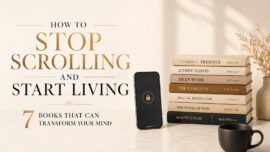
- Deep Work by Cal Newport: the best book for professional focus
- Atomic Habits by James Clear: the best book for building habits and changing your environment
- Stolen Focus by Johann Hari: the best book for understanding why we are distracted
- The Power of Now by Eckhart Tolle: the best book for meditation and spirituality
- Indistractable by Nir Eyal: the best book for beating daily distractions
- The Power of Your Subconscious Mind by Joseph Murphy: the best book for the subconscious mind, the law of attraction and manifestation
- Digital Minimalism by Cal Newport: the best book for a screen-time reset
Let us dive into each one.
1. Deep Work by Cal Newport: The Best Book for Professional Focus
Best for: students, professionals, creators and entrepreneurs who want to produce high-quality work in less time.
If there is one book that started the modern conversation about focus, it is Deep Work: Rules for Focused Success in a Distracted World by Cal Newport, a computer science professor at Georgetown University. First published in 2016, it has become more relevant with every passing year. In 2026, when AI tools can handle shallow tasks in seconds, the ability to think deeply is what separates ordinary results from extraordinary ones.
What is the big idea?
Newport divides work into two types. Deep work is professional activity performed in a state of distraction-free concentration that pushes your mental abilities to their limit. Shallow work is everything else: quick emails, chats, meetings and admin tasks that feel busy but create little lasting value. His argument is simple and powerful: the world rewards people who can do deep work, yet modern life makes it harder than ever.
The four rules of Deep Work
The book is organised around four practical rules:
- Work deeply: Build rituals and routines that protect long stretches of undisturbed time. Newport describes four scheduling styles (monastic, bimodal, rhythmic and journalistic), so you can pick the one that fits your life.
- Embrace boredom: If you reach for your phone every time you are bored, you train your brain to crave distraction. Learning to sit with boredom strengthens your attention.
- Quit social media (or use it with intention): Evaluate each tool by the value it truly brings, instead of keeping it because it might be useful someday.
- Drain the shallows: Limit the time you give to low-value tasks, and learn to say no to the things that do not matter.
Three lessons you can use today
- Schedule your deep work. Block 60 to 90 minutes in your calendar, the way you would for an important meeting. Protect it fiercely.
- Create a shutdown ritual. At the end of the workday, review your tasks, plan tomorrow, and say a closing phrase to yourself. This tells your mind it is safe to rest, which improves your evenings and your sleep.
- Track your deep work hours. What gets measured gets improved. A simple tally on a notebook page can quickly turn into a motivating streak.
Why we love it at Readers Books Club
Deep Work is not about working harder. It is about working with full presence. The mindset shift here is huge: instead of asking “How can I do more?”, you start asking “How can I do my most important work without interruption?” That small change is a genuine mindset transformation, and it connects beautifully with the coaching idea that clarity creates results.
Who should read it
Pick this book first if your biggest struggle is getting meaningful work done at your desk, studying for exams or building a career in a noisy workplace. Be warned: the writing is dense in places, so read a chapter a day with a pen in hand.
Your 10-minute action step
Tonight, decide on one task that matters most for tomorrow. Put your phone in another room, set a 45-minute timer and work on that single task. That is your first deep work session, and it is the start of a stronger attention span.
2. Atomic Habits by James Clear: The Best Book to Change Your Environment and Build Focus Habits
Best for: anyone who starts strong and then loses steam, and anyone who wants small daily changes to add up to a big transformation.
No list of self improvement books is complete without Atomic Habits by James Clear. Published in 2018, it has sold millions of copies worldwide and remains one of the most recommended books on personal growth. But why is it on a list about focus? Because focus is not a mood. It is a habit. People who concentrate well are rarely the ones with superhuman willpower. They are the ones who have built systems that make focus the default.
What is the big idea?
Clear’s central message is that tiny changes, repeated daily, compound into remarkable results. Improving by just 1 percent a day, he explains, leads to enormous progress over a year. You do not need a dramatic overhaul. You need a better system.
The book gives you four simple laws for building any good habit, and you can flip them to break a bad one:
- Make it obvious. Put your book where you will see it, and your phone where you will not.
- Make it attractive. Pair a habit you need with something you enjoy, like reading with a cup of chai.
- Make it easy. Reduce the friction. Start with just two minutes.
- Make it satisfying. Track your progress and reward yourself.
Why this is a focus book in disguise
The most valuable teaching in Atomic Habits for your attention span is the power of environment design. Clear shows that your surroundings often decide your behaviour more than your motivation does. If your phone sits next to your pillow, you will scroll. If your book sits on your pillow, you will read. When you change your environment, you remove the need for constant self-control.
Here are a few focus-friendly environment tweaks inspired by the book:
- Keep your phone in a different room while you work or study
- Turn off all non-essential notifications and move distracting apps off your home screen
- Dedicate one chair, desk or corner only to focused work or reading
- Keep a book visible and a remote or game controller out of sight
Identity: the secret to self-belief
The deepest idea in the book is about identity. Clear argues that lasting change comes from changing who you believe you are, not only what you do. Instead of saying “I am trying to read more,” you say, “I am a reader.” Instead of “I am trying to focus,” you say, “I am someone who protects my attention.” Every small action becomes a vote for that identity. This is self-belief in its most practical form, and it echoes what many a life coach teaches about identity-based goals.
Three lessons you can use today
- Use the two-minute rule. Make any new habit so small that you cannot say no. Read one page. Meditate for two minutes. Work for five.
- Stack your habits. Attach a new habit to an existing one: “After I make my morning tea, I will read for ten minutes.”
- Never miss twice. Missing one day is an accident. Missing two is the start of a new habit. Get back on track immediately.
Why we love it at Readers Books Club
Atomic Habits is the book that makes every other book on this list easier to apply. It is warm, practical and full of stories, and it respects the fact that you are busy. If you want motivation that lasts beyond the first week, this is your foundation.
Who should read it
Choose Atomic Habits first if you know what you should be doing but struggle to do it consistently. It is also an excellent starter book if you have not read in a long time, because the short chapters and clear summaries keep you moving.
Your 10-minute action step
Pick one distraction in your environment and add friction to it. Log out of one social media app, move it to the last page of your phone, or put your phone in a drawer for the next hour. Notice how much lighter your mind feels.
3. Stolen Focus by Johann Hari: The Best Book to Understand Why You Cannot Concentrate
Best for: readers who feel guilty about their distraction and want to understand what is really going on.
Have you ever blamed yourself for not being able to focus? Stolen Focus: Why You Can’t Pay Attention and How to Think Deeply Again by Johann Hari will change the way you see that struggle. Published in 2022, this book is part investigation and part personal journey, and it is one of the most eye-opening books of the decade on the topic of attention.
What is the big idea?
Hari’s core argument is that your attention problem is not only a personal failure of willpower. It is also the result of powerful forces in modern life that are working against your concentration. To explore this, he spent years speaking with scientists and researchers around the world, and he even spent time away from his own devices to see what changed.
He explains that many different factors are quietly draining our focus, including:
- Technology designed for addiction: Apps and platforms are built to keep you engaged for as long as possible, because your attention is what they sell.
- Constant task-switching: What we call multitasking is really rapid switching between tasks, and it leaves us slower, more error-prone and more tired.
- Lack of sleep and rest: A tired brain cannot concentrate, no matter how motivated you are.
- The loss of mind-wandering: Your brain needs unstructured, idle time to process ideas, and a full schedule never gives it any.
- Stress and a fast-paced life: When you are always rushing, your mind stays in survival mode and cannot settle into deep thought.
- Diet and environment: The food we eat and the world we live in affect how well our minds work.
Why this book matters for your mindset
Here is the beautiful part. When you realise that your distraction is not a character flaw, something shifts inside you. The shame fades, and so does the negative self-talk. This is a major step towards mindset transformation and stronger self-belief. You stop saying “What is wrong with me?” and start asking “What is wrong with my environment, and what can I change?”
That question is powerful. It connects closely to the idea of how to change your environment, and it is something many a life coach will encourage you to do before setting any goal.
Practical lessons you can take away
- Protect your sleep. Treat sleep as the foundation of focus, not a luxury. A consistent bedtime does more for your concentration than any app.
- Give your mind time to wander. Take a walk without your phone, stare out of the window or sit quietly for ten minutes. Some of your best ideas will show up here.
- Do one thing at a time. Stop switching tabs and tasks. Single-tasking is a superpower.
- Lock your phone away. Hari used a simple timed lockbox to separate himself from his phone, and you can use a drawer, another room or a basic timer box.
- Take part in the bigger conversation. The book reminds us that some changes, like healthier technology design, need community and collective action, not only individual effort.
Why we love it at Readers Books Club
Stolen Focus is compassionate. Many people who struggle with attention already carry guilt, and this book lifts that weight. At the same time, it does not leave you helpless. It gives you honest understanding and a set of realistic steps. If your goal is self improvement with kindness towards yourself, this is the book to start with.
Who should read it
Choose this book if you feel overwhelmed, restless or ashamed of your screen time. Keep in mind that it is more of an investigation than a step-by-step manual, so pair it with a practical book like Atomic Habits or Indistractable for the best results.
Your 10-minute action step
Tonight, charge your phone outside your bedroom. Use a cheap alarm clock instead. Notice how your sleep, your mornings and your mood improve over the next week.
4. The Power of Now by Eckhart Tolle: The Best Book for Meditation and Spirituality
Best for: overthinkers, anxious minds and anyone who wants a calmer, more present way of living.
A scattered mind is very often a mind that is living somewhere else: replaying yesterday or worrying about tomorrow. The Power of Now by Eckhart Tolle, a modern classic of spirituality, invites you to come home to the present moment. It was first published in the late 1990s and has since become one of the most loved books on meditation, awareness and inner peace.
What is the big idea?
Tolle’s message is simple: the present moment is the only place where life actually happens. Most of our mental noise comes from the constant stream of thoughts about the past and future. When you learn to observe those thoughts instead of being swept away by them, you discover a deep stillness inside you. In that stillness, attention becomes effortless.
This is the heart of every serious meditation practice. You are not trying to stop thinking. You are learning to notice that you are the one who is aware of the thoughts. That awareness, practised daily, is the purest form of attention training there is.
How it improves your focus
- It reduces mental chatter. The more you notice your thoughts, the less power they have over you.
- It brings you back to the task. Presence means giving your full attention to whatever you are doing, whether that is reading, working or washing dishes.
- It calms the emotional triggers behind distraction. Much of our scrolling is an escape from uncomfortable feelings. When you can sit with those feelings, the urge to escape fades.
- It builds acceptance. Fighting the moment wastes energy. Accepting it frees your attention for action.
Simple practices from the book
- Conscious breathing. Take three slow breaths and feel the air moving in and out. Do this before any task that needs concentration.
- Watch your thoughts like clouds. When your mind drifts, silently note “thinking,” then return to what you were doing, without judging yourself.
- Make routine moments mindful. Fully feel your hands under running water or your feet on the ground as you walk. These tiny pauses add up to a stronger attention span.
- Create a gap. Between finishing one task and starting another, pause for one breath instead of reaching for your phone.
A note on spirituality and science
You do not need to follow any particular belief system to benefit from this book. Whether you see it through a spiritual lens or a purely psychological one, the practice is the same: return to the present, again and again. Modern research on mindfulness has linked regular meditation with better attention and lower stress, which supports what contemplative traditions have taught for centuries.
Why we love it at Readers Books Club
Many readers describe this book as a lighter, calmer way of seeing everyday life. If you are exploring spirituality, the law of attraction or deeper personal growth, The Power of Now is a gentle starting point. A calm mind is also the best soil for clear goals and positive action, which is why so many a life coach recommends presence practice before goal setting.
Who should read it
This book is for you if your mind never seems to switch off. Some passages are abstract, so read slowly, a few pages at a time, and pause often. It is a book to experience, not rush.
Your 10-minute action step
Sit comfortably, set a timer for five minutes and simply watch your breath. Each time your mind wanders, gently return. Congratulations, you have just completed ten or twenty “attention reps”.
5. Indistractable by Nir Eyal: The Best Book for Beating Daily Distractions
Best for: busy people who want a clear, step-by-step system to control their time and attention.
If Deep Work tells you why focus matters and Stolen Focus explains why it is hard, Indistractable: How to Control Your Attention and Choose Your Life by Nir Eyal shows you exactly how to fight back. Eyal is a behavioural designer who studied how products capture attention, and he flips that knowledge to help you protect yours. The result is one of the most practical self improvement books of recent years.
What is the big idea?
Eyal’s biggest insight is surprising: distraction is rarely about the phone. It is about discomfort. We reach for our devices to escape boredom, stress, loneliness or uncertainty. So, instead of only blocking apps, you must learn to manage the feelings underneath. Once you understand your inner triggers, you can respond to them wisely.
The four-part framework
The book is built around four clear steps:
- Master your internal triggers. Notice the emotion that comes before the urge to distract yourself. Write it down, get curious about it and ride out the urge instead of obeying it. A simple trick is to say, “I will give this urge ten minutes,” and see whether it passes.
- Make time for traction. Traction is any action that pulls you towards what you want. Eyal teaches you to plan your week on a calendar, including time for work, relationships and rest, so your day follows your values rather than other people’s demands.
- Hack back external triggers. Review every ping, email alert and group chat. Ask whether each one serves you, and switch off the ones that do not.
- Prevent distraction with pacts. Make commitments in advance, such as a rule that you will not check your phone before your first task is done, or a small financial or social penalty if you break your own promise.
Why it works
This book respects your intelligence. It does not shame you or demand perfection. It treats distraction as a solvable design problem. Many readers find that the idea of “timeboxing,” where every part of your day has a planned place, gives them an instant sense of control and calm.
There is also a mindset transformation hidden in the pages. Eyal encourages you to see yourself as someone who can choose how to spend your attention, which strengthens self-belief with every kept promise. That is the kind of practical coaching you can read on a train or in bed.
Three lessons you can use today
- Plan tomorrow tonight. Write down your top priorities and assign each a time slot.
- Turn off all non-human notifications. Keep alerts for calls and messages from real people only, and silence everything else.
- Use the ten-minute rule. When the urge to check your phone strikes, wait ten minutes. Notice what feeling was behind it.
Why we love it at Readers Books Club
Indistractable is the perfect bridge between motivation and action. It is also quite balanced, because it teaches you to enjoy technology on your terms instead of running away from it. After reading it, many people feel that their time is finally their own.
Who should read it
Choose this book if you want a clear plan, enjoy structure and prefer tools over theory. It is especially useful for working professionals, students and parents juggling many demands.
Your 10-minute action step
Open your phone’s notification settings and switch off every alert that does not come from a real person. It takes ten minutes, and it may give you back hours.
6. The Power of Your Subconscious Mind by Joseph Murphy: The Best Book for Mindset, the Law of Attraction and Manifestation
Best for: readers who want to reprogram limiting beliefs, build self-belief and explore manifestation.
Focus is not only about blocking distractions. It is also about what your mind is quietly telling you all day long. The Power of Your Subconscious Mind by Dr. Joseph Murphy was first published in 1963 and is still one of the most widely read classics in the world of law of attraction, manifestation and personal growth. Many of today’s life coach and coaching teachings trace their roots back to ideas found in this book.
What is the big idea?
Murphy explains that your mind works on two levels. The conscious mind reasons, chooses and decides. The subconscious mind stores your beliefs, habits and emotional patterns and acts on them automatically. According to the book, your subconscious accepts whatever is repeatedly impressed upon it with conviction. So, if you keep telling yourself, “I am always distracted,” that story becomes your reality. If you consistently feed it positive, specific and believable ideas, your behaviour begins to follow.
How it connects to focus
Your attention follows your beliefs. A person who deeply believes “I am a focused, disciplined reader” naturally takes actions that support that identity. This is why self-belief matters so much for concentration. Murphy’s teachings give you a toolkit to shift that inner story:
- Positive affirmations: Short, present-tense statements such as “I give my full attention to what matters.”
- Visualisation: Seeing yourself calmly working, studying or reading with total focus before you begin.
- Pre-sleep programming: Spending the last few minutes before sleep gently holding a positive thought, when the mind is most receptive.
- Emotional conviction: Feeling the thought as true, not just repeating words.
The law of attraction and manifestation, explained simply
Murphy’s ideas are often seen as an early foundation of the law of attraction: the belief that your thoughts and feelings shape your experiences. In practical terms, manifestation here means getting clear on what you want, strengthening your belief that it is possible and then acting in line with that vision. You can think of it as aiming your attention at a target.
A balanced note: the book has a strong spiritual and faith-based tone, and its claims are not scientifically proven in the way a lab result is. The sensible way to read it is to take what helps, such as visualisation, positive self-talk and clear intention, and pair it with real action. Mental rehearsal and positive self-talk are widely used by athletes and performers, so the practical side of these ideas has solid support.
Three lessons you can use today
- Rewrite one limiting belief. Replace “I can’t concentrate” with “I am training my focus every day.”
- Do a two-minute morning visualisation. Picture your most focused version of the day ahead, and feel how calm and capable you are.
- Take one aligned action. Belief without action is just a wish. Pair every affirmation with one small step, like reading five pages.
Why we love it at Readers Books Club
Our channel has always celebrated the link between inner beliefs and outer results. If you enjoy topics such as the subconscious mind, spirituality and mindset transformation, this book will feel like a trusted friend. It reminds you that the quality of your thoughts shapes the quality of your attention.
Who should read it
Choose this book if you struggle with self-doubt, negative self-talk or a feeling that you are your own biggest obstacle. Read it with an open but thoughtful mind.
Your 10-minute action step
Write down one belief about your focus that holds you back. Then write its positive opposite and read it aloud tonight, right before you sleep.
7. Digital Minimalism by Cal Newport: The Best Book for a Screen-Time Reset
Best for: anyone who feels glued to their phone and wants a calmer, more intentional relationship with technology.
Our final pick is another gem from Cal Newport. Digital Minimalism: Choosing a Focused Life in a Noisy World is the perfect companion to Deep Work. If Deep Work is about doing your best work, Digital Minimalism is about building a life with enough quiet to do it. Published in 2019, it has helped countless readers rethink how much of their lives they hand over to screens.
What is the big idea?
Newport defines digital minimalism as a philosophy of technology use in which you focus your online time on a small number of carefully chosen activities that strongly support your values, and happily miss out on everything else. This is not about hating technology or throwing your phone away. It is about being the boss of your tools, rather than the other way around.
The 30-day digital declutter
The heart of the book is a powerful experiment called the digital declutter:
- Step away for 30 days from optional technologies, such as social media, endless video feeds and news apps, while keeping the tools that are essential for work and safety.
- Rediscover what you enjoy. Use the free time to read, walk, cook, learn something new or meet friends.
- Reintroduce slowly and deliberately. After the month, add back only the tools that clearly add value, and decide exactly how and when you will use them.
Many people say this experiment is the first time in years that they have felt genuinely in control of their attention.
Other big ideas in the book
- Embrace solitude. Spend regular time alone with your thoughts, without inputs from other minds. A simple daily walk without your phone is a great start.
- Don’t click “like.” Real conversation, a call or a face-to-face meeting builds stronger relationships than a quick online reaction ever can.
- Reclaim leisure. Rather than passive scrolling, choose high-quality leisure: hobbies that use your hands and mind, like cooking, drawing, music or exercise.
- Be intentional. Before you adopt any app, ask what specific value it provides and whether there is a better way to get the same result.
Why this builds a stronger attention span
Every time you pick up your phone in a moment of quiet, you miss a chance to let your mind rest and think. Over time, that makes it harder to read a book, hold a conversation or sit with a single task. By building more silence and offline joy into your day, you rebuild your ability to focus. It is also a way to change your environment, because you are designing a life that is friendly to deep thought.
Why we love it at Readers Books Club
This book is a gift for anyone seeking mindset transformation in the digital age. It pairs beautifully with meditation and spirituality, because all of them point to the same truth: peace comes when you stop reaching outside yourself for constant stimulation. And as a bonus, it will almost certainly leave you with more time to read the best books 2026 has to offer.
Who should read it
Choose this book if you spend many hours each day on your phone, feel anxious without it or want more real-life connection. Even a partial version of the declutter, such as a seven-day break from one app, can be eye-opening.
Your 10-minute action step
Decide on one app you will remove from your phone for the next seven days. Write down what you will do with that time instead. Then notice how often your thumb reaches for the empty spot.
Which Book Should You Read First? A Quick Guide
Not sure where to begin? Match your biggest challenge to the right book.
| If your biggest struggle is… | Start with | Main benefit |
|---|---|---|
| Getting meaningful work done | Deep Work | Long, protected focus sessions |
| Staying consistent | Atomic Habits | Habits and a focus-friendly environment |
| Feeling guilty about distraction | Stolen Focus | Understanding and self-compassion |
| An overthinking, restless mind | The Power of Now | Meditation and presence |
| Phone notifications and time | Indistractable | A clear anti-distraction system |
| Negative self-talk and limiting beliefs | The Power of Your Subconscious Mind | Mindset, self-belief and manifestation |
| Too much screen time | Digital Minimalism | A 30-day reset |
Bonus books worth adding to your list
If you finish all seven and want more, these best books 2026 bonus picks are great next steps:
- Hyperfocus by Chris Bailey: Learn how to direct your attention with intention and manage your mental energy.
- Essentialism by Greg McKeown: Discover how to say no to the trivial many and yes to the vital few.
- Think Like a Monk by Jay Shetty: A friendly blend of spirituality, meditation and motivation for modern life.
- Mindset by Carol Dweck: The research behind the growth mindset, which supports every kind of personal growth.
- Attention Span by Gloria Mark: A research-based look at how digital life changes the way we concentrate.
Your 30-Day Focus Reset: A Simple Reading and Practice Plan
Reading about focus is good. Practising it is better. Here is a simple four-week plan that combines reading with small daily actions. You do not need to finish every book in 30 days. Read 20 pages a day, and choose the titles that match your needs.
| Week | Theme | Suggested reading | Daily practice |
|---|---|---|---|
| 1 | Clear the clutter | Stolen Focus or Digital Minimalism | Phone out of the bedroom, notifications off, one app removed |
| 2 | Build the system | Atomic Habits or Indistractable | Habit stacking, a two-minute start and a written plan for tomorrow |
| 3 | Calm the mind | The Power of Now | Five minutes of meditation and one phone-free walk |
| 4 | Deepen and believe | Deep Work and The Power of Your Subconscious Mind | One 45 to 90 minute deep work block and a pre-sleep affirmation |
Five daily habits that make every book work better
- Read first, scroll later. Start your morning with ten pages of a book before checking your phone.
- Use a reading spot. Make one chair or corner your focus zone. Your brain will begin to associate it with concentration.
- Meditate for five minutes. Even a short meditation daily trains your mind to notice and return from distraction.
- Write one line of reflection. After reading, note one idea you will apply. This is the coaching habit that turns knowledge into personal growth.
- Celebrate small wins. Tick off each day on a calendar. Seeing your streak grow builds self-belief and lasting motivation.
A simple rule for your environment
If you remember only one thing from this blog, make it this: change your environment before you try to change your willpower. A quiet room, a phone in a drawer and a book within reach will do more for your focus than any amount of self-criticism.
Frequently Asked Questions About Books for Focus and Attention Span
What is the best book to improve focus and attention span?
There is no single winner, because it depends on your challenge. Deep Work is best for work focus, Atomic Habits for consistency, The Power of Now for a calmer mind and Digital Minimalism for screen time. If you can only pick one, begin with Atomic Habits.
Can reading books really improve my attention span?
Yes. Reading a book requires sustained, single-task attention, which is the opposite of scrolling. Reading a little every day, even 15 to 20 minutes, works like exercise for your concentration. The ideas inside self improvement books also give you tools you can apply immediately.
How many pages should I read each day?
Start small. Ten to twenty pages, or 15 minutes, is plenty. The goal is consistency, not speed. Use the two-minute rule from Atomic Habits to begin and let momentum carry you.
Does meditation help with focus?
Regular meditation is widely linked with better attention and lower stress. Even five minutes a day of watching your breath counts. Books such as The Power of Now make meditation and spirituality simple to start.
Do law of attraction and subconscious mind books really work?
They work best when treated as tools for mindset, clarity and self-belief, combined with consistent action. Visualisation, positive self-talk and clear goals can change how you think and behave. They are not a substitute for effort, and no book can promise specific outcomes.
Can a life coach or coaching program help me focus?
Often, yes. A life coach can help you spot limiting beliefs, set priorities and stay accountable. Many readers combine coaching with the books above for faster personal growth.
Where can I find summaries of these books?
You can watch book summaries and listen to podcast conversations on the Readers Books Club YouTube channel, which covers self-help, spirituality, the law of attraction, personal finance and motivation.
Final Thoughts: Start Small, Stay Consistent, Read Deeply
Your attention is your life. Where it goes, your energy, time and dreams follow. The seven books in this guide, from Deep Work and Atomic Habits to The Power of Now and The Power of Your Subconscious Mind, give you a complete path to reclaim it. Together they cover your mindset, your habits, your subconscious mind, your meditation practice and your environment.
You do not need to change everything overnight. Pick one book from this best books 2026 list, read 15 minutes a day, and apply one idea at a time. Move your phone, quiet your notifications, take five breaths and believe that your focus can grow. That is how real mindset transformation begins, one small decision at a time.
Join the Readers Books Club family
If this blog helped you, we would love to continue the journey with you:
- Subscribe to Readers Books Club on YouTube for easy-to-understand book summaries and podcasts by Amiett Kumar on self improvement, spirituality, the law of attraction, personal growth and more
- Explore more book recommendations on our website, readersbooksclub.com
- Tell us in the comments: Which of these 7 books will you read first? Which book changed your focus?
- Share this blog with a friend who needs a little help staying focused
Happy reading, and remember: the best time to build your focus was yesterday. The next best time is right now.
Contents