7 Life-Changing Books to Read in 2026
Introduction: Why These Seven Books Matter in 2026
Some books entertain you for a weekend. Some give you an idea you remember for a month. And then there are books that quietly change the questions you ask yourself long after you have closed the final page.
Those are the books this list is about.
In 2026, readers are not short of information. We can ask an AI tool for an answer in seconds, watch a motivational reel before breakfast, listen to a podcast during the commute, and save fifty pieces of advice before lunch. The real challenge is no longer access. The challenge is deciding which ideas deserve enough attention to become part of the way we actually live.
That is why long-form reading still matters. A serious book does something a quick post cannot. It gives an argument room to develop. It shows you where an idea came from, where it may fail and how it connects to the rest of your life. Good books slow your thinking down just enough for you to notice assumptions, habits, and emotional patterns that are easy to miss when everything is moving quickly.
For this Readers Books Club guide, we selected seven books that speak to seven different areas of a better life: meaning, boundaries, environment, caring, money, growth, and habits. Several are major books of 2026. Others are slightly older titles whose relevance has only increased. Together, they form a practical personal-growth library rather than seven versions of the same message.
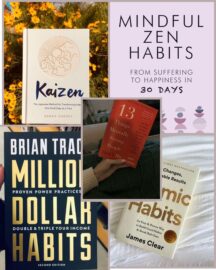
The list includes Arthur C. Brooks’s The Meaning of Your Life, Mel Robbins’s The Let Them Theory, Angela Duckworth’s Situated, Dr. Tony Nader’s The Power of Caring, Morgan Housel’s The Art of Spending Money, Ryan Hawk’s The Price of Becoming, and James Clear’s Atomic Habits.
At Readers Books Club, book recommendations often sit beside content about meditation, spirituality, mindset, manifestation, and personal growth. That wider context appears in this article too, but with an important distinction: not every author on this list teaches the Law of Attraction, manifestation, meditation or coaching. Where we connect a book to those ideas, that connection is our editorial interpretation for the Readers Books Club audience, not a claim about the author’s own philosophy.
If you are searching for life changing books, best books 2026, self improvement books, personal growth books, books to change your mindset, psychology books, motivation books, habit formation books, books for mental clarity or books for success, use this list as a starting point. You do not need to read all seven at once. In fact, the most useful book is usually the one that addresses the problem you are actually living through today.
How We Chose These Life-Changing Books
A title does not become life-changing simply because it sells well. Bestsellers can be useful, but popularity alone is not the standard. For this list, we looked for books that do at least three things well.
First, a life-changing book should give you a lens, not just a tip. A tip solves one small problem. A lens changes how you interpret many problems. The Let Them Theory gives you a lens for separating other people’s choices from your responsibility. Situated gives you a lens for seeing the hidden influence of environment. Atomic Habits gives you a lens for understanding behavior as a system rather than a moral verdict on your character.
Second, the book should be actionable. Insight feels satisfying, but personal growth depends on what you repeatedly do. A useful self-help or personal-development book should leave you with a question to ask, a behavior to test, a habit to change or a decision to make differently. That does not mean every book needs worksheets. It means the ideas should be able to leave the page and enter real life.
Third, the book should solve a problem that still matters. In 2026, many readers are dealing with attention fragmentation, career uncertainty, social comparison, relationship stress, burnout, financial anxiety and a sense that life is moving faster than their ability to make sense of it. The seven books below address these pressures from different directions.
The result is intentionally balanced. This is not a list of seven productivity books. It is not seven spirituality books. It is not seven books telling you to wake up at 5 a.m. The goal is a broader kind of transformation: becoming clearer about what matters, more deliberate about what you can control, more aware of your surroundings, wiser about caring, calmer about money, more committed to learning and better at turning intentions into systems.
That balance is also why some books published before 2026 belong here. The best books to read in 2026 are not necessarily the books printed in 2026. A book earns a place if its ideas match the problems readers are facing now. Atomic Habits is the clearest example. It is not new, yet it remains on bestseller lists because the struggle to turn good intentions into consistent action has not gone away.
Use this article in one of two ways. You can read it straight through and choose the book that pulls you most strongly. Or you can begin with the quick comparison later in the article and identify your current challenge first. The goal is not to build the biggest TBR pile. It is to choose the right next conversation for your mind.
1. The Meaning of Your Life Arthur C. Brooks
If 2026 has a defining personal-development question, it may be this: what is all this effort actually for?
Arthur C. Brooks’s The Meaning of Your Life speaks directly to that question. Published in March 2026, the book became a #1 New York Times bestseller and currently leads SUCCESS’s personal-development bestseller list. Brooks, a Harvard professor and happiness researcher, argues that modern life has made the search for meaning harder even as it has made many other things more convenient.
We have more entertainment, more information, more ways to measure status and more ways to compare ourselves with other people. Yet many successful people still report emptiness, lack of direction or the uncomfortable feeling that their life is full but not meaningful. Brooks treats that not as a personal failure but as a serious human problem worth studying.
The book asks readers to distinguish happiness from meaning. Happiness matters, but a meaningful life can include responsibility, sacrifice, grief, uncertainty and hard work. The deeper question is whether your life contains coherence, purpose and significance: does your story make sense to you, do your efforts serve something that matters, and do you believe your life has value beyond immediate comfort?
That is what makes this a life-changing book rather than simply a happiness book. It shifts the question from “How can I feel good today?” to “What kind of life is worth building?” That second question changes decisions. A job offer is no longer only about salary. A relationship is not only about excitement. A difficult season is not automatically evidence that you are on the wrong path. Meaning gives difficulty context.
For Readers Books Club readers interested in spirituality, this is one of the strongest fits on the list. Brooks draws not only on social science but also on philosophy and faith traditions. You do not have to share a specific religious belief to find the central exercise useful: identify what you serve that is larger than your own immediate preferences.
A practical way to apply the book is to create a one-page “meaning map.” Divide it into four headings: people, work, transcendence and story. Under people, write the relationships you want to love well. Under work, write the contribution you want your effort to make. Under transcendence, write what connects you to something larger than your ego, whether that is faith, nature, service, art or meditation. Under story, write the events that shaped you and what you want them to mean rather than merely what happened.
This is also a useful counterbalance to manifestation culture when manifestation becomes overly focused on acquisition. Wanting a home, career, relationship or financial goal is not wrong. But the question “What do I want?” becomes more powerful when paired with “Why would this matter once I have it?” A clear why can protect you from chasing goals that look impressive but do not fit your values.
If you follow Amiett Kumar for meditation, spirituality or manifestation, you can use Brooks’s framework as a grounding practice. Before a visualisation session, identify the deeper quality behind the image. If you are visualising career success, perhaps the deeper value is contribution or freedom. If you are visualising a relationship, perhaps it is love, trust or companionship. If you are visualising wealth, perhaps it is security, generosity or time. This does not replace action; it makes action more coherent.
Best for: readers who are productive but feel directionless; people at a career or life transition; anyone interested in purpose, spirituality, happiness and long-term fulfillment.
One question to carry from the book: If nobody could applaud your life, what would still make it meaningful?
2. The Let Them Theory Mel Robbins
Mental energy is one of the most valuable resources you have, yet many people spend enormous amounts of it trying to manage things that were never fully under their control: other people’s opinions, reactions, timing, choices and approval.
Mel Robbins’s The Let Them Theory became a major bestseller by packaging a familiar but powerful truth into a memorable framework. When another adult behaves in a way you do not like, “let them.” Let them have the opinion. Let them make the choice. Let them reveal their priorities. Then return to the part that belongs to you: what will you do?
The reason this idea resonates so strongly is that modern life creates endless opportunities for social control and comparison. You can see when someone viewed your message. You can see who was invited, who was promoted, who liked the post, who did not respond and who appears to be doing better than you. Technology gives us more information about other people’s behavior without giving us more control over it.
The book’s practical value is in helping readers distinguish influence from control. You can communicate clearly, but you cannot force someone to understand. You can work hard, but you cannot force a manager to recognize you. You can love someone, but you cannot make them want the same relationship. You can set a boundary, but you cannot control whether they approve of it.
That distinction can immediately reduce overthinking. Imagine you send a thoughtful message and receive a cold response. One path is to spend the next six hours analyzing tone, rewriting the conversation in your head and trying to engineer the other person’s feelings. The other is to acknowledge the information, decide whether a conversation or boundary is needed and return to your own life.
This is not a philosophy of passivity. Healthy detachment is not the same as avoiding difficult conversations. If a situation requires action, take action. If a relationship needs clarity, ask. If a boundary is crossed, respond. The point is to stop confusing action with control.
The Let Them Theory also fits naturally with meditation because both train the ability to notice an impulse without automatically obeying it. In meditation, a thought appears and you do not have to follow it. In relationships, another person’s reaction appears and you do not have to let it determine your entire emotional state.
For readers who use Law of Attraction or manifestation language, the useful editorial connection is attention. Obsessively checking whether a person has replied, whether a result has arrived or whether “the universe” has sent a sign can turn a desired goal into a source of anxiety. Letting go of compulsive monitoring does not mean abandoning the goal. It means reclaiming your focus for actions, values and decisions that are actually yours.
Try a simple two-column exercise. On the left, write “Let Them” and list the behaviors, opinions or outcomes you cannot directly control. On the right, write “Let Me” and list your choices: communicate, leave, ask, prepare, rest, improve, apply, apologize, say no, move on. The second column is where your agency lives.
Best for: people-pleasing, relationship anxiety, boundaries, approval-seeking, social comparison and overthinking.
One question to carry from the book: What am I trying to control today that would be more useful to observe, accept and respond to?
3. Situated Angela Duckworth
Self-help often tells us to become stronger, more disciplined and more motivated. Angela Duckworth’s Situated adds a necessary complication: what if the problem is not only your character, but the situation around you?
Published in September 2026, Situated: Find the People and Places That Bring Out Your Best is Duckworth’s follow-up to Grit. Her first book helped popularize the idea that passion and perseverance matter enormously. Situated asks what happens when perseverance meets an environment that either supports or sabotages it.
This is a powerful shift because people often treat every behavior as evidence about identity. If you cannot focus, you call yourself distracted. If you do not exercise, you call yourself undisciplined. If you stay quiet in meetings, you call yourself unconfident. Duckworth asks you to look outward as well as inward. What cues are built into your environment? Which people raise your standards? Which spaces make a behavior easier? Which cultures reward the version of you that you are trying to become?
Think about reading. Place one person in a quiet room with a visible book and no phone nearby. Put the same person in a noisy room with five notifications arriving every ten minutes. The difference in behavior is not simply a difference in willpower. Situation changes the cost of the action.
That makes Situated one of the most practical life-changing books for readers interested in habit formation and self discipline. Instead of asking only, “How can I become more motivated?” ask, “How can I redesign this situation so the right behavior requires less motivation?”
The same applies to people. A social circle can normalize curiosity or normalize complaining. A workplace can reward deep work or constant interruption. A coach or mentor can change what you believe is possible because they repeatedly expose you to a different standard. Environment is not destiny, but it is rarely neutral.
A useful exercise is a situation audit. Choose one goal, such as reading more, exercising, saving money or meditating. Then rate four elements from 1 to 10: physical space, digital environment, people and routines. If your meditation practice keeps failing, maybe the issue is not your spirituality. Perhaps you are trying to meditate beside your phone, at a different time every day, in a room where people constantly interrupt you. Change the situation before attacking your character.
This book also has an interesting connection to manifestation and mindset transformation. Personal-growth culture often emphasizes the inner world: thoughts, beliefs, self-concept and visualisation. Situated reminds us that inner change becomes easier when the external environment is designed to support it. If you want to embody a new identity, create physical evidence around you. Put the journal on the desk. Schedule the class. Spend time with people who already practice the behavior. Reduce the cues that repeatedly pull you back into the old pattern.
For Readers Books Club readers, this idea can transform the way you use books themselves. Do not merely read a book and hope motivation lasts. Let the book alter your room, calendar, phone, friendships or routines. A book changes your life when it changes your situation, not just your vocabulary.
Best for: readers who feel stuck despite knowing what to do; habit formation, motivation, environment design, education, parenting and performance.
One question to carry from the book: What if I stopped asking “What is wrong with me?” and started asking “What in this situation is making the right behavior unnecessarily hard?”
4. The Power of Caring Dr. Tony Nader
Many people do not need to learn how to care more. They need to learn how to care without exhausting themselves.
Dr. Tony Nader’s The Power of Caring, published in July 2026, approaches this problem through consciousness, psychology, philosophy and his background as a neuroscientist and Vedic scholar. The book became a USA Today and Los Angeles Times bestseller and entered SUCCESS’s personal-development list as a new title.
Its central question is deceptively simple: what does healthy caring actually look like?
We often treat caring as automatically virtuous. But caring without boundaries can become control, resentment, burnout or chronic worry. A parent may call constant monitoring “care.” A manager may call micromanagement “care.” A partner may believe that carrying another adult’s emotional life is proof of love. A socially conscious person may consume upsetting news for hours because looking away feels irresponsible.
Nader’s framework asks readers to make caring more conscious. Caring should connect you to what matters, not destroy your capacity to function. It should include compassion without requiring self-erasure. It should be able to coexist with boundaries.
This matters especially in 2026 because many people feel stretched across too many circles of concern. Family. Career. Health. Money. Community. Global events. Social media exposes us to suffering and outrage from everywhere, all the time. The nervous system was not designed to emotionally process the entire world before breakfast.
One of the most life-changing lessons from this book is that your capacity to care depends on clarity. What is actually yours to do? What are you responsible for? What can you influence? What must you witness without pretending you can control it?
A simple practice is to divide your concerns into three circles: direct responsibility, meaningful influence and compassionate awareness. Direct responsibility includes things like your child, your commitments, your health or work you promised to complete. Meaningful influence includes situations where your action can help but you are not solely responsible. Compassionate awareness includes problems you care about but cannot personally solve today. All three deserve humanity, but they do not deserve the same amount of nervous-system activation.
For readers interested in meditation and spirituality, The Power of Caring is one of the most natural bridges on this list. Nader’s work is explicitly informed by Vedic scholarship and Transcendental Meditation. The deeper argument is not simply “set boundaries.” It is that conscious awareness can change the quality of caring itself.
This is also useful for anyone interested in coaching or life coach content. Good coaching should not create dependence. It should increase clarity and agency. Healthy care supports another person’s growth without taking over responsibility for their life.
For manifestation-focused readers, the editorial connection is emotional sustainability. If your personal-growth routine becomes another place where you pressure yourself to maintain the “right vibration” every minute, caring for your future can become anxiety about your future. Conscious caring suggests a gentler standard: care enough to act, but not so compulsively that the goal consumes the present.
Best for: caregivers, leaders, parents, helpers, highly sensitive readers, people dealing with burnout and anyone exploring spirituality or compassion.
One question to carry from the book: Where in my life has caring become control, and what would caring with wisdom look like instead?
5. The Art of Spending Money Morgan Housel
Personal finance advice often begins with earning, saving and investing. Morgan Housel asks a more uncomfortable question: even if you become good at accumulating money, do you know how to use it well?
The Art of Spending Money, published in October 2025, is one of the strongest books to carry into 2026 because it addresses the psychological side of spending. Housel, author of The Psychology of Money, explores envy, expectations, identity, status, regret and the strange ways money interacts with happiness.
This is important because spending is rarely only about the object being purchased. A car can be transportation, identity, social proof or an attempt to reduce insecurity. A home can be shelter, stability, status or a symbol of having “made it.” A luxury purchase can bring genuine joy, or it can be an expensive attempt to buy admiration from people who are not thinking about us nearly as much as we imagine.
Housel’s work is valuable because it does not treat every purchase as irresponsible. The point is not to become afraid of spending. It is to understand what money is for. If money cannot improve your life, relationships, time, experiences or peace of mind, accumulating it can become a scoreboard with no finish line.
One of the most useful ideas in money psychology is that expectations matter almost as much as income. A person earning more can feel poorer if their desired lifestyle expands even faster. Social comparison creates a moving target. You finally reach the level you once considered success, only to notice someone with more.
That makes this book deeply relevant to mindset transformation. Money mindset is not merely repeating “I am abundant.” It includes noticing the emotional stories beneath your financial behavior. Do you spend when stressed? Do you avoid looking at your accounts because numbers make you anxious? Do you buy status? Do you save compulsively because spending feels unsafe even when you can afford it? Do you pursue wealth without a clear picture of what enough would look like?
Try a three-question spending filter for non-essential purchases: Will this improve my life after the excitement of buying fades? Am I buying utility, joy or social approval? What future option am I trading for this purchase? The goal is not to kill pleasure. It is to make pleasure more deliberate.
For Readers Books Club readers interested in the Law of Attraction or manifestation, this book is a valuable reality check. Financial manifestation content can become vague if it focuses only on attracting money. Housel’s question is different: if more money arrived, would your habits and expectations allow it to create a better life? Wealth building requires earning and investing, but a healthy financial life also requires knowing when spending is enough and what money cannot buy.
The spirituality connection is equally interesting. Many traditions warn about attachment, comparison and endless desire. Housel reaches some similar territory through behavioral finance: envy can make a financially successful life feel inadequate. Gratitude, clarity and a personal definition of enough can be financially intelligent, not merely spiritually comforting.
Best for: money mindset, financial literacy, spending habits, wealth building, social comparison and anyone who liked The Psychology of Money.
One question to carry from the book: What do I actually want money to do for my life, beyond helping me look successful?
6. The Price of Becoming Ryan Hawk
Most ambitious people know what they want in broad terms: become better, communicate more effectively, lead well, create meaningful work, build a career they respect. The difficult part is turning that ambition into a repeatable practice.
Ryan Hawk’s The Price of Becoming is built around that gap. Currently rising on SUCCESS’s 2026 personal-development list, the book organizes personal growth around three areas: Learn, Work and Lead. Hawk draws from hundreds of conversations on The Learning Leader Show with leaders, authors, athletes and thinkers, then turns those patterns into a practical framework.
The title is useful because it challenges a common fantasy: becoming better should feel inspiring all the time. In reality, growth has a price. You pay with attention. You pay with repetition. You pay by asking for feedback you may not enjoy. You pay by doing work before recognition arrives. You pay by becoming a beginner again.
This makes the book especially strong for readers who consume a lot of motivation but struggle with implementation. Inspiration can tell you what is possible. Continuous learning tells you what to practice next.
The Learn section encourages better inputs: reading, asking questions, seeking mentors, staying curious and developing a system for reflection. The Work section turns knowledge into action. The Lead section recognizes that growth eventually expands beyond self-improvement; if you learn something useful, can you teach, communicate and model it for others?
A simple Readers Books Club application is a daily three-question review: What did I learn today? Where did I react instead of respond? What will I practice tomorrow? This keeps personal growth concrete. A bad day becomes information rather than a verdict. A good day becomes something you can study rather than merely enjoy.
The book is also helpful for self-belief because it offers an alternative to confidence-first thinking. You do not have to feel fully confident before acting. You can build confidence from evidence: the meeting you prepared for, the difficult conversation you handled, the skill you practiced, the promise you kept.
This connects naturally to habit formation and motivation. Motivation asks, “Do I feel like doing this?” A learning system asks, “What does the next repetition require?” Over time, that distinction matters more than intensity.
For readers who follow Amiett Kumar for coaching, manifestation or mindset, the editorial connection is aligned action. Personal transformation is easier to believe when the new identity has behaviors attached to it. If your affirmation is “I am becoming a confident communicator,” then practice one clear conversation. If your visualization is becoming a leader, study leadership and take responsibility for a real outcome. Inner identity and outer practice reinforce one another.
Best for: ambitious professionals, entrepreneurs, leaders, lifelong learners, communication skills, decision making and self discipline.
One question to carry from the book: What can I practice today that the person I want to become would eventually consider normal?
7. Atomic Habits James Clear
A list of life-changing books would feel incomplete without the book that has become shorthand for the power of small systems.
James Clear’s Atomic Habits remains on 2026 bestseller lists for a simple reason: people continue to discover that goals are easier to set than behaviors are to sustain. Clear’s central argument is that meaningful change usually comes from small actions repeated long enough to compound.
This sounds obvious. The power is in the structure he gives it.
Instead of relying on motivation, change the environment. Instead of obsessing over outcomes, improve the system. Instead of asking only what you want to achieve, ask who you are becoming through repetition. Habits are not merely tasks; they become evidence about identity.
This is why Atomic Habits works so well as the final book on this list. The previous six books can give you powerful ideas: find meaning, release control, redesign your situation, care wisely, spend intentionally, keep learning. Atomic Habits asks the question that determines whether any of those ideas survive: what will you repeatedly do?
Suppose The Meaning of Your Life convinces you that relationships matter. A habit turns that insight into a weekly phone call. Suppose The Art of Spending Money helps you define enough. A habit turns that into an automatic savings rule and a monthly spending review. Suppose Situated helps you see that your environment is distracting. A habit and an environment change turn that into a phone-free reading hour.
Clear’s Four Laws of Behavior Change are useful because they make behavior design practical: make a good habit obvious, attractive, easy and satisfying. For unwanted habits, invert the process: make them invisible, unattractive, difficult and unsatisfying.
Readers often overestimate how dramatic a life change should feel. The most important actions may look boring. Ten pages every night. Five minutes of meditation. A fixed bedtime. A weekly financial review. Thirty minutes of focused work. One difficult conversation instead of another week of avoidance.
This is where Atomic Habits connects strongly to meditation and spirituality. Spiritual practices also depend on repetition. A single calm meditation may feel meaningful, but a daily practice changes your relationship with attention. An affirmation repeated mechanically may do little, but an affirmation paired with consistent behavior can become an identity cue.
For manifestation-focused readers, the most grounded lesson is to connect desired identity with evidence. If you are manifesting a healthier life, create one health behavior. If you are visualising financial stability, create one financial system. If you are affirming confidence, practice one act of courage. Manifest anything becomes more useful as a philosophy when “anything” is connected to the daily actions that make the desired self more likely.
Try the two-minute version of one behavior today. Read one page. Meditate for two minutes. Write one sentence. Put on your walking shoes. Open the document. The goal of the first repetition is not transformation. It is making the second repetition easier.
Best for: habit formation, self discipline, consistency, productivity, reading habits, fitness, money routines and anyone who keeps starting over.
One question to carry from the book: What tiny behavior would make my desired identity more believable by tonight?
Quick Guide: Which Book Should You Read First?
The seven books solve different problems. If you are not sure where to begin, match the book to your current season rather than choosing the title with the biggest reputation.
If your life looks successful but feels empty, start with The Meaning of Your Life. If your energy is disappearing into other people’s opinions, choose The Let Them Theory. If you know what to do but your surroundings keep pulling you backward, read Situated. If you are emotionally exhausted from caring for everyone, choose The Power of Caring. If money occupies too much mental space, read The Art of Spending Money. If ambition feels scattered, choose The Price of Becoming. If you keep learning but struggle to act consistently, return to Atomic Habits.
Notice how these books also reinforce one another. Meaning tells you what matters. Boundaries protect your energy for it. Situation design makes good behavior easier. Conscious caring protects relationships without burnout. Money psychology helps resources serve your life. Continuous learning keeps you growing. Habits turn all of it into repetition.
That sequence is a useful model of personal growth itself. Transformation is rarely one big breakthrough. It is clarity plus environment plus relationships plus resources plus learning plus repeated action.
What These Seven Life-Changing Books Have in Common
Although these books come from different fields, several themes appear again and again.
First, identity matters, but identity is not only something you think. It is something you practice. James Clear makes this explicit, but the same pattern appears elsewhere. Ryan Hawk asks what you are willing to practice to become better. Angela Duckworth asks whether your situation supports the person you want to be. Mel Robbins asks whether your attention belongs to your own choices or to other people’s reactions.
Second, attention is a hidden form of wealth. Where attention goes, behavior follows. Brooks asks you to aim attention at meaning rather than status. Robbins asks you to stop giving it away to uncontrollable people. Duckworth asks you to design surroundings that protect it. Housel shows how comparison can capture it financially. Nader asks you to care consciously rather than being emotionally pulled in every direction.
Third, personal growth is relational. Even a book about habits eventually touches other people. The Meaning of Your Life includes love and vocation. Situated emphasizes people and places. The Power of Caring is explicitly about connection. The Price of Becoming moves from learning into leadership. A stronger self is not merely more efficient; it is better able to participate in relationships, work, and community.
Fourth, self-belief becomes more stable when it is evidence-based. Positive thinking can be useful, but repeated action gives the mind something concrete to trust. If you keep a small promise to yourself for thirty days, you no longer need to argue abstractly about whether you are disciplined. You have data.
Fifth, a life-changing idea needs an environment. This is one reason Readers Books Club encourages readers not only to watch a book summary but also to read, discuss, take notes, and apply. A book can introduce a mindset transformation, but your calendar, phone, spending, friendships, and routines determine whether that transformation gets a chance to survive.
This is also where meditation and mindfulness fit naturally. Reading gives the mind better material. Meditation trains the ability to observe the mind using that material. You may intellectually understand that you cannot control someone else’s behavior, yet still feel a surge of anxiety when they disappoint you. Mindfulness creates a pause in which the new idea can become a new response.
For readers interested in spirituality or the Law of Attraction, this list offers a useful grounding principle: inner work and outer structure are not enemies. Visualization can clarify direction. Affirmation can reinforce identity. Meditation can steady attention. But books like Situated and Atomic Habits remind us that the environment and repeated behavior still matter. The most useful personal-growth approach is often both-and rather than either-or.
A 30-Day Readers Books Club Reading Plan
The biggest mistake with a list like this is buying seven books, reading twenty pages of each, and finishing none. A smaller, slower plan is more useful.
Week 1: Choose the problem. Spend one evening writing down what currently feels hardest: purpose, boundaries, environment, burnout, money, growth, or consistency. Choose the book that matches the problem.
Week 2: Read for twenty minutes a day. Do not set a page target at first. Set a time target. Put the phone away and read with a pen or notes app available only if you genuinely need it. Highlight less than you think. A book full of highlights often means nothing was prioritized.
Week 3: Choose one idea to test. If you are reading The Let Them Theory, practice one boundary. If you are reading Situated, change one environmental cue. If you are reading The Art of Spending Money, create one spending rule. If you are reading Atomic Habits, shrink one habit until it is easy enough to repeat daily.
Week 4: Explain the idea to someone. Discussion is one of the fastest ways to discover whether you actually understand what you read. Talk with a friend, journal a one-page summary or participate in a reading community such as Readers Books Club. Do not ask only, “Did I like the book?” Ask, “What did I understand differently because of it?”
At the end of the month, write three lines: what I believed before, what I believe now, and what I will do differently. That is a better measure of a life-changing book than the number of quotes you saved.
You can also pair reading with a five-minute meditation. Sit quietly after your reading session. Take a few slow breaths. Recall the one idea that mattered most. Notice whether your mind resists it, fears it or feels relieved by it. Then choose one action for the next day. This makes the reading experience reflective without turning it into something mystical.
If you use affirmation or visualization, keep them behavior-linked. Instead of only saying, “I am focused,” visualize the actual scene: phone outside the room, book open, twenty minutes of reading completed. Instead of only affirming abundance, pair it with the money behavior Housel would ask you to examine. Instead of only imagining confidence, practice the difficult conversation Hawk’s learning framework would encourage.
The point is not to turn every book into a productivity project. It is to let one good idea become real enough to change something.
Common Mistakes When Reading Self-Improvement Books
A good reading list can still be used badly. Here are the mistakes worth avoiding.
Do not confuse buying books with changing. A full shelf can become a substitute for practice. Finish fewer books and apply more.
Do not turn every author into an authority on everything. Arthur Brooks is not your financial planner. Morgan Housel is not your therapist. James Clear is not your spiritual teacher. Take each book seriously in its domain without outsourcing your entire judgment to a single writer.
Do not treat self-help as self-criticism. If a book makes you notice a weakness, use the insight to design support, not to attack your identity. Situated is especially useful here: sometimes the solution is changing the situation, not shouting louder at yourself.
Do not confuse inspiration with evidence. Personal-development books often mix research, stories, philosophy, and opinion. Read actively. Ask what is supported, what is interpreted, and what is simply a useful metaphor.
Do not use spirituality to avoid reality. Meditation, manifestation, affirmation, and Law of Attraction content can be meaningful practices for many readers, but they should not replace difficult conversations, professional advice, financial planning, medical care, or consistent action when those are needed.
Finally, do not force yourself to finish a book that clearly is not useful for your current season. Sometimes the right book at the wrong time feels boring. You can return later. Reading is a tool, not a test of character.
Frequently Asked Questions
What are the best life-changing books to read in 2026?
A strong 2026 list includes The Meaning of Your Life, The Let Them Theory, Situated, The Power of Caring, The Art of Spending Money, The Price of Becoming and Atomic Habits. They cover purpose, boundaries, environment, compassion, money, growth and habit formation.
Which book should I start with for personal growth?
Start with the problem that is costing you the most energy. For purpose, choose The Meaning of Your Life. For people-pleasing, choose The Let Them Theory. For habits, Atomic Habits remains the most direct starting point. For environment and motivation, Situated is especially useful.
Which of these are actually new books in 2026?
The Meaning of Your Life was published in March 2026, The Power of Caring in July 2026 and Situated in September 2026. The Price of Becoming is also a current 2026 bestseller. The Art of Spending Money was published in late 2025, while The Let Them Theory and Atomic Habits are older titles that remain highly relevant and commercially strong.
What is the best book for mindset transformation?
That depends on the type of mindset change you need. The Let Them Theory changes how you relate to control and approval. Situated changes how you think about motivation and environment. Atomic Habits changes how you think about identity and repeated behavior. The Meaning of Your Life changes how you think about success itself.
What is the best book for self discipline?
Atomic Habits is the most practical choice for building consistent systems. The Price of Becoming adds a strong learning-and-leadership dimension, while Situated helps when discipline keeps failing because the environment is badly designed.
Which book is best for money mindset?
The Art of Spending Money is the clearest choice on this list. It focuses on money psychology, expectations, identity, envy and how to use money in ways that improve life rather than merely signal status.
Which book is best for spirituality and meditation?
The Power of Caring is directly informed by Dr. Tony Nader’s work in consciousness and Transcendental Meditation. The Meaning of Your Life also engages deeply with transcendence and faith traditions. Readers Books Club may connect other titles to meditation editorially, but those books are not necessarily meditation books themselves.
Can books really change your life?
A book can change your interpretation of a problem, give you a new language for your experience and offer practices you can test. But reading alone does not guarantee transformation. Change usually appears when an idea is repeated through decisions, conversations, environments and habits.
How many personal growth books should I read at once?
One or two is usually enough. Reading several similar self improvement books at the same time can blur the ideas together. It is often better to read one slowly, test its main framework, then decide what you need next.
How can I remember more of what I read?
After each chapter, write one sentence summarizing the main idea and one sentence explaining what you might do differently. Discussing a book, teaching an idea to someone else and revisiting your notes after a week also improve retention.
Are these books useful for manifestation or Law of Attraction readers?
They can be useful as complementary reading. The books offer practical frameworks for meaning, boundaries, environment, money and habits. Readers who use manifestation, affirmation or visualisation can pair those practices with the clearer actions and systems described here. That connection is editorial; most of these authors are not teaching the Law of Attraction.
Where can I find more book recommendations like these?
Readers Books Club publishes book summaries, recommendations and reading-focused content across its website, YouTube channel and podcast, alongside personal-growth material associated with Amiett Kumar.
Final Thoughts: Read Less Randomly, Apply More Deeply
A life-changing book does not have to change everything. Sometimes it changes one question, and that question changes a decision. A decision changes a habit. A habit changes a year.
The Meaning of Your Life may change what you call success. The Let Them Theory may return hours of mental energy you were spending on other people’s reactions. Situated may help you redesign an environment instead of blaming your personality. The Power of Caring may teach you that compassion and boundaries belong together. The Art of Spending Money may change what you want wealth for. The Price of Becoming may turn ambition into practice. Atomic Habits may help all of those ideas survive long enough to matter.
Choose one book. Read it slowly. Test one idea. Talk about it. Keep what works and question what does not.
That is the spirit behind Readers Books Club: books are not trophies for a shelf. They are tools for thinking, conversations with people you may never meet and invitations to become more deliberate about the life you are building.
If you also follow Amiett Kumar for meditation, spirituality, coaching, affirmation, visualisation, manifestation or the Law of Attraction, let these books provide practical structure beneath that inner work. A calmer mind becomes more useful when it can make clearer decisions. A powerful intention becomes more useful when it has a habit, environment and action attached to it.
The next book will not live your life for you. But it may help you see your life differently enough to live it better.
Contents