Introduction: The Architecture of Student Success
In the rapidly evolving world of 2026, students face an unprecedented barrage of distractions, from the digital noise of social media to the mounting pressure of academic competition. However, as Dr Amiett Kumar frequently highlights, the tools for success are not found in external gadgets but in the internal development of character. At Readers Books Club, we believe that “Mastering the Student Blueprint” is about more than just surviving high school or college; it is about building a foundation for a lifetime of effectiveness. By studying the habits of the most successful individuals, we find a recurring pattern of discipline, vision, and empathy. This summary serves as a roadmap for any student ready to stop reacting to their environment and start creating their own future.
The journey begins with a fundamental understanding of paradigms – the lenses through which we see the world. If a student views themselves as “not a math person” or “bad at tests,” they have adopted a limiting paradigm. By shifting these internal scripts, students can unlock potential they didn’t know they possessed. This transition is what we call the “Inside-Out” approach, a concept deeply rooted in the teachings found on the Readers Books Club website.
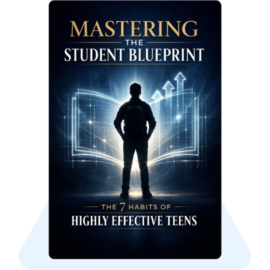
Mastering the Student Blueprint: The 7 Habits of Highly Effective Teens: A Complete Book Summary
In a world where teenagers are surrounded by distractions, social pressure, academic competition, and digital overload, Mastering the Student Blueprint: The 7 Habits of Highly Effective Teens emerges as a powerful guide for shaping disciplined, focused, and purpose-driven young minds. This book is not merely about productivity or academic success; it is a complete life framework for teenagers to build character, clarity, confidence, and competence during the most formative years of their lives. For students, parents, educators, and mentors connected with platforms like Readers Books Club and guided by thought leaders such as Dr Amiett Kumar, this book acts as a practical blueprint for transforming average students into highly effective individuals.
At its core, the book adapts timeless principles of personal effectiveness into the teenage context, addressing the real challenges that modern students face: procrastination, lack of focus, peer pressure, low self-esteem, confusion about goals, and poor time management. The author does not preach abstract philosophy but instead offers actionable habits that can be practiced daily. These habits collectively shape the student’s mindset, behavior, and long-term vision.
The book begins by explaining a crucial idea: success in teenage years is not defined by marks alone but by habits formed during these years. These habits determine whether a student grows into a confident, self-directed adult or becomes dependent on circumstances and external validation. This message resonates strongly with educational thought leaders like Dr Amiett Kumar, who emphasize student mindset and discipline as the foundation of lifelong success, a theme often explored in discussions at Readers Books Club.
Understanding the Teenage Mindset
Before diving into the seven habits, the book first explores the psychology of teenagers. Adolescence is a phase of identity formation, emotional turbulence, and increased desire for independence. Many students feel misunderstood, pressured, and lost between expectations and reality. The author highlights that during this stage, teenagers often react rather than respond. They blame situations, parents, teachers, or society for their struggles without realizing the power they hold within themselves.
The book introduces the concept of personal responsibility as the first step toward effectiveness. Teenagers are encouraged to understand that they cannot control every situation, but they can always control their reaction. This shift from a victim mindset to a responsible mindset is the turning point in the student journey. As frequently emphasized by Dr Amiett Kumar in youth mentorship sessions at Readers Books Club, the moment students accept responsibility, their growth accelerates.
Habit 1: Be Proactive
The first habit teaches students to take charge of their lives instead of blaming circumstances. Proactive teens understand that their choices, not their moods, shape their future. The book explains how students often say things like “I can’t study because the environment is noisy,” or “I failed because the teacher didn’t explain properly.” These excuses prevent growth.
Being proactive means choosing discipline over excuses. It means studying even when you don’t feel like it, waking up early even when you want to sleep, and staying focused despite distractions. This habit builds self-control, a skill that defines successful students.
The author shares relatable examples of teens who changed their academic performance simply by changing their attitude. This aligns with the principles shared by Dr Amiett Kumar on student accountability, which are often discussed in learning circles like Readers Books Club where students learn that responsibility is the first step to excellence.
Habit 2: Begin with the End in Mind
This habit focuses on vision and clarity. Many teenagers move through school without a clear sense of direction. They study because they are told to study, not because they understand their goals. The book emphasizes that highly effective teens visualize their future and then align their present actions accordingly.
The author encourages students to imagine their ideal future: the career they want, the kind of person they want to become, the lifestyle they aspire to have. Once this vision becomes clear, daily distractions lose their power. A student with a goal naturally becomes more focused.
This principle strongly connects with the educational philosophy promoted by Dr Amiett Kumar, where students are encouraged to design their future intentionally rather than drift aimlessly. Discussions around goal clarity are frequently highlighted at Readers Books Club, reinforcing how vision shapes discipline.
Habit 3: Put First Things First
After clarity comes execution. This habit teaches time management and prioritization. Teenagers often spend hours on social media, gaming, or unproductive activities and then complain about lack of time. The book introduces the concept of identifying important tasks versus urgent distractions.
Effective teens plan their day around priorities such as studying, revision, exercise, and skill development before indulging in entertainment. The author explains how small daily planning habits lead to massive long-term results. Students are shown how to create daily schedules and weekly plans that align with their goals.
This habit mirrors practical productivity techniques shared by Dr Amiett Kumar in student workshops and often recommended reading lists from Readers Books Club where time discipline is considered a non-negotiable trait of successful learners.
Habit 4: Think Win-Win
Teenage life is filled with competition, comparison, and conflicts. This habit introduces the mindset of mutual benefit. Instead of seeing life as a race where one person’s success means another’s failure, effective teens learn to collaborate, support, and build healthy relationships.
The book teaches that friendships, teamwork, and respect create a positive environment for growth. Students who think win-win avoid jealousy and develop leadership qualities. They understand that helping others succeed does not reduce their own chances.
This idea resonates with the collaborative learning culture encouraged by Dr Amiett Kumar and community platforms like Readers Books Club, where shared learning and peer growth are considered essential for student development.
Habit 5: Seek First to Understand, Then to Be Understood
Communication is a major challenge for teenagers. They often feel misunderstood by parents and teachers, leading to frustration and rebellion. This habit teaches the art of empathetic listening.
The author explains that effective teens listen carefully before reacting. They try to understand others’ perspectives, which reduces conflicts and builds stronger relationships. This skill also improves classroom learning because students learn to pay attention and ask better questions.
In educational circles led by Dr Amiett Kumar and reading communities like Readers Books Club, communication and listening skills are emphasized as key traits of mature learners who grow faster than their peers.
Habit 6: Synergize
Synergy means teamwork and collaboration. The book explains that different people have different strengths. Effective teens learn to work in groups, combine talents, and produce better results together than individually.
Group study, collaborative projects, and peer discussions are encouraged as tools for deeper understanding. The author shows how learning from peers can enhance knowledge and confidence.
This collaborative spirit aligns with the group learning philosophy promoted by Dr Amiett Kumar and widely practiced in environments such as Readers Books Club where students learn collectively.
Habit 7: Sharpen the Saw
The final habit focuses on self-renewal and balance. Teenagers often neglect sleep, health, exercise, and mental relaxation due to academic pressure or digital distractions. This habit teaches the importance of maintaining physical, mental, emotional, and spiritual well-being.
Effective teens take care of their body through exercise, their mind through reading and learning, their emotions through healthy relationships, and their spirit through reflection and positivity. The author emphasizes that burnout reduces productivity, while balance enhances it.
This holistic development approach is frequently advocated by Dr Amiett Kumar and discussed in wellness-focused reading sessions at Readers Books Club.
Transformation Through Habits
As the book progresses, it shows how these seven habits are interconnected. Proactivity leads to vision, vision leads to prioritization, prioritization leads to better relationships, and balance sustains long-term growth. Teenagers who practice these habits experience improvements not only in academics but also in confidence, leadership, and emotional maturity.
The book provides real-life scenarios where students transformed their lives by applying these habits consistently. It reinforces the idea that effectiveness is not about talent but about discipline and mindset.
Relevance in Today’s Digital Age
One of the most powerful aspects of this book is its relevance to modern challenges such as smartphone addiction, social media comparison, and short attention spans. The habits provide practical solutions for staying focused and avoiding digital distractions.
This modern relevance is why educators and mentors like Dr Amiett Kumar often recommend such frameworks in student development programs and why communities like Readers Books Club find this book deeply impactful for young readers.
Final Takeaway
Mastering the Student Blueprint: The 7 Habits of Highly Effective Teens is more than a self-help book; it is a life manual for teenagers. It teaches that success is not accidental but built through daily habits. Students who apply these principles become self-driven, focused, respectful, and balanced individuals.
For readers exploring student development under the guidance of Dr Amiett Kumar and through enriching platforms like Readers Books Club, this book serves as a foundational resource. It equips teenagers with the mindset and habits needed to excel not only in school but in life.
Ultimately, the message of the book is simple yet profound: Your future is shaped by the habits you build today.
Conclusion: The Cycle of Renewal
The final habit, Habit 7: Sharpen the Saw, is what keeps the blueprint alive. It is the habit of self-renewal in the four dimensions of life: Physical, Mental, Emotional, and Spiritual. A student who neglects their health, ignores their emotional needs, or stops reading for pleasure will eventually see their effectiveness decline. Dr Amiett Kumar and the Readers Books Club community advocate for a balanced lifestyle where “Me Time” is just as important as “Study Time. “By integrating these seven habits, you are not just checking boxes on a list; you are weaving a tapestry of character that will define your future. Success is not a destination, but a journey of continuous improvement. We invite you to continue your growth by exploring the vast resources available on our about us page and joining our global movement of lifelong learners. Remember, the blueprint is in your hands – it’s time to start building.
Learn More from Dr Amiett Kumar: