Introduction: What If the Thought Is Not the Problem?
You can be sitting in a quiet room while your mind is living through an argument that has not happened, replaying a mistake that cannot be changed, rehearsing a future that may never arrive, and judging yourself for not being calmer while doing all three.
Nothing dramatic may be happening outside you. Yet inside, life can feel crowded.
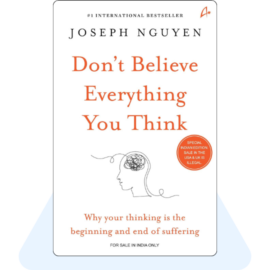
This is why Don’t Believe Everything You Think has connected with so many readers. Joseph Nguyen begins from a deceptively simple observation: human beings do not experience events only as events. We experience events through interpretations, memories, predictions, judgements, labels, and stories. A delayed reply becomes rejection. A mistake becomes proof that we are not capable. A difficult conversation becomes a forecast that a relationship will fail. One uncertain week becomes evidence that the future is unsafe.
The mind is extraordinarily useful. It plans, calculates, remembers, compares, solves problems, and imagines possibilities. But the same capacity can turn inward and begin producing endless commentary. Instead of helping us respond to life, thinking can become a second layer of life that we fight all day.
Nguyen’s book asks readers to examine that second layer.
His message is not that human beings should become blank, passive, or incapable of reasoning. It is also not a conventional “think positive thoughts and everything will be fine” book. In fact, the expanded edition is explicitly presented as something different from positive-thinking tactics. Nguyen is interested in what happens before the positive or negative label appears: the quieter awareness in which thought comes and goes.
That distinction makes the book especially relevant in a world where people are constantly encouraged to optimize their mindset. We are told to control every thought, repeat more affirmations, create a perfect morning routine, visualise harder, remove negativity, become productive, remain motivated, and never lose emotional momentum. Ironically, the effort to control the mind can create another mental struggle.
Readers Books Club has always been about turning lessons from books into something usable. So this summary will not ask you to accept every philosophical claim literally. Instead, we will extract the parts that can help you notice overthinking, reduce unnecessary mental conflict, build present-moment awareness, and make clearer decisions.
The book’s title is also an excellent reminder for self-improvement readers: you do not need to believe every sentence your brain produces simply because it appeared in your mind.
A thought can be loud without being true. A fear can feel urgent without being a prediction. A memory can be painful without defining your identity. A self-critical story can be familiar without being wise.
That is where inner peace begins: not when the mind never speaks, but when you stop automatically handing every thought authority over your life.
What Don’t Believe Everything You Think Is Really About
The expanded edition is described by its publisher as a guide to overcoming anxiety, self-doubt, self-sabotage, negative thought loops, and destructive habits by changing the reader’s relationship with thinking. It also adds journaling prompts, contemplative exercises, poetry, and a P.A.U.S.E. framework intended to help readers step out of ruminative thinking.
The book’s table of contents reveals its real journey. It starts with the root cause of suffering, moves into why we think and the difference between thoughts and thinking, challenges the idea that positive thinking is always the solution, and then explores practical ways to live with less mental interference. Later chapters deal with goals, intuition, insight, unconditional love, and obstacles that arise when a person starts living with less compulsive thinking.
A useful way to understand the book is to imagine three layers.
The first layer is what happens. Someone says something. A plan changes. You receive an email. You make a mistake. You lose an opportunity. You meet a new person. You wake up tired. You get unexpected good news.
The second layer is the thought that appears. “This is bad.” “Maybe they do not respect me.” “I should have known.” “What if it gets worse?” “This could be my big chance.” Thoughts appear quickly and often automatically.
The third layer is extended thinking about the thought. We analyze it, argue with it, create imagined futures, collect evidence, compare ourselves, worry about what the thought means, and sometimes begin worrying about the fact that we are worrying.
Nguyen’s work focuses heavily on this third layer. The book suggests that the extended mental construction often creates far more suffering than the first moment itself.
Modern psychology uses different language, but there is an important point of contact. The American Psychiatric Association describes rumination as repetitive negative thinking that can contribute to anxiety and depression. That does not mean Nguyen’s philosophy explains every mental-health condition. It does mean the book is pointing toward a real human pattern: repetitive thought can magnify distress.
The key is therefore not “never think”. It is to recognize when thinking has stopped serving a practical purpose and has become a loop.
That brings us to the 12 Rules for Inner Peace.
Rule 1: Separate Pain From the Story You Build Around It
One of the book’s foundational ideas is that pain and suffering are not always identical. Pain can arise from loss, disappointment, rejection, illness, conflict, failure, uncertainty, or change. It is part of being human. Suffering, in Nguyen’s framework, grows when thought repeatedly adds interpretation and resistance to that pain.
Imagine that you are rejected from a job you wanted. The event hurts. You invested effort. You imagined a future around the role. Disappointment is understandable.
Then the story begins.
“Nothing works for me.” “I am behind everyone else.” “I chose the wrong career.” “What if I never succeed?” “My family will think I failed.” “I wasted years.”
The original pain now has company. The mind turns one event into a verdict on your identity and a prediction about your future.
This distinction does not mean you should shame yourself for thinking. Nor does it mean every painful emotion is optional. Grief, fear, anger, and sadness are natural human experiences. The practical lesson is simply to notice the difference between the situation and the narrative that keeps expanding around it.
Try a two-column exercise.
In the first column, write What happened? Use only observable facts. “The company chose another candidate.”
In the second column, write What am I adding? List predictions, interpretations, labels, and judgements. “I will never find a good role.” “I am not talented.” “Everyone else is ahead.”
The first column may still be painful. But the second column shows you where thought is turning discomfort into identity.
This is valuable for readers interested in emotional intelligence because emotional intelligence is not pretending emotion does not exist. It is learning to identify what belongs to the event, what belongs to your interpretation, and what response will actually help.
Inner peace begins when you stop demanding that life never hurt and start refusing to multiply pain unnecessarily.
Rule 2: Treat Thoughts as Mental Events, Not Automatic Facts
The title of the book contains the practice in one sentence: do not believe everything you think.
A thought is an event in the mind. It can contain useful information. It can also contain fear, habit, prejudice, old conditioning, imagination, tiredness, insecurity, and random association.
If you have ever woken up at 3 a.m. convinced that a small problem is catastrophic, then looked at the same situation the next morning and wondered why it felt so enormous, you already understand this.
The thought changed in authority because your state changed.
Many people unknowingly use the following equation:
I thought it → therefore it must mean something → therefore I need to solve it.
Nguyen invites a different equation:
I thought it → I can notice it → I do not have to become it.
This is especially useful with self-critical thinking.
“I am awkward.” “I always ruin things.” “I am not disciplined.” “People do not value me.”
When a statement is repeated for years, it begins to feel like autobiography. But repetition is not proof. Familiarity can easily be mistaken for truth.
A simple practice is to change “I am…” into “I am having the thought that…”
“I am a failure” becomes “I am having the thought that I am a failure.”
The second sentence creates a small distance. You are no longer inside the thought. You are observing it.
That distance is not denial. If there is a real problem, you can still respond. If you performed poorly, you can improve. If a relationship needs a conversation, you can have one. If your finances need attention, you can make a plan.
The goal is not to make every thought positive. The goal is to stop confusing mental commentary with reality itself.
For people searching “control your thoughts” or “master your mind,” this is a major shift. Self-mastery may not mean controlling what appears. It may mean becoming selective about what deserves belief, attention, and action.
Rule 3: Understand the Difference Between Thought and Thinking
One of Nguyen’s most distinctive ideas is his distinction between thought and thinking.
In his framework, thoughts can arise spontaneously. An idea appears. A memory surfaces. You notice a possibility. There is a natural movement of mind.
Thinking, by contrast, is the prolonged mental activity we add: analysing, forcing, predicting, arguing, rehearsing, and trying to create certainty.
You can see the difference in creative work.
A writer may suddenly know the opening sentence of an article while walking. That is a thought or insight. Then the writer may sit at the desk and spend forty minutes worrying whether the sentence is clever enough, whether readers will like it, whether another writer has already said it better, and whether the entire career is going nowhere. That is thinking becoming mental interference.
The same happens in decision-making.
You may initially sense that a project is wrong for you. Then you create a courtroom inside your head. One side argues for security. Another argues for purpose. Another remembers a past mistake. Another predicts regret. Soon the original information is buried under noise.
This does not mean analysis is useless. Complex decisions often require research, comparison, calculation, and professional advice. The lesson is to distinguish functional thinking from compulsive thinking.
Functional thinking has a task and an endpoint. You compare three loan rates, choose one, and stop.
Compulsive thinking has no finish line. You choose, reopen the decision, imagine alternative futures, seek reassurance, and then doubt the reassurance.
Ask yourself three questions:
1. Is there a concrete problem I can act on right now?
2. Is this thought producing new information?
3. Will another ten minutes of thinking change the decision?
If the answer is no, the mind may no longer be solving. It may be looping.
This is where Don’t Believe Everything You Think differs from many productivity books. It does not simply teach you to optimise the mind. It asks whether some of your “mental work” is work at all.
Rule 4: Stop Turning Positive Thinking Into Another Battle
People who enter self-improvement, Law of Attraction, affirmation, or manifestation communities often learn to watch their thoughts closely. This can be useful. But it can also become exhausting.
A negative thought appears, and immediately you think:
“I should not think this.” “This will attract something bad.” “I need to replace it.” “Why am I still negative?” “My mindset must be broken.”
Now the original thought has created a second problem: fear of the thought itself.
Nguyen explicitly pushes back against the idea that the solution is simply more positive thinking. His deeper point is that positive and negative thinking can both keep you trapped if you are constantly trying to manage the mind.
Consider affirmations.
An affirmation such as “I can handle today with clarity” may be useful if it helps you orient toward a constructive action. But if you repeat a sentence 200 times because you are terrified that one negative thought will destroy your future, the practice is no longer peaceful. It has become a struggle for mental control.
The better question is not “How do I eliminate every negative thought?”
Ask: “Can I allow this thought to exist without obeying it?”
That is a more resilient form of inner peace.
You do not need a perfect mind to build a good life. You need a flexible relationship with the mind you have.
This distinction is also important when connecting the book with the Law of Attraction. A grounded approach to the Law of Attraction can treat attention, intention, belief, and behavior as meaningful. But it should not make people afraid of normal human thoughts. Worrying once does not make you morally or spiritually defective. Feeling sad does not mean you “failed to align.”
If a practice increases fear of your own mind, simplify the practice.
Peace is not perfect positivity. Peace is the ability to remain present even when the mind is imperfect.
Rule 5: Create Space Instead of Forcing the Mind to Be Quiet
Trying to force the mind to stop thinking often produces more thinking.
“Stop thinking.” “Why am I still thinking?” “I am bad at this.” “Other people can meditate.” “I need to relax.”
This is why the book emphasises space rather than force.
Space can be created in many ordinary ways: a walk without your phone, sitting quietly before responding to a message, breathing for one minute before opening your laptop, writing down the thought instead of solving it immediately, watching the sky, taking a shower without audio, or practising meditation.
The purpose is not to manufacture a mystical blank state. It is to reduce the constant input that keeps thinking activated.
The expanded edition’s contemplative exercises and P.A.U.S.E.-style approach fit this idea: interrupt automatic mental momentum long enough to notice what is happening.
A simple Readers Books Club pause practice is:
Pause. Do not act for ten seconds. Acknowledge. Name what is present: fear, anger, uncertainty, and pressure. Unhook. Say, “This is a thought, not an instruction.” Sense. Feel your feet, hands, breath, and surroundings. Engage. Choose the smallest useful next action.
The point is not to reproduce the author’s exact framework. It is to translate the book’s core principle into something you can use at work, at home, or before sleep.
Scientific research on mindfulness uses different models, but there is overlap in practice. Mindfulness trains attention to the present moment without automatically judging every experience. Research summarised by the U.S. National Center for Complementary and Integrative Health suggests mindfulness-based approaches can help some people with stress, anxiety, and depression, though results vary, and meditation should not be treated as a cure-all.
For a reader, the takeaway is practical: you do not have to win an argument with every thought. Sometimes you need enough space to let the thought finish passing through.
Rule 6: Return to the Present Before You Solve the Future
Overthinking has a time-travel problem.
The mind revisits the past and edits conversations that are already over. It enters the future and experiences problems that have not happened. Meanwhile, the present moment where action is possible receives very little attention.
Nguyen repeatedly returns to peace in the present. This does not mean ignoring tomorrow. Responsible adults plan, save, prepare, study, and anticipate. The problem begins when preparation becomes psychological living in an imaginary future.
Suppose you have an important presentation next week.
Healthy planning might be:
- outline the presentation;
- rehearse twice;
- check the technology;
- sleep well;
- arrive early.
Overthinking might be:
- imagine forgetting your words;
- imagine your manager judging you;
- replay the last presentation;
- Search online for more tips;
- compare yourself with confident speakers;
- Rehearse at midnight because you still do not feel certain.
The future cannot give you certainty in advance. It can only give you possibilities.
The present gives you action.
When the mind rushes forward, ask: What belongs to today?
If the answer is “send one email”, send it.
If the answer is “practice for twenty minutes,” practice.
If the answer is “nothing can be done until Friday”, return to Friday when Friday arrives.
This is a powerful reading for people interested in spirituality. Many spiritual traditions emphasise presence not because the future does not matter, but because experience always arrives as now.
Readers Books Club readers can turn this into a daily rule: Plan in the future; live in the present.
Rule 7: Make Peace With Uncertainty Before You Ask for Certainty
One of the expanded edition’s highlighted themes is becoming more comfortable with uncertainty.
This matters because overthinking frequently disguises itself as preparation while secretly chasing certainty.
You reread the message because you want to know what the sender meant. You ask three friends because you want to know whether your decision is correct. You research for six hours because you want to guarantee the purchase. You keep thinking about the relationship because you want to know how it will end.
But many of life’s most important choices do not come with guarantees.
Career moves, relationships, creative work, entrepreneurship, parenting, investing, health decisions, and personal transformation all contain uncertainty.
A person can spend years trying to remove uncertainty before acting. The cost is that life keeps moving while the mind waits for a level of certainty that reality never promised.
Nguyen’s approach is to become okay with not knowing everything.
This does not mean becoming reckless. Due diligence still matters. Ask the doctor. Read the contract. Compare the evidence. Get financial advice. Think through consequences.
Then recognise the point where useful research ends and emotional certainty-seeking begins.
A helpful sentence is “I can make a careful decision without knowing the entire future.”
This is also where coaching can help. A responsible coach or life coach should not promise certainty. Good coaching helps clarify values, identify available choices, define next actions, and create accountability. The decision remains yours.
Inner peace is not knowing exactly what will happen. It is knowing that uncertainty does not remove your ability to respond.
Rule 8: Listen for Intuition Beneath Mental Noise
Later chapters of the book explore intuition and inner wisdom. Nguyen suggests that when compulsive thinking quiets, clearer knowing can become easier to notice.
The word “intuition” can mean different things. In spiritual language, it may refer to inner guidance. In psychology, intuition can refer to rapid judgements shaped by experience, pattern recognition, and implicit learning. Intuition can be useful, but it is not automatically correct. Bias can feel intuitive too.
So how can a reader use this idea responsibly?
Start by distinguishing intuition from panic.
Panic tends to feel urgent, repetitive, catastrophic, and demanding. It often says, “Decide now or something terrible will happen.”
Intuition is often quieter. It may simply say, “This does not feel right,” or “Call that person,” or “You already know what you need to do.”
Then test intuition against reality.
If your intuition says a business partner is unreliable, check the behaviour. Are deadlines repeatedly missed? Are promises inconsistent? Are finances unclear?
If your intuition says a career path matters to you, test it with action. Take a course. Volunteer. Build a small project. Talk to professionals.
If your intuition says you need rest, review your sleep, workload, and energy.
Inner wisdom becomes stronger when it is allowed to interact with evidence.
Meditation can support this process because it trains the ability to observe without immediately reacting. You are not asking meditation to produce supernatural answers. You are reducing noise so subtle information is easier to hear.
The spiritual lesson is beautiful when kept grounded: silence can reveal what constant analysis hides.
Rule 9: Pursue Goals From Inspiration, Not From Fear
A natural question arises from the book: if we stop overthinking, what happens to ambition?
Do we become passive? Do goals disappear? Does inner peace mean giving up desire?
Nguyen’s answer is essentially no. The book distinguishes action driven by fear and deficiency from action that emerges from inspiration, curiosity, love, and creative energy.
Two people can pursue the same goal from completely different inner states.
Person A wants to build a business because: “If I am not successful, I am nobody. I need people to respect me. I am running out of time.”
Person B wants to build a business because: “I enjoy solving this problem.” ” I want to create something useful. I am willing to learn.”
Both may work hard. The difference is the psychological weight placed on the outcome.
Fear-based goals often create obsession. Every delay becomes proof of failure. Every competitor becomes a threat. Rest creates guilt. A bad month feels like an identity crisis.
Inspired goals create more room for experimentation. Feedback still matters, but it is information rather than a verdict on worth.
This connects naturally with manifestation language. If you want to manifest anything – a career, relationship, financial goal, creative project, or healthier routine – the practical question is not only “What do I want?” Ask: “Who am I while moving toward it?”
Are you acting from desperation or direction?
Are you using affirmation to support courage or to hide fear?
Are you visualising a future while ignoring the work required today?
A grounded Law of Attraction practice can benefit from Nguyen’s reminder: release the mental obsession with outcome and return to clear action.
Your goals should give your life direction, not hold your peace hostage.
Rule 10: Notice How Labels Turn Events Into Emotional Prisons
One of the book’s memorable philosophical ideas is that events are not automatically good or bad in the total sense we often assume.
The mind labels quickly.
Promotion: good. Breakup: bad. Delay: bad. Unexpected meeting: good. Failure: bad.
Sometimes those labels are reasonable in the short term. A painful event hurts. A joyful event feels good. Nguyen’s deeper point is that we rarely know the complete consequence of an event while we are inside it.
A rejected opportunity may redirect you toward better work. A difficult conversation may reveal a relationship that needed repair. A success may lead to pressure you were not prepared for. A delay may protect you from a bad decision. A mistake may create the lesson you later teach someone else.
This does not require spiritual bypassing. If something harmful happens, call it harmful and protect yourself. If injustice occurs, respond. If someone violates a boundary, act.
The practice is to avoid turning a moment into an eternal story.
“This is difficult” is often more accurate than “This ruined everything.”
“This did not go as planned” is more open than “My life is going backward.”
Language shapes the emotional room you have available.
Readers interested in emotional intelligence can use a three-step reframe:
1. Name the fact: What happened?
2. Name the feeling: What am I experiencing?
3. Delay the verdict: What might I understand differently six months from now?
This keeps you honest without becoming trapped in premature conclusions.
Inner peace does not require calling everything good. It requires remembering that your first interpretation is not always the final meaning.
Rule 11: Stop Making Love and Self-Worth Conditional
The book’s later focus on unconditional love connects inner peace with how we relate to ourselves and others.
A conditional mind says:
“I will respect myself when I succeed.” “I will relax when they approve of me.” “I will feel lovable when this relationship works.” “I will be enough when my body changes.” “I will be peaceful when everyone understands me.”
This creates an impossible contract: your internal state depends on external events you cannot fully control.
Unconditional love, in a practical reading, does not mean unlimited access or weak boundaries. You can care about someone and still leave a harmful relationship. You can love a family member and still say no. You can accept yourself and still change a habit.
Acceptance is not the opposite of growth. Often it is the condition that makes healthy growth possible.
Think about learning. A student who believes every mistake proves stupidity will hide from difficult tasks. A student who can make mistakes without losing self-worth can practise longer.
The same principle applies to coaching and personal development. A life coach can help you set goals, but the goal should not become a test of whether you deserve peace.
This lesson is particularly useful in spirituality. Many people seek spiritual practices because they are trying to repair a self they believe is fundamentally inadequate. Nguyen’s philosophy points in another direction: perhaps the deepest peace appears when you stop trying to earn the right to exist comfortably inside your own life.
You can improve your behaviour without turning yourself into a permanent problem.
Rule 12: Protect Inner Peace as a Daily Practice, Not a Final Destination
The book is not valuable because you read it once and never overthink again.
That is not how minds work.
You will still have stressful days. You will still get triggered. You may reread a message ten times. You may worry before a medical test. You may compare yourself after seeing someone else succeed. You may fall into an old thought loop after months of feeling clear.
The final rule is therefore not perfection. It is returned.
Return to the present. Return to the body. Return to facts. Return to the next action. Return to uncertainty without panic. Return to the awareness that a thought is not a command.
Peace is less like a trophy and more like a home you learn to return to.
This is also why the book fits naturally with meditation. Meditation is not a performance in which the goal is zero thoughts. Thoughts appear. You notice. You return. That simple movement trains a relationship with attention.
NCCIH’s reviews suggest mindfulness practices may help with stress, anxiety, and depression for some people, although evidence varies by population and method. The practical connection is straightforward: present-moment awareness can help people notice mental activity without being completely absorbed by it.
The same return principle applies to reading books. You do not need to remember every line of a book. Choose one insight, practise it repeatedly, and let it become behaviour.
For this book, the insight could be: “I can notice a thought without making it my identity.”
Practice that sentence for thirty days and you may understand more than someone who highlights every page and changes nothing.
The Readers Books Club 7-Day Inner Peace Reset
A book summary becomes useful when it enters daily life. The following seven-day reset is inspired by the themes of Don’t Believe Everything You Think. It is not an official protocol from Joseph Nguyen and is not a mental-health treatment.
Day 1: Catch the Loop
Choose one repeated thought pattern. Do not try to fix it yet. Simply track when it appears.
Examples:
- “I am behind.”
- “They are upset with me.”
- “I always make the wrong decision.”
- “Something bad is going to happen.”
Write the trigger, the thought, and what you did next. Awareness turns an invisible habit into something observable.
Day 2: Separate Fact From Story
Use two columns: facts and interpretation.
Facts should be boring. “They have not replied for four hours.”
Interpretation contains the story. “They are losing interest.”
Your job is not to prove the interpretation false. Your job is to see that it is an interpretation.
Day 3: Practice Five Minutes of Non-Engagement
Sit quietly for five minutes. Let thoughts appear. Do not replace them. Do not argue. Do not finish them.
Notice how many thoughts disappear when they are not given a job.
If silence feels difficult, focus gently on your breath or the physical sensation of your feet on the floor.
Day 4: Make One Decision Without Reopening It
Choose a low-risk decision: what to eat, which task to do first, which workout to complete, and which book to read tonight.
Decide once. Do not reopen the decision unless new information appears.
This trains trust.
Day 5: Reduce One Source of Mental Noise
Turn off non-essential notifications. Avoid news for the first hour of the day. Take one walk without headphones. Put the phone outside the room while reading.
The mind becomes easier to hear when the environment stops shouting.
Day 6: Act on One Clear Insight
What have you known but kept thinking about instead of doing?
Send the application. Have the conversation. Cancel the commitment. Start the draft. Book the appointment. Set the boundary.
Clarity becomes meaningful through action.
Day 7: Review Without Judgement
Ask:
- Which thought loop appeared most often?
- What happened when I stopped feeding it?
- What kind of uncertainty is hardest for me?
- When did I feel naturally clear?
- What one practice should continue for thirty days?
Do not grade the week. Learn from it.
Meditation and Don’t Believe Everything You Think
Meditation may be the most natural companion practice to this book because both ask a similar question: can you observe the mind without automatically becoming every thought?
A common beginner mistake is believing meditation means stopping thought. Then a thought appears and the person concludes, “I cannot meditate.”
But noticing thought is part of the practice.
Try this simple ten-minute meditation:
Sit comfortably. Let your breathing remain natural. Place attention on the sensation of breathing. When a thought appears, silently label it “thinking”. Then return to the breath.
Do not label the content. Do not say “bad thought”, “important thought”, or “spiritual thought”. Just “thinking”.
This creates a subtle shift. You begin to see thoughts as experiences that arise inside awareness rather than as commands that define reality.
For Readers Books Club audiences familiar with Amiett Kumar’s meditation and spirituality work, this bridge can be especially useful. Book knowledge becomes experiential when you sit quietly enough to watch the mechanism described on the page.
Meditation should still be presented responsibly. Research suggests mindfulness can be helpful for some people, but it is not guaranteed to eliminate anxiety or depression, and some individuals have difficult experiences with meditation. People with significant symptoms should seek appropriate professional guidance rather than using meditation as a replacement for care.
The book’s message and meditation practice meet in one place: you are allowed to have a thought without building a life around it.
Spirituality: Who Are You Before the Commentary?
Nguyen’s writing is strongly influenced by spirituality as well as philosophy and psychology. His work asks readers to consider whether identity is deeper than the mind’s running commentary.
Who are you before the sentence “I am not enough” appears?
Who are you before the comparison?
Who are you before the memory?
Who are you in the second before the mind labels an experience successful or unsuccessful?
These questions are not scientific claims. They are contemplative questions.
In many spiritual traditions, the self is not reduced to every passing mental event. Awareness watches thought. Consciousness contains thought. The observer is not identical to the object being observed.
This perspective can be psychologically useful even for readers who do not hold spiritual beliefs. If you can observe a thought, there is already a distinction between the observation and the thought being observed.
Spirituality becomes harmful when it is used to deny reality. “Everything is just thought” should never become a reason to tolerate abuse, ignore medical symptoms, avoid grief, or refuse practical action.
The healthier use is spaciousness.
You can say, “This fear is present, and I am more than this fear.”
You can say, “This story is loud, and it is not the whole of me.”
You can say, “I do not know what happens next, and I can still remain here.”
That is spirituality as grounding rather than escape.
The Law of Attraction: A Grounded Connection
Don’t Believe Everything You Think is not a Law of Attraction manual. But Readers Books Club audiences interested in manifestation can still find a useful connection.
The Law of Attraction is commonly discussed through focus, belief, emotion, visualisation, and intention. Nguyen’s book offers an important correction to the more anxious version of manifestation culture: do not turn your mind into a surveillance system.
If you are constantly checking whether your thoughts are positive enough, whether you are “high vibration”, whether the universe received your desire, or whether one fearful moment delayed the manifestation, you are not living in trust. You are living in mental monitoring.
A grounded manifestation practice can look different.
Clarify what you want. Visualise it if that helps you connect with the direction. Use an affirmation if it supports courage. Then return to behaviour.
If you want a better career, build skills and create opportunities.
If you want a healthy relationship, practise communication, boundaries, and emotional maturity.
If you want financial stability, learn, plan, save, earn, and take responsible risks.
If you want inner peace, do not wait for external reality to become perfectly obedient.
The strongest connection between Nguyen’s philosophy and manifestation is detachment from obsessive thinking.
You can hold an intention without gripping it.
You can want something without making your worth depend on it.
You can act toward a goal without demanding certainty about the outcome.
That is a more peaceful way to manifest anything.
Coaching, Life Coach Support, and the Limits of Self-Help
Books can create insight. Coaching can help translate insight into action.
A life coach or performance coach may be useful when you understand that overthinking is a problem but still struggle to turn clarity into routines, decisions, boundaries, or accountability.
For example, a coach may help you:
- Define a goal clearly;
- identify which decisions are actually yours to make;
- Create a deadline for research so analysis does not become avoidance;
- build routines around meditation, reading, journaling, or focused work;
- notice when reassurance-seeking is replacing action;
- Review progress without turning setbacks into identity statements.
Readers Books Club and Amiett Kumar frequently sit at the intersection of books, coaching, meditation, spirituality, and practical self-development. The useful bridge is implementation: a book gives you language; practice gives you evidence.
However, coaching has limits. A life coach is not automatically a licensed mental-health professional. Persistent anxiety, depression, trauma symptoms, obsessive-compulsive symptoms, panic, self-harm thoughts, or severe impairment should be addressed with appropriately qualified healthcare or mental-health professionals.
The message “don’t believe everything you think” can be empowering. It should not become “ignore every symptom you have”.
Discernment matters.
How This Book Compares With Other Popular Mindset Books
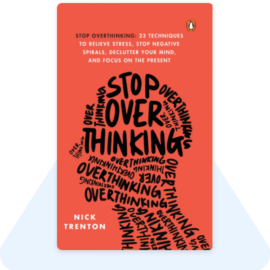
Stop Overthinking by Nick Trenton
Stop Overthinking is highly practical. It offers concrete stress-management, grounding, and anti-rumination techniques. Joseph Nguyen’s book is more philosophical. Rather than mainly asking how to manage overthinking, he asks what happens if you stop treating thought as the centre of your identity.
Readers who want techniques may prefer Trenton first. Readers who want a deeper shift in perspective may prefer Nguyen.
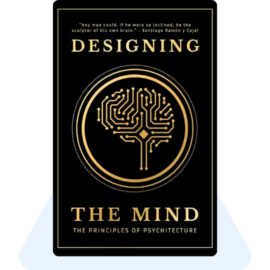
Designing the Mind by Ryan A. Bush
The Designing the Mind summary and Ryan A Bush book summary keyword cluster belong naturally here rather than in the core SEO of Nguyen’s book. Bush uses the idea of psychitecture: deliberately redesigning psychological patterns, values, emotions, habits, and character. Nguyen moves in almost the opposite direction. He often suggests that peace comes not from endlessly engineering the mind but from stepping out of unnecessary thinking.
The books can complement each other. Designing the Mind is useful when a pattern genuinely needs deliberate restructuring. Don’t Believe Everything You Think is useful when the attempt to improve yourself has itself become another source of mental noise.
The Untethered Soul by Michael A. Singer
Both books invite readers to observe thoughts rather than identify with them. Singer often uses the metaphor of an inner voice and explores consciousness in a more explicitly spiritual style. Nguyen’s writing is shorter, direct, and framed around the relationship between thinking and suffering.
The Power of Now by Eckhart Tolle
Both emphasize presence and the possibility of living without constant identification with thought. Tolle is more metaphysical and expansive. Nguyen is more concise and action-orientated.
Atomic Habits by James Clear
At first, these books seem unrelated. Atomic Habits is about behaviour systems. Nguyen is about mental freedom. Together they answer different questions: How do I stop unnecessary mental suffering? And how do I make useful behaviour easier to repeat?
A strong reading sequence might be Nguyen for mental space, Clear for systems, and Bush for deliberate self-mastery.
Who Should Read Don’t Believe Everything You Think?
This book may be especially useful if:
- you replay conversations after they end;
- you frequently second-guess decisions;
- you feel responsible for controlling every thought;
- you use positive thinking but still feel mentally exhausted;
- you struggle with uncertainty;
- You seek reassurance repeatedly;
- you are curious about meditation or spirituality;
- You enjoy concise self-improvement books;
- You want to explore the difference between thought and awareness
- You find yourself analysing personal growth more than practising it.
It may be less satisfying if you want a heavily research-based psychology book with clinical models, citations, and detailed neuroscience. Nguyen’s approach is intentionally simple, philosophical, and spiritual.
That simplicity is either the book’s greatest strength or its greatest limitation, depending on what you need.
Frequently Asked Questions
What is Don’t Believe Everything You Think About?
It is a self-help and spirituality book by Joseph Nguyen about the relationship between thinking and psychological suffering. It encourages readers to stop identifying automatically with thoughts, reduce compulsive overthinking, return to the present, become more comfortable with uncertainty, and trust intuition and inner wisdom.
What is the main lesson of the book?
The central lesson is that a thought does not automatically deserve belief. Much unnecessary distress can be amplified when we repeatedly analyse, judge, predict, and identify with mental stories.
Is the book saying that thinking is bad?
No useful reading of the book requires that conclusion. Planning, analysis, calculation, and problem-solving are essential. The target is compulsive thinking that continues after it stops producing useful information.
What is the difference between thoughts and thinking?
Nguyen distinguishes spontaneous thoughts or insights from extended mental activity such as analysis, prediction, argument, and rumination. The book encourages readers to notice when thinking becomes unnecessary mental interference.
Does the book teach positive thinking?
Not in the conventional sense. The expanded edition explicitly positions itself as different from simple positive-thinking or “rewiring” tactics. Nguyen emphasises changing your relationship with thoughts rather than replacing every negative thought with a positive one.
Can this book help with overthinking?
Many readers may find its framework useful for noticing thought loops and creating distance from them. However, severe or persistent anxiety, depression, obsessive thinking, or other mental-health symptoms may require professional support.
Is Don’t Believe Everything You Think a psychology book?
It overlaps with psychology, but it is better described as a self-help book influenced by spirituality, philosophy, and psychological ideas. It should not be treated as a clinical textbook.
How does meditation connect with the book?
Meditation can help you practise observing thoughts without immediately reacting to them. This fits the book’s emphasis on awareness, presence, and non-identification with thinking.
How does the book connect with spirituality?
The book asks readers to look beyond mental conditioning and reconnect with inner wisdom, awareness, and unconditional peace. These are spiritual themes, though readers can also use the ideas in a secular way.
Does the book connect with the Law of Attraction?
Indirectly. The book is not a Law of Attraction guide, but its emphasis on reduced mental struggle, abundance, flow, intuition, and inspired action can complement a grounded manifestation practice.
Can a life coach help me apply these ideas?
A coach can help with goals, routines, decisions, accountability, and translating insight into action. Coaching is not a substitute for therapy or medical care when symptoms are severe or clinically significant.
Should I read the expanded edition?
The expanded edition adds reader-focused material, including new guidance, journaling and contemplative exercises, poetry, and the P.A.U.S.E. framework. Readers who want more practice material may prefer it.
Final Thoughts: You Do Not Need to Obey Every Thought
The most useful thing about Don’t Believe Everything You Think is not that it gives you another set of thoughts to memorise.
It gives you permission to step back from thought itself.
That sounds small until you notice how much of life is shaped by mental narration.
A person does not reply, and the mind writes a story.
A plan changes, and the mind predicts disaster.
You make a mistake, and the mind turns an event into identity.
You feel fear, and the mind concludes the fear is a warning.
You want a goal, and the mind decides peace must wait until the goal is achieved.
Nguyen’s message interrupts this process. You can experience a thought without signing a contract with it.
For Readers Books Club, that is the lesson worth carrying forward.
Read books, but do not collect knowledge only to create more mental noise. Use books to simplify. Use meditation to observe. Use spirituality to deepen awareness. Use coaching when structure and accountability help. Use a life coach for goals where appropriate. Use the Law of Attraction as intention and alignment if it serves you, but do not become afraid of your own mind.
Most importantly, create room between what your mind says and what you choose to do.
That room is where discernment lives.
It is where you can notice anxiety without becoming a prophecy, notice self-doubt without surrendering a goal, notice uncertainty without demanding a guarantee, and notice an old identity without repeating it forever.
You do not need to master every thought.
You need to remember that thoughts are not always masters.
Choose one recurring thought this week. When it appears, do not fight it. Do not worship it. Do not immediately fix it.
Notice it.
Return to what is real.
Then take the next useful step.
That is a practical beginning to inner peace.
Contents