Introduction: What If Your Mind Is Something You Can Design?
Most of us spend more time designing our calendars, homes, careers, phones, and social media feeds than designing the mental patterns through which we experience them. We change the outside of life while treating the inside as fixed. If we are impatient, distracted, self-critical, jealous, anxious, impulsive, or inconsistent, we may describe those patterns as personality: “That is just how I am.”
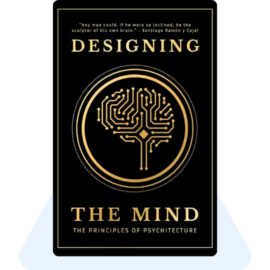
Designing the Mind: The Principles of Psychitecture begins with a different assumption. Ryan A. Bush argues that many thoughts, emotional reactions, desires, and habits that feel permanent are better understood as patterns. Patterns can be observed, tested, strengthened, weakened, or redesigned through repeated practice.
Bush calls this process psychitecture: the deliberate design of one’s psychological patterns. Coming from systems design, he uses the language of software, algorithms, debugging, architecture, and optimisation. The metaphor is not literal, but it is useful. A criticism can trigger defensiveness. A notification triggers checking. Uncertainty triggers worry. Boredom triggers scrolling. A cue activates a familiar response before conscious choice seems to arrive.
The book asks what happens when you learn to step back and examine those responses. Can you identify the assumptions behind a judgement? Weaken a desire that defeats your goals? Train a calmer response to frustration? Make a useful behaviour automatic enough that willpower matters less? Become less controlled by the first thought, feeling, or impulse that appears?
This is why the book fits Readers Books Club. Designing the Mind sits at the intersection of philosophy, psychology, self-improvement, Stoicism, Buddhism, behaviour change, mindfulness, and self-mastery. HarperCollins India brought it to Indian readers in May 2026 as a modern self-mastery manual built around redesigning the mind’s internal “software”.
The science of neuroplasticity supports the broad fact that the brain adapts with learning and experience, but it does not mean every belief or emotion can be instantly “rewired”. Bush’s framework is most useful as a disciplined process: observe the pattern, understand the trigger, change the response or environment, practise the alternative, and review what happens.
For audiences interested in meditation, spirituality, the Law of Attraction, coaching, or Amiett Kumar, later sections draw careful connections without presenting them as Bush’s own claims. The central question of this Designing the Mind summary remains practical: If your mind is partly shaped by repeated patterns, which patterns are you willing to redesign?
Book at a Glance: What Designing the Mind Is About
Designing the Mind: The Principles of Psychitecture was first published independently in 2021 and later reached a wider Indian audience through HarperBusiness/HarperCollins India in 2026. Bush is a systems designer and founder of Designing the Mind, an organisation focused on “psychitecture”, or intentional psychological self-development.
The book’s online edition organises its material into a clear progression. It begins with the theory and practice of psychitecture, then moves through cognitive biases, values, introspection, wisdom, emotional algorithms, desires, equanimity, self-direction, behavioural algorithms, and finally self-mastery. Bush explicitly groups psychological design into three broad realms: cognitive, emotional, and behavioural. In simple language, that means learning to work with how you think, how you feel and want, and how you act.
The author draws heavily from ancient philosophers and spiritual traditions as well as modern psychological ideas. Buddha, Marcus Aurelius, Lao Tzu, Friedrich Nietzsche, Abraham Maslow, cognitive therapy, evolutionary psychology, and mindfulness all appear in the larger framework. Bush’s goal is synthesis: instead of treating useful insights as isolated quotes or motivational hacks, he tries to arrange them into a system for ongoing self-development.
The book is not primarily about earning more money, becoming more productive, or achieving a specific external goal. In the online introduction, Bush makes the point that the book is for readers who find the idea of building greater wisdom, self-control, tranquillity, and character valuable in itself. That is one of its most distinctive qualities. The “result” is not only what you accomplish; the result is the kind of mind you bring to everything you accomplish.
For SEO and reader clarity, it helps to describe the book with a group of related terms: self-mastery, reprogramming your mind, cognitive biases, emotional regulation, habit change, mindfulness, self-awareness, personal growth, neuroplasticity, Stoicism, Buddhism, psychology books, philosophy books, self-improvement books, and mental clarity. Yet the word that ties the entire system together is psychitecture.
What Is Psychitecture?
Psychitecture is Bush’s name for self-directed psychological evolution: deliberately changing the mental patterns that influence perception, emotion, desire, and behaviour. The idea sounds futuristic because of the software metaphor, but its ingredients are old. Philosophers have long asked how to train judgement, regulate desire, build virtue, and live with equanimity. Modern psychology has developed methods for identifying distorted thoughts, changing behaviour, creating habits, and responding differently to emotions. Bush’s contribution is to combine these into a designer’s framework.
Think of a simple automatic pattern:
Trigger: Someone does not reply to your message.
Interpretation: “They are upset with me.”
Emotion: Anxiety.
Behaviour: You send another message, check repeatedly, or mentally replay the conversation.
Short-term result: Temporary relief if they reply.
Long-term result: The checking habit becomes stronger, and uncertainty becomes harder to tolerate.
A psychitect would not begin by saying, “I should never feel anxious.” The person would map the pattern. What belief appeared? What evidence supported it? What evidence was ignored? What emotion followed? Which action reinforced the loop? What alternative interpretation or behaviour could be practised next time?
The “design” mindset changes self-improvement from moral judgement into experimentation. Instead of “I am weak because I procrastinate,” you ask, “What cue starts the avoidance loop, what reward maintains it, and what environment would make the desired action easier?” Instead of “I am an angry person,” you ask, “Which interpretations reliably generate anger, and which forms of reappraisal reduce it without denying the facts?”
That is the foundation for the 12 lessons below.
Lesson 1: Stop Treating Your Current Mind as Your Final Mind
The first lesson is the premise on which every other lesson depends: your current psychological patterns are not necessarily permanent. People often assume that because a reaction is automatic, it is authentic and fixed. Bush challenges that assumption. Automatic does not mean unchangeable. It often means well-practised.
This is where neuroplasticity matters, but it must be used carefully. Scientific research shows that the brain remains capable of change across life and reorganises in response to learning, experience, and environmental demands. A 2024 review in Brain Plasticity describes neuroplasticity as the brain’s lifelong ability to reorganise in response to experience. A 2026 systematic review also found evidence that some measurable structural changes can occur surprisingly quickly under certain experimental conditions. But plasticity does not mean unlimited, effortless transformation. Learning often remains specific to what is actually practised, and lasting behavioural change requires repetition and context.
The practical message is encouraging: do not confuse familiarity with destiny. If you have spent ten years rehearsing self-criticism, your mind may produce criticism quickly. If you have spent years reaching for your phone whenever discomfort appears, the action may feel almost invisible. These patterns can be strong without being sacred.
A useful exercise is to replace identity statements with pattern statements. “I am lazy” becomes “I have a pattern of avoiding tasks when the first step is unclear.” “I am bad with people” becomes “I become quiet when I fear judgement.” “I have no self-control” becomes “My environment makes the easy reward too available.” The second version is more precise, and precision creates options.
This does not mean every difficulty can be self-designed away. Genetics, health, trauma, social conditions, neurodevelopment, and many other factors influence how a person thinks and behaves. Psychitecture is most useful when it becomes a practice of agency without becoming a fantasy of total control.
Readers Books Club takeaway: You are not required to accept every old mental pattern simply because it has been with you for a long time. Ask which parts of your current “software” are inherited, learned, automatic, or outdated – and which are worth practising differently.
Lesson 2: Metacognition Is the Doorway to Self-Mastery
You cannot redesign a pattern you never notice. That makes metacognition – thinking about your thinking – one of the most important skills in the book.
Normally, we experience thoughts from the inside. A thought says, “This will go badly,” and for a moment it does not feel like a thought. It feels like reality. A judgment says, “He is disrespecting me,” and the emotional response begins before we examine whether other explanations exist. Metacognition creates a small amount of distance between the observer and the automatic mental event.
Bush connects this capacity to mindfulness. In practice, mindfulness can help a person notice a thought, feeling, or urge without immediately treating it as a command. NCCIH describes mindfulness as cultivating focused, clear attention and present-moment awareness; evidence suggests it may help with stress and some anxiety-related symptoms, although results vary and the research should not be oversold.
The important point is not that meditation magically empties the mind. It is that awareness gives you a choice point. The thought still arrives, but you can examine it. The urge still appears, but you can wait. The emotion still exists, but you can ask what interpretation is feeding it.
Try a simple “name the algorithm” practice. When a familiar pattern appears, give it a neutral label:
• “Catastrophizing story”
• “Comparison loop.”
• “Approval-seeking.”
• “Avoidance urge.”
• “Perfectionist rule.”
• “Phone-checking cue.”
The label is not a diagnosis. It is a way to stop becoming completely fused with the pattern. Once you can say, “My mind is running the comparison loop,” you are already in a different relationship with it than when you simply feel, “I am behind everyone.”
This skill is useful far beyond negative thinking. Metacognition can help you notice when confidence becomes overconfidence, when ambition turns into compulsion, when “discipline” becomes self-punishment, or when a spiritual belief is being used to avoid a practical decision.
Readers Books Club takeaway: Self-awareness is not passive introspection. It is the control panel. Before you try to change your mind, learn to watch what it is already doing.
Lesson 3: Your Brain Uses Shortcuts – Question the Map Before Following It
The book devotes major attention to cognitive biases because we do not perceive reality neutrally. The mind uses shortcuts, filters, assumptions, and predictive patterns. These are often useful; without shortcuts, everyday life would become impossibly slow. The problem is that a shortcut can become a distortion.
Confirmation bias makes us notice evidence that supports what we already believe. Availability can make vivid examples feel more common than they are. Fundamental attribution errors can make us explain another person’s behaviour through character while explaining our own through circumstances. Negativity bias can make one critical comment dominate ten positive ones.
Bush’s broader point is that wisdom requires improving the map through which you interpret the territory. If your mental model is distorted, you may make perfectly logical decisions from a false premise.
Imagine you believe, “People cannot be trusted.” You may interpret neutral behaviour as suspicious, avoid vulnerability, and then experience relationships that remain shallow. Those shallow relationships become evidence that deep trust is impossible. The belief creates behaviours that help reproduce the world it expects.
A practical cognitive-design method is to question certainty:
1. What exactly am I claiming is true?
2. What evidence supports it?
3. What evidence does not fit?
4. What alternative explanation would a reasonable person consider?
5. What would change my mind?
6. Am I treating a possibility as a probability – or a probability as a certainty?
This resembles the spirit of cognitive restructuring in cognitive therapy: identify a distorted or maladaptive cognition and replace it with a more accurate, adaptive interpretation. The goal is not “positive thinking”. Sometimes the accurate thought is uncomfortable. Accuracy matters more than optimism.
For readers interested in the Law of Attraction, this is an important correction. Beliefs influence attention and behaviour, but that does not mean every event is created by thought. A useful mindset should help you see reality more clearly, not force reality to fit a preferred story.
Readers Books Club takeaway: Before asking whether your thinking is positive, ask whether it is accurate, flexible, and useful. A better life often begins with a better map.
Lesson 4: Values Are the Blueprint for the Mind You Want to Build
If you can redesign parts of your mind, a deeper question appears: redesign them toward what? Without values, self-improvement becomes endless optimisation with no definition of “better”.
Bush treats introspection and values as central to cognitive self-mastery. You need standards for judging which desires, beliefs, habits, and traits deserve reinforcement. Otherwise, you may simply become more efficient at pursuing goals you never consciously chose.
Values are different from goals. A goal might be “publish a book”. A value might be creativity, contribution, courage, truth, or craftsmanship. A goal can be completed; a value is expressed repeatedly. Goals tell you where you want to arrive. Values help decide how you want to travel.
This distinction becomes powerful when life is uncertain. Suppose your goal is to receive a promotion and you do not get it. If your entire identity is attached to the result, the setback can feel like total failure. If your deeper values are learning, excellence, leadership, and contribution, you can still act on those values while changing strategy.
Try the “admired self” exercise. Write the names of three people – living, historical, or fictional – whose character you deeply respect. Do not list their achievements first. List the traits you admire: patience, courage, intellectual honesty, compassion, discipline, curiosity, equanimity, and creativity. Then ask which traits you are currently training through your ordinary week.
The uncomfortable discovery may be that your calendar is training a different value system than your words. You say health matters, but sleep is constantly sacrificed. You say family matters, but every conversation is interrupted by the phone. You say wisdom matters, but your information diet is dominated by outrage. You say spirituality matters, but there is no silence in your day.
This is where books can become more than entertainment. Great books expose you to models of character and competing philosophies of a good life. Readers Books Club exists partly to help readers turn those ideas into usable reflection.
Readers Books Club takeaway: Do not optimise your mind before deciding what kind of person you want that mind to help you become.
Lesson 5: Wisdom Is the Skill of Seeing Clearly and Choosing Well
In Designing the Mind, cognitive self-mastery is not simply intelligence. A person can be highly intelligent and still repeatedly make decisions that produce misery. Bush is interested in wisdom: the capacity to see reality more accurately, understand yourself, recognise long-term consequences, and choose in line with deeper values.
Wisdom has a time dimension. Many poor decisions feel good immediately. Many good decisions feel difficult immediately. The wise mind can represent the future strongly enough that it matters now.
Consider spending. The impulse purchase offers an immediate emotional reward. Saving offers an abstract future benefit. Consider anger. The sharp reply offers immediate relief or dominance. Restraint protects a relationship you still want tomorrow. Consider exercise. Avoidance protects comfort now; movement protects health later.
One way to strengthen wisdom is to widen the frame of a decision. Ask:
• How will I feel about this in ten minutes?
• How will I feel about it in ten months?
• What happens if I repeat this choice one hundred times?
• What would I advise someone I care about to do?
• Which option strengthens the person I want to become?
The last question is especially important. Every repeated choice trains something. A single decision rarely defines character, but patterns accumulate. You become more capable of what you repeatedly practise.
Wisdom also requires accepting uncertainty. There is no mental algorithm that guarantees perfect outcomes. Sometimes a good process produces a bad result, and a careless choice produces a lucky result. Judge decisions are not only by what happened but by the quality of the reasoning available at the time.
For a life coach or coaching context, this principle is useful because it shifts the conversation from “What should I do?” toward “What decision process helps me act according to my values under uncertainty?” A responsible coach can support reflection and accountability but should not replace qualified psychological or medical care when those are needed.
Readers Books Club takeaway: Mastering your mind is not about winning every internal argument. It is about improving the quality of the choices your mind repeatedly makes.
Lesson 6: Emotions Are Patterns You Can Work With, Not Enemies You Must Defeat
The emotional section of the book is one of its most practical. Bush describes emotional responses as algorithms: patterns in which an event is interpreted in a certain way and a familiar emotional response follows. The goal is not emotional numbness. It is greater freedom in how emotional patterns are generated and expressed.
Suppose a colleague receives praise. The raw event is simple. But your interpretation might be, “Their success proves I am falling behind.” That thought can generate envy, shame, or resentment. Another interpretation – “Their success contains information I can learn from” – does not change the event, but it changes the emotional pathway.
This is close to the idea of cognitive reappraisal: changing the interpretation of a situation in order to change its emotional impact. Reappraisal does not mean denying a real problem. If someone behaves unfairly, you do not need to pretend it is wonderful. You can choose an interpretation that is accurate without adding unnecessary suffering.
A useful three-column practice is:
Event: What happened without interpretation?
Meaning: What did my mind say it meant?
Alternative: What other meaning is plausible and useful?
For example:
Event: My proposal was rejected.
Meaning: “I am not good enough.”
Alternative: “This proposal did not meet this decision-maker’s needs. I can learn why, improve it, and try again.”
The alternative is not guaranteed optimism. It is a more precise statement. Precision reduces the tendency to turn one event into a global identity judgement.
Meditation can support this process because it trains observation. You notice anger as anger, fear as fear, and craving as craving before building a story around it. But meditation should not be treated as a cure-all. NCCIH notes that mindfulness research is promising in some areas but mixed in others, and study quality varies.
Readers Books Club takeaway: Emotional mastery is not “never feel bad”. It is the ability to feel without being automatically governed by the first interpretation your mind produces.
Lesson 7: Self-Control Becomes Easier When You Redesign Desire
Traditional self-control is often described as a fight between desire and willpower. You want the cake, the phone, the purchase, the argument, or the shortcut—and your “strong” self must resist. Bush offers a different direction: instead of constantly fighting desire, learn to change the conditions that create and strengthen desire.
This is an elegant idea because willpower is expensive. If you keep the phone beside your keyboard and resist it fifty times a day, you create fifty battles. If you place it in another room during focused work, the cue is weaker, and many battles never begin.
Desires are influenced by attention, availability, framing, environment, identity, and habit. Advertisers understand this. Apps understand it. Shops understand it. Psychitecture asks you to use the same design logic on your own behalf.
Start with “desire architecture”:
• Remove cues that repeatedly trigger unwanted behaviour.
• Increase friction around temptations.
• Make desired actions visible and easy.
• Reframe the reward: focus on what the unwanted habit costs, not only what it gives.
• Strengthen attractive reasons for the better behaviour.
• Use identity: “I am becoming someone who protects morning focus.”
Suppose you want to read more books. Do not rely only on motivation. Put a book where the phone normally sits. Decide the page range before you begin. Keep reading sessions short enough to repeat. Track pages or days if tracking motivates you. Join a reading community. Listen to an audiobook during a commute. Build a system in which reading has obvious cues and low friction.
For Readers Books Club followers, this is one of the most useful bridges between psychology books and daily life. A book can inspire you once. An environment can remind you every day.
Readers Books Club takeaway: The strongest form of self-control is often not heroic resistance. It is designing a life in which better desires and better defaults have a structural advantage.
Lesson 8: Equanimity Is Strength Without Emotional Rigidity
Bush draws heavily from Stoicism and Buddhism in his discussion of emotional self-mastery. The target is equanimity: a stable, balanced mind that can experience changing circumstances without being thrown completely off course.
Equanimity is easy to misunderstand. It does not mean indifference. It does not mean suppressing grief, refusing joy, or becoming passive about injustice. It means reducing unnecessary dependence on circumstances you cannot fully control.
A useful Stoic distinction is between what is within your influence and what is not. You can influence preparation, effort, communication, boundaries, attention, and response. You cannot fully control other people, the economy, the weather, timing, algorithms, illness, or whether every plan succeeds.
Much suffering comes from demanding certainty from uncertain systems. “They must approve of me.” “This investment must rise.” “My plan must happen on my timeline.” “My child must make the choice I prefer.” “My manifestation must appear exactly this way.” The demand adds a second layer of distress to whatever reality already contains.
Practise the sentence: “I prefer this outcome, but I do not require reality to obey my preference before I can act wisely.”
This is a grounded point of connection with spirituality. Many traditions teach some form of non-attachment: care deeply, act sincerely, but do not make inner peace completely dependent on controlling the external world. In meditation, you can practise a smaller version every time an itch, sound, thought, or emotion appears and you choose not to react immediately.
Equanimity also improves performance. If a mistake automatically becomes catastrophe, feedback becomes threatening. If uncertainty automatically becomes panic, experimentation becomes difficult. A steadier mind can stay engaged long enough to learn.
Readers Books Club takeaway: Peace is not the absence of difficult events. It is a mind that does not surrender all of its stability to them.
Lesson 9: Motivation Fails When Your System Keeps Pulling in the Opposite Direction
The book’s discussion of self-direction asks why people can know what they want and still repeatedly do something else. The answer is rarely “not enough motivation”. Human behaviour is shaped by competing goals, habits, short-term rewards, fear, identity, social pressure, and environmental cues.
Imagine you want to build a business. The stated goal is clear. But another part of you wants to avoid rejection. If sales requires outreach, the avoidance motive may quietly defeat the business goal. You may spend hours designing logos, researching tools, or watching motivational videos because those actions feel productive without exposing you to rejection.
Psychitecture encourages you to find the impediment behind the impediment. When a behaviour does not match a goal, ask what reward the “bad” behaviour provides.
Procrastination may provide relief from uncertainty.
People-pleasing may provide protection from conflict.
Perfectionism may provide protection from judgement.
Overthinking may create the feeling of control.
Constant learning may protect you from publishing.
Once the hidden reward becomes visible, change becomes more intelligent. You stop treating the symptom as a character flaw and start redesigning the function.
A practical method is to complete this sentence: “When I avoid the action I say I want, I immediately gain ______.” The answer may be comfort, certainty, approval, distraction, or protection. Then ask how you could meet that need in a way that does less damage to the larger goal.
This is a useful place for coaching. A skilled coach or life coach can help identify contradictions between goals, calendars, incentives, and habits, then create accountability. But coaching is not psychotherapy, and serious or persistent mental-health difficulties require appropriately qualified care.
Readers Books Club takeaway: If your behaviour keeps defeating your intention, do not only increase pressure. Find the competing reward that your current system is protecting.
Lesson 10: Habits Are Behavioural Algorithms – Design the Cue, Action, and Reward
The behavioural section of Designing the Mind treats habits as automatic programmes. When a cue appears, a response becomes more likely because it has been repeated and reinforced. This makes habit change a design problem rather than a daily referendum on character.
Readers familiar with Atomic Habits will recognise the overlap. Environment matters. Repetition matters. Friction matters. Identity matters. The difference is that Bush places habit design inside a larger system that also includes beliefs, emotions, desires, and values.
Consider the habit of checking email whenever work becomes difficult. The cue may not be a notification; it may be discomfort. The action is checking. The reward is relief from the demanding task. If you only disable notifications, the emotional cue remains. A complete redesign must address both behaviour and the feeling that triggers it.
Map one habit using five questions:
1. What is the cue?
2. What action follows?
3. What immediate reward does the action provide?
4. What long-term cost does it create?
5. What replacement action could provide enough of the reward without the same cost?
For example, if the cue is mental fatigue, endless scrolling may provide stimulation and escape. A replacement could be a ten-minute walk, tea away from the screen, stretching, or a short conversation. The replacement has to be realistic. A plan that assumes your tired self will suddenly choose the hardest option is poorly designed.
Make good habits easier to start. Define the first action. “Meditate daily” becomes “sit on the cushion for five minutes after brushing my teeth.” “Read more books” becomes “read ten pages before opening entertainment apps at night.” “Exercise” becomes “put shoes by the door and walk for fifteen minutes after work.” Small actions are not the final goal; they reduce activation energy.
Readers Books Club takeaway: Do not ask your future self to win the same willpower battle forever. Change the loop until the better behaviour begins to feel normal.
Lesson 11: Identity Turns Repeated Behaviour Into Character
Behaviour is not only what you do; it becomes evidence about who you believe you are. Bush’s final movement toward self-mastery connects repeated action with character. If you practise honesty when honesty is costly, you are not merely completing a task. You are building a more honest self-concept. If you repeatedly keep promises to yourself, self-trust changes.
This is why identity-based change can be stronger than outcome-based change. “I want to read twelve books” is a goal. “I am a reader who protects time for deep thinking” is an identity. “I want to meditate for thirty days” is a challenge. “I am someone who creates space before reacting” is a character direction.
Identity can also trap you. “I am not athletic.” “I am terrible with money.” “I am an anxious person.” “I am the one who always gives up.” These statements compress many experiences into a rule, and the rule then filters future choices.
A healthier approach is evidence-based identity. Choose the identity you want to strengthen, then create small, repeatable evidence.
If you want to become more disciplined, keep one small promise every morning.
If you want to become a reader, finish a few pages daily.
If you want to become calmer, practise one pause before one familiar reaction.
If you want to become courageous, do one action each week that includes reasonable discomfort.
Do not demand that the identity feel true before acting. Identity often follows evidence.
This also offers a grounded interpretation of affirmation. An affirmation such as “I am confident” can feel empty when every behaviour provides contradictory evidence. A more useful affirmation might be “I am learning to act with courage even when I feel uncertain,” followed by a concrete action that proves it. Words can focus attention; behaviour gives them credibility.
Readers Books Club takeaway: Character is not built by a single dramatic decision. It is the accumulated architecture of repeated choices.
Lesson 12: Self-Mastery Is a Lifelong Practice of Becoming
The final lesson is that there is no finished version of the mind. Psychitecture is not a thirty-day challenge after which your psychological system is permanently optimised. Life changes, environments change, responsibilities change, and old patterns can return under stress. Self-mastery is therefore a practice of continuous review and redesign.
This is one of the healthiest ideas in the book because it removes the fantasy of perfection. You are not trying to become a human being who never experiences bias, craving, anger, fear, distraction, or inconsistency. You are trying to become more skilled at recognising those patterns and responding deliberately.
Think like a designer after a product launch. You observe how the system behaves in real conditions. Where does it fail? Which feature creates unintended consequences? Which assumption was wrong? What needs simplification? The failure is data.
Use a monthly “mind review”:
• Which thought pattern created the most unnecessary suffering?
• Which emotion was hardest to regulate?
• Which desire repeatedly distracted me from a deeper value?
• Which habit helped me most?
• Which environment brought out my best behaviour?
• Which person or situation reliably triggered an old algorithm?
• What one change will I test next month?
This mindset reduces shame. You can be responsible for improvement without treating every imperfection as a moral failure. A setback becomes a signal that the design needs revision.
The same principle applies to spirituality. There is a temptation to imagine awakening, manifestation, discipline, or confidence as permanent states that eliminate ordinary human difficulty. A more grounded spirituality treats practice as returning: returning to awareness, values, compassion, truth, or purposeful action again and again.
Readers Books Club takeaway: Mastery is not the moment you stop needing to work on yourself. Mastery is becoming increasingly capable of doing that work with clarity, patience, and skill.
The Readers Books Club 7-Day Mind Design Reset
Reading a summary can create the illusion of progress. The book becomes valuable only when one idea changes behavior. Use this seven-day reset to turn psychitecture into a small experiment.
Day 1: Map One Mental Algorithm
Choose one recurring problem: procrastination, comparison, anger, checking, self-criticism, impulsive spending, or avoidance. Write the trigger, thought, emotion, action, immediate reward, and long-term cost. Do not try to fix it yet. Your job is observation.
Day 2: Practise Metacognition
Set three reminders during the day. When each reminder appears, write one sentence: “My mind is currently doing ______.” Name the process rather than judging it. You might write, plan, worry, rehearse, compare, crave, defend, or focus.
Day 3: Challenge One Belief
Choose a belief that influences behaviour. Write the evidence for it, evidence against it, and a more accurate alternative. Avoid fake positivity. The replacement should be believable enough that you can act from it.
Day 4: Clarify One Value
Pick one value you want your week to express: courage, learning, health, compassion, integrity, creativity, or presence. Choose one behaviour that would make that value visible today.
Day 5: Redesign One Desire
Identify a temptation that repeatedly wins. Remove one cue or add one layer of friction. Move the app, log out, change the room, prepare a healthier alternative, or create a precommitment. Do not rely on motivation alone.
Day 6: Build One Behavioural Algorithm
Create a simple if-then rule: “If I finish dinner, I read ten pages.” “If I feel the urge to check my phone during focus time, I write the urge on paper and continue for five minutes.” “If I become angry in a discussion, I take three breaths before replying.”
Day 7: Review Like a Designer
Ask what worked, what failed, and what surprised you. Keep only one or two changes for the next three weeks. A small design that survives ordinary life is more valuable than an impressive system you abandon in three days.
Meditation and Designing the Mind: Training the Observer
Meditation fits naturally beside architecture because both depend on awareness. In many meditation practices, the point is not to force the mind into silence but to notice thoughts, sensations, and emotions as events that arise and pass. That creates the psychological distance needed for redesign.
Try a five-minute “observer meditation”. Sit comfortably and pay attention to the breath. When a thought appears, silently label it “thinking”. When an emotion appears, label it “feeling”. When an urge appears, label it “urge”. Then return to the breath. You are not solving the content. You are practising the ability to notice the process.
Over time, this skill can support everyday change. The gap between cue and response may become easier to recognise. A critical thought can be noticed before it becomes a ten-minute self-attack. A craving can be observed before the purchase. Anger can be felt before the message is sent.
The evidence on meditation should be stated responsibly. NCCIH reports that mindfulness-based approaches can be helpful for some people and conditions, including stress and anxiety symptoms, but research quality and results vary. Meditation is a practice, not a universal treatment, and persistent psychological difficulties may require professional support.
For Readers Books Club audiences, a useful combination is read, reflect, meditate, and apply. Read the idea. Reflect on where it appears in your life. Use meditation to notice the pattern. Then make one behavioral change.
Spirituality and Psychitecture: Who Is the “You” Watching the Mind?
The book borrows from Buddhism, Stoicism, Taoism, and other traditions while framing its methods in rational, psychological language. That creates a natural spiritual question: if you can observe your thoughts, are you identical to every thought that appears?
You do not need a metaphysical answer to benefit from the question. Practically, it means you can hold thoughts more lightly. “I am a failure” becomes “a failure story is appearing”. “I need everyone to like me” becomes “an approval-seeking pattern is active.” The shift can reduce fusion without requiring you to deny emotion.
Spirituality can also deepen the values question. What is a good life? Which desires deserve obedience? What is enough? What remains when status, comparison, and external approval lose some of their power? These are not software-engineering questions, but they are essential design questions for a human mind.
The risk is spiritual perfectionism. If you use spirituality to demand that you never feel anger, jealousy, grief, or fear, you may create another rigid algorithm. A mature practice makes room for ordinary humanity while strengthening how you respond to it.
Designing the Mind and the Law of Attraction: A Grounded Connection
The Law of Attraction is often discussed through focus, belief, visualisation, affirmation, emotional alignment, and intention. Designing the Mind is not a Law of Attraction book, and Bush does not present psychitecture as a method for making the universe deliver outcomes. The useful connection is more grounded: what you repeatedly focus on can influence what you notice, how you interpret events, and which actions you practise.
If you visualise yourself speaking confidently, then also rehearse the presentation, ask for feedback, and practise tolerating discomfort, visualisation can support a real behavioural pathway. If you repeat affirmations about abundance while maintaining avoidant financial habits, the words are unlikely to compensate for the behaviour.
A practical Law of Attraction interpretation is alignment between intention and mental architecture. If you say you want a peaceful relationship but your habits are suspicion, checking, and defensive communication, redesign those patterns. If you say you want a creative career but your environment is optimised for distraction, redesign the environment. If you want to “manifest anything,” include the person you are becoming and the actions that make the desired future more probable.
This is where the work of Amiett Kumar and Readers Books Club audiences can connect: manifestation becomes more useful when paired with self-awareness, meditation, clear intention, learning, and aligned action rather than passive wishful thinking.
Coaching and Life Coach Applications: From Insight to Accountability
Books can reveal a pattern, but repetition changes it. Coaching can sometimes help bridge that gap. A coach or life coach may help a client clarify values, define behavioural experiments, design routines, challenge vague goals, and create accountability.
For example, “I need more discipline” is too broad. A coaching conversation might identify the real problem as late-night phone use, unclear morning priorities, and a task that feels emotionally risky. The intervention becomes specific: charge the phone outside the bedroom, define the first work action the night before, and schedule a small exposure to the feared task.
Good coaching stays within scope. Clinical anxiety, depression, trauma, compulsions, eating disorders, substance problems, or other significant mental-health concerns may require licensed professional care. Psychitecture can be a self-development framework; it is not a substitute for diagnosis or treatment.
Frequently Asked Questions
What is Designing the Mind by Ryan A. Bush about?
Designing the Mind: The Principles of Psychitecture is a self-development book about deliberately changing cognitive, emotional, and behavioural patterns. Bush calls this process psychitecture and uses the metaphor of redesigning psychological “software”.
What does psychitecture mean?
Psychitecture is Bush’s term for self-directed psychological development: observing patterns in beliefs, emotions, desires, and habits, then deliberately practising alternatives that better support wisdom, well-being, self-control, and character.
Is designing the Mind based on science?
The book draws from cognitive, affective, and behavioural psychology as well as neuroplasticity, but it also synthesises philosophy and spiritual traditions. The “software” and “algorithm” language is metaphorical. Neuroplasticity is real, but it should not be interpreted as proof that every mental pattern can be instantly or completely reprogrammed.
What are the three parts of psychitecture?
Bush organises the framework into cognitive, emotional, and behavioural realms. In simple terms: how you think, how you feel and desire, and how you act.
Is Designing the Mind a spirituality book?
It is not a conventional religious or spirituality book, but it draws significantly from Buddhism, Stoicism, Taoism, and thinkers concerned with self-mastery and enlightenment. Bush reframes many of these ideas through a psychological and systems-design lens.
Can meditation help with psychitecture?
Meditation can support the metacognitive skill of noticing thoughts and urges before reacting to them. Research suggests mindfulness may benefit stress and some anxiety-related symptoms, but results vary and meditation should not be treated as a universal cure.
Is this book useful for habit change?
Yes. The later chapters address behavioural algorithms, self-direction, temptation, habits, and self-control. Readers who mainly want a tactical habit guide may find Atomic Habits more focused, while Designing the Mind provides a broader system connecting habits to beliefs, emotions, desires, and identity.
How does Designing the Mind connect with the Law of Attraction?
The book itself is not about the Law of Attraction. A grounded connection is that beliefs and attention can influence perception, interpretation, habits, and action. Visualisation and affirmation become more useful when paired with accurate thinking, skill-building, environment design, and aligned behavior.
Can a life coach use ideas from Designing the Mind?
Coaching can use compatible ideas such as values clarification, habit design, goal alignment, reflective questioning, and accountability. A coach should stay within professional scope and refer clinical mental-health concerns to qualified professionals.
Who should read Designing the Mind?
It is best suited to readers who enjoy self-improvement books that combine psychology, philosophy, mindfulness, Stoicism, Buddhism, habit change, emotional regulation, and self-mastery. It may especially appeal to readers who prefer systems and frameworks over motivational slogans.
Why is designing the mind relevant in India in 2026?
HarperCollins India announced the book’s Indian release in May 2026, highlighting the country’s long tradition of introspective inquiry and the book’s synthesis of psychological self-design with thinkers including the Buddha and modern psychology. That makes it particularly timely for Indian readers interested in self-mastery and personal growth.
Should I read the full book after this summary?
If the ideas of psychitecture, cognitive bias, emotional restructuring, desire management, and self-mastery resonate with you, the full book provides the author’s complete framework, examples, references, and philosophical argument. A summary can give you the map; the full book gives you the terrain in greater depth.
Final Thoughts: Become the Architect, Not the Prisoner, of Your Patterns
The most memorable idea in Designing the Mind is the shift in posture it creates. Instead of treating every thought as truth, every emotion as destiny, every desire as a command, and every habit as personality, you learn to see patterns as patterns.
A biased interpretation can be questioned. An emotional loop can be reappraised. A desire can be weakened by changing cues and meaning. A habit can be redesigned. A value can become a behavioural standard. An identity can be rebuilt through evidence. A setback can become data.
The framework also needs a human limit: people are not machines. We do not need to optimise every hour, suppress every emotion, or turn life into an engineering project. The point of design is greater freedom – more ability to see clearly, choose deliberately, recover from difficulty, and live according to examined values.
For Readers Books Club, that is the practical promise. Read widely. Observe deeply. Use meditation or reflection to notice the mind. Let spirituality expand the questions you ask about identity and desire. Use coaching when accountability helps. If you explore the Law of Attraction, connect intention with behaviour and reality-based action. The best self-improvement books are invitations to practise, not trophies for a shelf.
You do not have to redesign your entire mind today. Choose one algorithm. Notice it. Understand what keeps it running. Test one better response. Repeat and review. One pattern at a time, you become more capable of being the architect of your own character.
Contents