Introduction
Most personal finance advice begins with the same questions: How much do you earn? How much do you save? What should you invest in? How quickly can you build wealth? Morgan Housel asks a different question in The Art of Spending Money: once you have money, do you actually know how to use it to make life better?
That question sounds simple, but it exposes one of the biggest gaps in financial literacy. A person can be excellent at earning, saving, and investing and still make spending decisions that produce stress, comparison, regret, or a lifestyle that looks impressive from the outside but feels strangely empty from the inside. Money is mathematical on a spreadsheet, yet deeply emotional in real life. We spend because of memory, insecurity, hope, family expectations, status, fear, convenience, generosity, and identity, and sometimes because everyone around us appears to be doing the same thing.
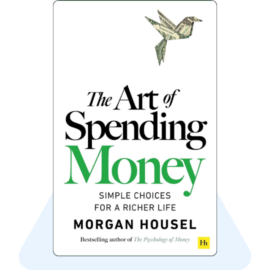
The Art of Spending Money, published by Portfolio in October 2025, turns the spotlight from wealth accumulation to wealth use. Housel, best known for The Psychology of Money, argues that spending well is not mainly about finding the perfect budget. It is about understanding yourself well enough to know what money is for. The official description of the book emphasizes that the goal is not to get rich but to get more value from what you already have and to learn to want what is actually worth wanting.
This The Art of Spending Money summary from Readers Books Club explores that idea in practical language. We will look at money psychology, spending habits, status, expectations, financial freedom, peace of mind, self-awareness, smart spending, and the difference between looking rich and living well. We will also connect the book’s lessons to mindfulness, personal growth, coaching, spirituality, and money mindset without pretending that Housel is teaching the law of attraction. He is not. His message is more grounded: money becomes useful when it serves your values instead of becoming a scoreboard for your worth.
For readers who follow Amiett Kumar, Readers Books Club, personal development books, self-help books, meditation, life coaching, and practical transformation, this book fits an important space. It does not tell you what to buy. It helps you ask better questions before you buy anything at all.
The Art of Spending Money is a 256-page personal finance book by Morgan Housel, published by Portfolio on October 7, 2025. It follows Housel’s earlier work on behavioral finance and focuses on a neglected side of money: spending. By September 2026, the title was still appearing among prominent money bestsellers, showing that the subject has continued to resonate with readers.
The book’s central promise is not a formula. Housel avoids rigid rules because the best use of money depends on the life a person wants. One reader may value travel, another may value time with family, another may value a quiet home, another may value generosity, and another may value the freedom to leave a job. The point is not that one category is universally superior. The point is that spending should be intentional enough to reflect your real priorities rather than borrowed expectations.
If The Psychology of Money asked why people behave strangely around earning, saving, risk, and wealth, The Art of Spending Money asks what happens after that wealth becomes usable. It asks whether your spending converts money into peace, autonomy, joy, relationships, comfort, purpose, or freedom or whether it simply converts money into more comparison.
About Morgan Housel
Morgan Housel is a financial writer, author, and partner at Collaborative Fund. His official biography notes that his books have sold millions of copies and have been translated into dozens of languages. He is known for writing about money through stories rather than formulas. That matters because most financial decisions are not made in a laboratory. They are made at home, in families, in shops, on phones, during stressful periods, and while comparing ourselves with people whose private circumstances we do not understand.
Housel’s style is especially effective for readers who feel intimidated by finance. He rarely needs complex equations to explain why people overspend, underspend, chase status, or fear using money they have worked hard to earn. His strength lies in showing that financial behavior is human behavior.
That is one reason a Morgan Housel book summary works well for the Readers Books Club audience. The useful lesson is rarely hidden in technical jargon. It usually appears in a familiar situation: wanting a better car, feeling behind after seeing someone else’s lifestyle, saving so aggressively that life never gets enjoyed, or buying something because we imagine it will change how other people see us.
The Central Idea: Money Is A Tool, Not A Scoreboard
The most important idea in this The Art of Spending Money book summary is that money is useful when it helps you live, not when it becomes a measurement of whether you are winning against other people.
A scoreboard invites comparison. If your neighbor has a bigger house, you feel behind. If a colleague has a more expensive watch, you wonder whether your own success is visible enough. If someone on social media travels more often, your ordinary weekend suddenly feels inadequate. The problem is that there is no finish line. Every comparison creates another comparison.
A tool works differently. A tool is valuable because of what it helps you do. A hammer is not impressive because it is expensive; it is useful because it helps build something. Money should work the same way. Its value is in the life it enables.
This shift changes the meaning of financial freedom. Financial freedom does not have to mean never working again. It can mean having enough savings to leave a toxic job, taking a lower-paying role that gives you time with your children, paying for help that reduces daily stress, or choosing a smaller lifestyle so you are not trapped by monthly obligations.
When money becomes a tool, the question changes from “How rich do I look?” to “What does this money allow me to do?” That is the foundation of smart spending.
Lesson 1: Spending Is Emotional Before It Is Logical
People often imagine that spending decisions are rational. We compare prices, read reviews, check features, and tell ourselves we are making objective choices. But Housel’s broader philosophy of money reminds us that financial behavior is shaped by personal history.
Someone who grew up with very little may spend heavily as an adult because purchasing provides evidence that scarcity is over. Another person with the same childhood may do the opposite and save nearly everything because the fear of losing security never disappears. Neither response is simply about arithmetic. Both are emotional adaptations.
This is why two people with identical incomes can have completely different spending habits. One values visible signs of success. Another values privacy. One spends on travel. Another spends on hobbies. One saves for freedom. Another saves because spending creates guilt.
The lesson is not to judge these patterns but to notice them. Self-awareness is the beginning of better money management. Before asking, “Is this purchase good or bad?” ask, “What feeling am I trying to create, avoid, or prove?”
That question can reveal a lot. Are you buying because you need the item, because you are bored, because you had a difficult week, because your friends have it, because you want admiration, or because it genuinely improves your daily life?
Mindfulness can be helpful here. A short pause before purchasing creates space between impulse and action. Meditation is not a budgeting strategy, but the ability to observe thoughts without immediately obeying them can support healthier spending habits. This is one natural connection between personal finance and self-awareness.
Lesson 2: The Best Return On Money May Be Peace Of Mind
Traditional finance teaches us to think in returns. We ask how much an investment gained, how much interest a savings account pays, or whether a purchase was worth the price. Housel invites a broader calculation: what if one of the best returns money can provide is peace of mind?
Peace of mind is difficult to display on Instagram. Nobody can see your emergency fund. Nobody applauds the fact that you can sleep well because you have low debt and manageable expenses. Financial calm is mostly invisible, yet its effect can be enormous.
A person with a high income and no margin may feel less secure than someone with a moderate income, modest expenses, and savings. This is one reason wealth building is not only about maximizing assets. It is also about reducing fragility.
Smart spending sometimes means choosing the option that leaves you with more mental space. It may mean buying reliability rather than prestige. It may mean paying down a stressful debt. It may mean keeping a cash buffer. It may mean spending on health, insurance, or convenience when those choices genuinely reduce pressure.
The deeper principle is that a financial decision should be evaluated by what it does to your life, not only by how it looks on paper. If a choice increases income but destroys your time, health, and relationships, the real return may be poor. If a choice reduces visible consumption but gives you freedom and calm, the real return may be excellent.
This is why The Art of Spending Money is as much about mental clarity as money management.
Lesson 3: Expectations Matter As Much As Income
One of the book’s most useful themes is the role of expectations. People often assume that more income will automatically create greater satisfaction. Sometimes it does. Money can remove real hardship, increase safety, and create options. But after a point, income and expectations often rise together.
You earn more, so you upgrade your house. Then the neighborhood changes your reference point. You buy a better car, then start noticing even better cars. You take a nicer vacation, and soon the previous level of travel no longer feels special. What once felt luxurious becomes normal.
This is lifestyle inflation at the psychological level. The problem is not that comfort is bad. The problem is that humans adapt quickly. If expectations rise faster than resources, a person can feel poor while becoming objectively wealthier.
A powerful money mindset therefore includes learning how to manage desire. This does not mean suppressing ambition. It means noticing when the finish line keeps moving.
A practical exercise is to ask: “What was once a dream that I now treat as ordinary?” Maybe it is your current home, phone, job, business, savings balance, access to travel, or ability to order food whenever you want. Gratitude does not replace financial planning, but it can correct the habit of only looking at what is missing.
This is where spirituality and finance can meet in a grounded way. Many spiritual traditions warn against endless craving because desire can expand faster than satisfaction. Housel reaches a similar destination through money psychology: if you cannot define enough, more will never feel like enough.
Lesson 4: Status Is Expensive Because It Never Stays Won
Status spending is one of the most important ideas in the book. Many expensive purchases are partly attempts to influence how other people see us. We hope a car, house, brand, gadget, or lifestyle will communicate success.
The problem is that other people are often thinking about themselves, not us. Even when a purchase creates admiration, that admiration fades quickly. Then a new signal is required. This makes status a recurring expense rather than a one-time purchase.
There is also a subtle confusion between wanting an object and wanting the reaction we imagine the object will create. You may think you want the luxury car, but what you really want is respect. You may think you want the designer label, but what you really want is belonging. Money can buy the object, but the deeper need may remain unsatisfied.
This does not mean all luxury spending is foolish. If you genuinely love cars, fashion, watches, food, travel, art, or technology, spending on them can be completely reasonable. Housel’s broader message is not anti-consumption. It is anti-unconscious consumption.
The question is whether you would still want the purchase if nobody could see it. If the answer is yes, the spending may be aligned with real enjoyment. If the answer is no, you may be buying an audience rather than an experience.
That distinction can save enormous amounts of money while also improving self-awareness.
Lesson 5: Freedom Is An Invisible Purchase
One of the most powerful ideas in personal finance is that money you do not spend can still buy something. It can buy options.
Savings may look like “unused” money, but that is a narrow view. A savings buffer can buy the ability to say no. It can buy time to recover from illness. It can buy the freedom to wait for a better job. It can buy a career break, a move, education, a business experiment, or simply the confidence that one unexpected bill will not create a crisis.
This is why financial freedom is not only a future retirement concept. It can exist in small forms today. Every reduction in unnecessary fixed expenses can increase flexibility. Every amount saved can reduce dependence on the next paycheck.
For Housel, the richest use of money often comes from control over time. Time is non-renewable. A bigger bank balance matters partly because it can help you protect hours, days, or years from obligations you do not want.
This lesson is especially relevant for people who equate wealth with visible possessions. The most valuable part of someone’s financial life may be the part you cannot see: low debt, savings, flexibility, and the ability to choose.
A life coach might describe this as alignment between resources and values. A financial planner might call it liquidity and optionality. Housel’s language is simpler: money is most powerful when it helps you own more of your life.
Lesson 6: Learn The Difference Between Comfort And Excess
Comfort is one of money’s legitimate benefits. A safe home, reliable transport, good food, healthcare, rest, privacy, and convenience can improve quality of life. But comfort can gradually become excess without a clear boundary.
The tricky part is that the line is personal. A purchase that seems excessive to one person may be genuinely useful to another. Someone who travels constantly for work may gain enormous value from a premium seat. Someone who loves cooking may get daily joy from an expensive kitchen tool. Another person may buy the same things and barely use them.
This is why generic rules are limited. “Never spend on luxury” is too simple. “You deserve everything you can afford” is also too simple. The real work is understanding marginal value: how much better does the next upgrade actually make your life?
The first improvement may be transformative. Moving from an unsafe neighborhood to a secure one can change daily stress. Upgrading from an unreliable vehicle to a dependable one can save time and worry. But moving from already excellent to slightly more luxurious may create only a small benefit at a much higher cost.
Smart spending asks whether the additional cost produces additional life value. This principle helps prevent lifestyle inflation while still allowing enjoyment.
Lesson 7: Your Best Spending Category May Be Unique To You
The Art of Spending Money rejects the idea that everyone should spend in the same way. Personal finance is personal precisely because people value different things.
Some people feel most alive while traveling. Others prefer a calm home. Some value education, books, and learning. Others value sports, food, music, family experiences, nature, convenience, art, or giving. There is no universal “correct” category.
The danger begins when people copy spending patterns without copying the values that make those patterns meaningful. A friend may love fine dining, but if restaurants do not matter to you, spending heavily there will not create the same return. An influencer may love fashion, but if clothing is not part of your identity or joy, imitation becomes expensive noise.
Housel’s approach encourages experimentation. You may need to try different uses of money before learning what creates lasting satisfaction. The goal is not perfection. The goal is feedback.
After a meaningful purchase, ask: Did this make daily life better? Did the happiness last? Would I buy it again? Did it reduce stress? Did it create memories? Did it help someone? Did it bring me closer to the person I want to be?
This is a useful financial habit because it turns spending into a learning process rather than a moral test.
Lesson 8: Spend On Experiences, Relationships, And Time But Don’T Turn That Into Another Rule
Modern personal finance often tells people to buy experiences instead of things. There is wisdom in that. Experiences can strengthen relationships, create memories, and become part of identity. But Housel’s deeper philosophy suggests we should be careful about turning any idea into a universal commandment.
A “thing” can create tremendous value if it supports something meaningful. A musical instrument can create years of joy. A comfortable chair can improve daily reading. A bicycle can support health and friendship. A laptop can enable a career. The object is not the problem; the purpose matters.
Similarly, experiences can be wasteful if they are purchased only for social media or status. A vacation taken mainly to produce impressive photographs can become another form of comparison.
The better question is: what will this purchase help me experience repeatedly? Sometimes spending on time is especially powerful. Paying for help with cleaning, transportation, childcare, or administrative tasks can create hours for family, exercise, learning, or rest. For someone with sufficient resources, buying back time may deliver a greater return than buying another object.
The theme is intentionality. Spend toward the life you want to live, not toward a list of what “smart people” are supposed to buy.
Lesson 9: Avoid Making Money Your Identity
Money can become dangerous when financial outcomes merge with self-worth. A rising income feels like proof that you matter. A business setback feels like a personal failure. A luxury purchase becomes evidence that you have arrived. A market decline feels like an attack on identity.
Housel’s writing repeatedly separates human value from financial value. This is important because markets, careers, and businesses are uncertain. If identity depends entirely on wealth, every financial fluctuation becomes emotionally destabilizing.
A healthier mindset treats money as one domain of life, not the definition of life. You can care deeply about financial freedom without believing your net worth measures your worth as a person.
This lesson also matters for coaching and personal growth. A life coach may help someone identify goals, but good goals should serve a larger life rather than consume it. Earning more can be valuable. Wealth building can be valuable. Ambition can be valuable. But they become dangerous when they crowd out health, relationships, integrity, or peace.
Financial literacy should therefore include identity literacy: knowing who you are when your bank balance is not part of the introduction.
Lesson 10: Regret Is A Useful Filter
Every spending decision happens in the present, but its emotional consequences often arrive later. This is why regret can be a useful planning tool.
Before a major purchase, imagine yourself six months or five years in the future. Which choice are you more likely to regret? Spending the money or missing the experience? Buying the status symbol or keeping the flexibility? Working extra hours for the upgrade or having more time with family?
There is no universal answer. A young person may regret not traveling. A parent may regret missing time with children. Someone under financial stress may regret a large discretionary purchase. Someone who has saved obsessively for decades may regret never enjoying what they built.
This perspective helps balance two opposite mistakes: reckless spending and endless postponement. Personal finance advice often focuses so heavily on saving that some people become afraid to use money at all. But money has a purpose. If you have built a secure foundation, refusing every meaningful experience can become its own form of poor spending.
The art lies in using money at the right time for the right reason.
Lesson 11: Enough Is A Financial Superpower
One of the hardest words in finance is “enough.” Not because the word is difficult, but because the concept requires a stopping point.
Modern economies are excellent at creating new wants. There is always a better phone, larger home, faster car, more exclusive trip, higher investment target, or new benchmark. Without a personal definition of enough, financial goals can expand forever.
Enough does not mean giving up. It means knowing what you are optimizing for. You can still grow a business, increase investments, or pursue ambitious goals. The difference is that you are not depending on the next milestone to finally permit contentment.
This idea overlaps naturally with mindfulness and spirituality. Meditation trains attention toward present experience. Spiritual traditions often encourage gratitude and non-attachment. Housel’s money psychology makes a similar practical observation: if satisfaction always lives one upgrade away, no level of wealth can permanently solve the problem.
For readers interested in law of attraction or manifestation, this is an important grounding principle. The book is not a law of attraction text, and it does not claim thoughts magically create financial outcomes. But it does support the idea that beliefs, expectations, and identity shape behavior. If your money mindset is driven by scarcity, status, or comparison, your decisions will reflect that. Intentional goals work best when paired with practical action, financial literacy, and self-awareness.
Lesson 12: Spending Wisely Requires Self-Awareness, Not Just Spreadsheets
Spreadsheets are useful. Budgets are useful. Investment plans are useful. But none of them can tell you what you truly value.
A budget can show that you spend a large amount on travel. It cannot tell you whether those trips are the happiest part of your year or an attempt to keep up with friends. A spreadsheet can show a high savings rate. It cannot tell you whether the saving is building freedom or coming from fear. A financial plan can show that you can afford a house. It cannot tell you whether the house will improve your life enough to justify the commitment.
This is why self-awareness sits at the center of the book. Good financial habits are not merely rules repeated long enough. They are choices connected to a clear understanding of your priorities.
One practical approach is a monthly money reflection. Instead of only checking balances, review your last month of spending and identify three categories: purchases that improved life, purchases you barely remember, and expenses that created ongoing stress. Over time, patterns become visible.
This exercise turns financial literacy into self-knowledge.
The Art Of Spending Money Vs The Psychology Of Money
Readers familiar with The Psychology of Money may wonder whether this new book repeats the same ideas. There is overlap because both books focus on behavior rather than formulas, but the emphasis is different.
The Psychology of Money explores how people think about wealth, risk, luck, saving, investing, compounding, uncertainty, and financial behavior. It became popular because it explained that doing well with money often depends more on behavior than intelligence.
The Art of Spending Money moves to the other side of the equation. If you have learned to earn, save, and invest, what is the point? How do you convert financial resources into a life that feels richer rather than merely looks richer?
The first book can help you build a healthier relationship with accumulation. The second can help you build a healthier relationship with use. Together, they create a broader philosophy: acquire money with humility, preserve it with patience, and spend it with self-awareness.
For Readers Books Club followers who have already read or watched a Psychology of Money summary, The Art of Spending Money is a natural next step. It answers the question that many finance books leave unfinished: what is wealth for?
Money Psychology: Why We Buy Things We Do Not Really Want
To understand spending habits, it helps to understand the emotional triggers behind consumption. Modern commerce is designed to make purchasing easy and desire continuous. Social proof, scarcity messages, limited-time offers, influencer lifestyles, frictionless payments, and personalized advertising all reduce the amount of reflection between wanting and buying.
But external triggers only work because they connect to internal needs. We may want novelty, validation, relief from boredom, belonging, control, or a sense of progress. Shopping can temporarily simulate these feelings.
This is why a dopamine detox trend or no-spend challenge can sometimes help, but only if it creates awareness rather than becoming another extreme. The objective is not to treat spending as a moral failure. It is to recognize the difference between a purchase that solves a real problem and one that briefly changes your mood.
A useful pause is to ask three questions before discretionary spending: What problem am I solving? How long will the benefit last? What else could this money buy in terms of freedom, time, or future options?
That pause does not guarantee perfect decisions, but it interrupts automatic behavior. Over time, it can improve both money management and mental clarity.
Smart Spending And Financial Freedom
Many people think financial freedom begins with a certain net worth. Housel’s ideas suggest a more flexible definition. Freedom grows whenever your financial life gives you more choice.
A person can increase freedom in two ways: by increasing resources and by reducing obligations. If income rises but fixed expenses rise just as quickly, freedom may not improve. If income stays stable but debt falls and savings increase, freedom may expand significantly.
This is why smart spending is connected to wealth building. Every recurring expense becomes a claim on future income. A subscription, car loan, large mortgage, school fee, club membership, or lifestyle habit is not only a current cost; it is a future obligation.
This does not mean avoiding commitments. Some commitments are deeply worthwhile. It means understanding that the more of tomorrow’s income you promise today, the less flexibility tomorrow contains.
One of the most practical lessons from the book is therefore to protect optionality. Spend generously on what matters, but be cautious about building a life that requires a very high income just to remain stable.
The Mindful Money Connection
Readers Books Club covers books across finance, self-development, meditation, spirituality, and personal growth. The Art of Spending Money creates a useful bridge between these categories because intentional spending begins with attention.
Mindfulness is the practice of noticing experience clearly. Applied to money, it means noticing desire before automatically acting on it, noticing social comparison before believing it, and noticing anxiety before using shopping as relief.
Meditation can support this awareness, but it should not be presented as a substitute for budgeting, debt management, investing, or financial planning. A calm mind is useful, but practical systems still matter.
The deeper connection is that both mindfulness and smart spending ask a similar question: are you choosing consciously, or are you reacting automatically?
When you can observe a craving without immediately satisfying it, you gain choice. When you can observe fear without hoarding every rupee or dollar, you gain choice. When you can observe status pressure without copying someone else’s lifestyle, you gain choice.
That is financial freedom at the psychological level.
Spirituality, Law Of Attraction, And Money Mindset: Where They Connect And Where They Do Not
Because many Readers Books Club followers are interested in spirituality, manifestation, and law of attraction, it is useful to clarify how these ideas relate to The Art of Spending Money.
Housel is not teaching manifestation techniques, affirmations, or the law of attraction. The book belongs to personal finance and behavioral psychology. Its claims are about behavior, expectations, values, and decisions.
Still, readers interested in spirituality can find meaningful overlap. Spirituality often asks what is enough, what creates a meaningful life, and whether identity should depend on possessions. Housel asks similar questions through money.
Affirmations can help some people focus on constructive beliefs, but an affirmation such as “I am financially abundant” is not a financial plan. It becomes more useful when paired with measurable behavior: saving automatically, reducing high-interest debt, building skills, spending intentionally, and investing according to a sound strategy.
Likewise, manifestation goals can become healthier when they are connected to values rather than status. Instead of only visualizing a luxury car, ask what experience you believe the car will create. Freedom? Confidence? Comfort? Recognition? Once the underlying desire is clear, there may be several ways to meet it.
This is where money mindset becomes practical. Your beliefs influence your actions, but actions still matter.
What A Life Coach Can Learn From This Book
The Art of Spending Money is also relevant to coaching because many life goals have financial consequences. Career changes, entrepreneurship, relationships, travel, health, education, retirement, and family decisions all involve money.
A good life coach should not replace a qualified financial adviser, but coaching can help clarify values. If a client says, “I want to earn more,” the next question is “Why?” The answer may reveal a desire for safety, freedom, status, family support, or creative independence.
Once the deeper goal is visible, financial decisions can become more aligned. A person seeking freedom may need lower fixed expenses as much as higher income. A person seeking family time may benefit more from flexible work than a prestige-driven promotion. A person seeking peace may value an emergency fund more than a luxury upgrade.
This is the practical intersection of coaching and money psychology: goals become more powerful when they are translated into the life they are meant to create.
7 Practical Steps To Spend Smarter And Live Better
The following framework is inspired by the themes of The Art of Spending Money and is designed as a practical Readers Books Club implementation guide.
1. Define what “rich” means to you. Write down five things that make life feel genuinely good. Avoid financial numbers at first. Think in terms of time, relationships, health, work, learning, peace, contribution, and experiences.
2. Audit your last 90 days of discretionary spending. Mark purchases that created lasting value, purchases that were neutral, and purchases you regret or barely remember. Look for patterns instead of judging yourself.
3. Identify your status spending. Ask which purchases you would still want if nobody knew you owned them. This simple question reveals where money may be buying social approval instead of utility.
4. Build a freedom fund. Separate from long-term investments, maintain an appropriate emergency reserve based on your circumstances. The goal is not only security; it is optionality.
5. Choose one category for guilt-free spending. If books, travel, fitness, family experiences, food, or hobbies genuinely enrich your life, plan for them. Intentional spending is easier when enjoyment is part of the system.
6. Reduce one recurring expense that does not matter. Recurring expenses are powerful because they repeat automatically. Removing even one low-value obligation can create room for savings or meaningful spending.
7. Review expectations quarterly. Ask whether your definition of “normal” has become more expensive without becoming more satisfying. Lifestyle inflation is easiest to control before it becomes invisible.
These steps are not a universal financial plan. They are reflection tools. Anyone making major financial decisions should consider their goals, income, debt, taxes, risk tolerance, and professional advice where appropriate.
A 30-Day Money Awareness Practice
If you want to turn this Morgan Housel book summary into action, try a simple 30-day experiment. The objective is not to spend as little as possible. The objective is to understand your spending with more clarity.
During the first week, track discretionary purchases and write one sentence about why you made each one. During the second week, add a 24-hour pause to non-essential purchases above a threshold you choose. During the third week, deliberately spend on one category that consistently brings value and reduce one category that does not. During the fourth week, review the results.
Notice which purchases you remember positively. Notice which urges disappeared during the waiting period. Notice whether spending on time, relationships, health, or learning created more satisfaction than status purchases. Notice whether saving created a sense of restriction or a sense of freedom.
This type of experiment is more useful than copying someone else’s budget because it creates personal data. You begin to learn what money means in your actual life.
Common Money Mistakes This Book Can Help You See
The first mistake is assuming higher income automatically solves financial dissatisfaction. It can solve real shortages, but expectations can rise too.
The second is copying visible lifestyles without understanding invisible finances. You can see someone’s car but not their debt. You can see their vacation but not their anxiety. You can see income but not obligations.
The third is confusing price with value. Expensive does not automatically mean meaningful, and cheap does not automatically mean wise.
The fourth is saving without a purpose. Saving is powerful because it creates freedom, but endless accumulation without a reason can become fear disguised as discipline.
The fifth is spending to repair self-esteem. Purchases can change appearance, comfort, or convenience. They rarely solve the deeper need for respect, belonging, or self-worth.
The sixth is treating personal finance as purely mathematical. Human behavior can overpower perfect spreadsheets. A workable plan that matches your psychology is often better than an ideal plan you cannot sustain.
The seventh is forgetting time. A purchase may be affordable in money but expensive in hours of work, maintenance, attention, or stress.
Who Should Read The Art Of Spending Money?
This book is especially useful for people who already know the basics of personal finance but still feel uncertain about how to use money well. It is valuable for high earners who do not feel rich, disciplined savers who feel guilty spending, young professionals entering lifestyle inflation, entrepreneurs whose identity is tied to financial success, and anyone who notices that comparison shapes their spending.
It is also useful for readers who liked The Psychology of Money and want the next part of the conversation. If the earlier book helped you think about building and preserving wealth, this book helps you think about converting wealth into life value.
Readers looking for detailed budgeting templates, stock-picking strategies, tax planning, or technical investment advice will not find that here. The book is intentionally philosophical and behavioral.
That limitation is also its strength. Technical financial information changes across countries, products, and regulations. Human tendencies such as comparison, fear, adaptation, status, and desire are much more universal.
The Readers Books Club Perspective
Readers Books Club has long focused on turning book knowledge into practical action. That approach fits The Art of Spending Money particularly well because reading about money psychology is easy; noticing your own behavior is harder.
The value of a book summary is not that it replaces the book. It is that it helps readers identify ideas worth applying. This summary should leave you with a few questions that continue after the page ends: What do I want money to do for me? Which expenses increase freedom? Which purchases are really about status? What does enough look like? Where am I trading peace for appearance?
Amiett Kumar’s broader work across books, coaching, meditation, manifestation, and personal development often emphasizes awareness followed by action. Applied to personal finance, the same sequence is useful: become aware of the pattern, decide what matters, then change the behavior.
For readers who explore both finance and spirituality, this is a valuable reminder that money does not need to be worshipped or rejected. It can simply be used well.
Key Takeaways From The Art Of Spending Money
The central lesson of this The Art of Spending Money summary can be condensed into a simple idea: use money to improve life, not to perform success.
Spend in ways that increase peace, freedom, health, relationships, learning, purpose, and time. Be skeptical of purchases whose main purpose is admiration. Define enough before lifestyle inflation defines it for you. Remember that unspent money can buy flexibility. Notice that expectations can rise as fast as income. Use self-awareness before optimization. Experiment until you learn which spending genuinely makes your life better.
Most importantly, understand that the goal of personal finance is not to win a financial contest. The goal is to build a life in which money supports what matters instead of controlling what matters.
Final Thoughts: Spend Smarter, Live Better
The Art of Spending Money is not really a book about shopping. It is a book about values.
Every major spending decision contains an assumption about what will make life better. We assume a bigger house will make us happier, a luxury brand will make us respected, a higher income will finally make us feel secure, or more savings will eliminate uncertainty. Sometimes those assumptions are correct. Sometimes they are not.
Morgan Housel’s contribution is to make us examine the assumption before spending the money.
The best financial life is not necessarily the one with the highest income, the largest portfolio, or the most impressive possessions. It is the one where resources and values are aligned. It is the one where money creates options instead of obligations, calm instead of constant comparison, and experiences instead of endless scorekeeping.
That is why “spend smarter, live better” is more than a catchy title. It is the practical message of the book. Spending smarter does not mean spending less on everything. It means spending less on what does not matter so you can spend more money, time, attention, and energy on what does.
If this summary changes only one thing, let it be the question you ask before your next meaningful purchase. Instead of asking, “Can I afford this?” also ask, “What kind of life is this helping me build?”
That question may be worth more than any budgeting hack.
Contents