10 Powerful Lessons to Break Relationship Patterns and Build Self-Trust
Why do I overthink one text for hours? Why do I keep choosing people who cannot give me what I need? Why do I apologise even when I have done nothing wrong? Why do I know a relationship is unhealthy and still struggle to walk away? Why do I keep promising myself that this time will be different, only to repeat the same pattern again?
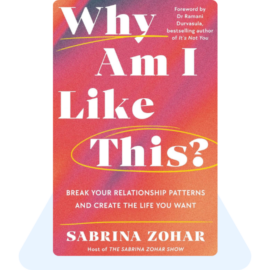
Those questions sit at the centre of Why Am I Like This? by Sabrina Zohar, a dating and relationship coach and host of The Sabrina Zohar Show. Published in October 2026, the book is designed as a direct, practical guide for people who are tired of repeating the same relationship patterns and blaming themselves for not being able to “just do better”.
Zohar’s central idea is that many frustrating patterns in love are not random. They are learned responses built from attachment experiences, childhood wounds, core beliefs, emotional survival strategies and the ways we learned to protect ourselves. She calls this internal pattern system the Bullshit Blueprint. The language is deliberately blunt because the book is not trying to make relationship psychology sound distant or academic. It is trying to help readers recognise the invisible rules they may be following without realising it.
The most important message in this Why Am I Like This? summary is not that your past determines your future. It is almost the opposite. The book argues that once you understand the pattern, you can interrupt it. Awareness alone is not enough, but awareness creates the possibility of a different response. From there, the work becomes emotional regulation, boundaries, self-trust, responsibility and conscious choice.
This is why the book is so relevant to readers searching for relationship patterns, anxious attachment, attachment styles, people pleasing, emotional regulation, nervous system regulation, self worth, self trust, healthy relationships, relationship anxiety and practical ways to break toxic relationship patterns.
It is also relevant to the Readers Books Club audience because the subject goes far beyond dating. Repeating old patterns can affect friendships, family, work, confidence and the way we make decisions. A person who constantly abandons their own needs to avoid conflict may do that with a partner, a boss, a client and a parent. Someone who mistakes emotional intensity for love may also mistake stress for ambition or urgency for intuition.
So this book is not only about finding the right person. It is about becoming more honest about the version of yourself that enters the relationship.
About Why Am I Like This? by Sabrina Zohar
Sabrina Zohar is a dating and relationship coach, entrepreneur and podcast host known for direct advice about attachment, self-worth, boundaries and modern dating. Her book Why Am I Like This? was released in the United States on October 13, 2026, by Penguin Life, with a foreword by psychologist and author Dr. Ramani Durvasula. The book is 304 pages and is positioned within psychology and self-improvement.
The publisher describes it as a roadmap for rewriting the patterns that hijack a person’s love life. The official framing centres on people-pleasing, questioning your worth, avoidance, reactivity and the survival strategies that once helped keep you emotionally safe but may now keep you stuck.
The book also explores attachment style, childhood wounds, core beliefs, emotional regulation, boundaries and self-abandonment. In public conversations around the release, Zohar has discussed why people often chase what feels familiar rather than what is genuinely safe, why chemistry is not the same as compatibility, why boundaries are different from walls, and why falling for someone’s potential can keep a person attached to a relationship that does not exist in reality.
Those themes make the book highly practical. It is not asking, “What is wrong with me?” It is asking, “What pattern am I repeating, what is that pattern trying to protect, and what would a more conscious choice look like now?” That is a much more useful question.
Lesson 1: Your Patterns Are Learned Strategies, Not Your Identity
One of the strongest ideas in the book is that repeated relationship behaviour should not automatically be treated as a personality flaw. If someone constantly seeks reassurance, becomes highly reactive to delayed texts, avoids difficult conversations or people-pleases to keep the peace, it is easy to say, “That is just who I am.” Zohar pushes back on that.
The book’s Bullshit Blueprint framework suggests that many of these responses developed because, at some point, they helped the person feel safer, more accepted or more connected. The behaviour may no longer be useful, but it probably had a logic.
That changes the emotional tone of self-improvement. Instead of shame, you begin with curiosity. Why does silence make me panic? Why do I immediately assume I did something wrong? Why do I feel guilty when I say no? Why am I attracted to emotionally unavailable people? Why does a calm relationship feel boring? These questions are not meant to excuse harmful behaviour. They are meant to understand it. Understanding and accountability are not opposites. You can recognise that a pattern came from earlier experiences and still take responsibility for changing what it is doing to your life today.
This is an important distinction because many people move between two extremes. One extreme is total self-blame: “Everything is my fault.” The other is total external blame: “I am like this because of my parents, my ex or my trauma, so there is nothing I can do.”
The healthier position is more balanced. Your history may explain the pattern. Your present choices still matter.
This is also where the book becomes useful for people interested in personal growth and self improvement books. Real growth often starts when you stop asking, “Why am I so broken?” and begin asking, “What is this behaviour trying to accomplish?”
Once the function becomes visible, a new strategy becomes possible.
Lesson 2: Attachment Style Is a Pattern of Relating, Not a Life Sentence
Attachment language has become extremely popular online. People describe themselves as anxious, avoidant, fearful-avoidant or secure. Sometimes this language creates insight. Sometimes it becomes another identity label. The book uses attachment as part of the bullshit blueprint, but one of the most useful ways to understand attachment is as a pattern rather than a permanent diagnosis.
Someone with higher attachment anxiety may become preoccupied with signs of rejection, need reassurance or feel intense distress when closeness feels uncertain. Someone with more avoidant tendencies may pull away from vulnerability, downplay needs or create distance when intimacy becomes uncomfortable.
Research continues to show meaningful relationships between attachment insecurity and how people regulate stress and navigate close relationships. At the same time, attachment exists on dimensions and can vary across relationships and life stages. People are not trapped forever inside one internet category.
That matters because “I am anxiously attached” can quietly become “I will always chase people.” “I am avoidant” can become “I am just not good at intimacy.” Labels can explain. They should not imprison. Zohar’s larger message is that the pattern may feel automatic, but automatic is not the same as permanent.
If your nervous system learned that love is unpredictable, you may become highly alert to changes in attention. If closeness once came with criticism, control or emotional inconsistency, distance may feel safer. These responses can make sense while still creating problems in adult relationships.
The practical question is not only, “What is my attachment style?” Ask instead: “What happens inside me when I fear losing connection?” That question takes you out of identity and into behaviour. Do you chase? Freeze? Over-explain? Withdraw? Test the other person? Pretend you do not care? The moment the pattern becomes specific, it becomes easier to interrupt.
Lesson 3: Familiar Does Not Mean Safe, and Chemistry Does Not Mean Compatibility
One of Zohar’s most powerful public messages around the book is the difference between what feels familiar and what is actually safe. Human beings often confuse repetition with recognition. If a certain emotional dynamic resembles something from earlier life, the body may recognise it instantly. That familiarity can feel like chemistry, destiny or intensity. But familiarity is not proof of compatibility. This explains why some people repeatedly choose partners who are unavailable, inconsistent or emotionally difficult even when they consciously say they want stability. The nervous system may be drawn to what it already understands.
A calm person may feel “boring.” A predictable relationship may feel suspicious. Someone who communicates clearly may not create the same emotional highs and lows as someone who disappears and returns. That does not mean every intense attraction is unhealthy or every peaceful relationship is healthy. It means intensity should not be used as the only measure. Compatibility requires more. Values. Communication. Reliability. Respect. Emotional availability. Mutual effort. A willingness to repair. A shared understanding of what the relationship is becoming.
This lesson is especially useful for people who confuse anxiety with attraction. When your nervous system is highly activated, you may experience the relationship more intensely, but intensity is not always intimacy. A healthier question is not, “How strongly do I feel?” It is, “How consistently are we showing up?” That shift can change dating completely. It can also reduce relationship anxiety because you stop making every emotional spike meaningful. Sometimes a text is just a text. Sometimes chemistry is just chemistry. Sometimes the person who feels like “home” feels familiar because the old home was emotionally complicated.
The goal is not to become suspicious of attraction. The goal is to stop letting attraction do all the decision-making.
Lesson 4: People-Pleasing Is Often Self-Abandonment Disguised as Kindness
People-pleasing is often praised because it looks generous. You are flexible. Understanding. Easygoing. Helpful. You avoid conflict. You think about everyone else. But there is a difference between kindness and self-abandonment. Kindness includes choice. People-pleasing often includes fear. The person says yes because no feels dangerous. They apologise because disagreement feels unsafe. They accept behaviour they dislike because they are afraid a boundary will make the other person leave. They become highly skilled at reading everyone else while becoming disconnected from their own needs.
Zohar’s work repeatedly returns to the importance of choosing yourself, and this is where self-trust begins. If you constantly override your own limits in order to keep someone close, you gradually teach yourself that your needs cannot be trusted. Then resentment grows. You feel unseen, but you have spent months hiding what you wanted. You feel taken for granted, but you trained the relationship to expect endless accommodation. You feel exhausted, but saying no still feels selfish. Breaking this pattern requires tolerating something people-pleasers often hate: disappointment. Someone may not like your boundary.
Someone may misunderstand your decision. Someone may think you changed. Someone may even leave. That does not automatically mean the boundary was wrong. The deeper lesson is that healthy relationships require two visible people. If one person is constantly shrinking, the relationship may feel peaceful on the surface while becoming emotionally unsustainable underneath. For readers interested in self worth and self respect, this is one of the most important lessons in the book. Self-worth is not only an internal feeling. It is also the standard you use when deciding what you will participate in.
Lesson 5: Regulate the Emotion Before You React to the Story
Modern relationship anxiety often happens through a screen. A message is read but not answered. A reply feels shorter than usual. Someone’s online activity changes. A date is rescheduled. A partner sounds distant. Within seconds, the brain can create an entire story. “They are losing interest.” “I said too much.” “They met someone else.” “I am being abandoned.” “I need to fix this now.” The story feels true because the emotion is strong. This is where emotional regulation becomes essential. Regulation does not mean suppressing emotion. It means becoming able to feel an emotion without immediately turning it into behaviour.
You can feel anxious without sending five messages. You can feel rejected without ending the relationship impulsively. You can feel angry without saying the most damaging thing available. You can feel uncertain without demanding immediate reassurance. This is why nervous system regulation appears so frequently in Zohar’s framework. Public discussions around the book repeatedly connect emotional triggers with the body’s learned responses. A useful sequence is: Notice the trigger. Notice the body. Name the emotion. Separate what happened from what you fear it means. Then choose the response. Suppose someone has not replied for four hours.
The fact is: no reply yet. The story may be: they do not care. The emotion may be: anxiety. The impulse may be: send another message. Regulation creates a pause between those steps. That pause is not passive. It is where self-trust grows. Emotion regulation also makes communication more accurate. If you wait until you are calmer, you may discover that what you wanted to say changes. Instead of “Why are you ignoring me?” you may say, “When communication changes suddenly, I notice I get anxious. Can we talk about what is happening?” That is a different relationship skill.
Lesson 6: Boundaries Keep You in Relationship; Walls Keep You From Relationship
The internet loves boundaries. Sometimes so much that boundaries are confused with punishment, control or emotional walls. Zohar has publicly made a useful distinction: a boundary is about what you will do to take care of yourself. A wall is often designed to prevent vulnerability altogether. For example, saying, “I do not take work calls after 9 p.m., so I will respond tomorrow,” is a boundary. Saying, “If anyone ever calls me after 9 p.m., they are disrespectful and I cut them off,” may be a rigid rule or wall depending on the context. A boundary does not require another person to become perfect. It requires you to become clear.
This is especially important in dating, where online advice can become highly binary. “If they wanted to, they would.” “Never double-text.” “Block them immediately.” “Do not explain yourself.” Some of these phrases can be useful in certain situations, but rules without context can become another way of avoiding emotional complexity. Healthy boundaries still allow conversation. They allow repair. They allow human mistakes. They also allow consequences when a pattern continues. The real test is not whether the boundary sounds strong. It is whether the boundary helps you show up with more self-respect and less resentment.
This is a crucial lesson for people who have moved from people-pleasing to hyper-independence. After years of weak boundaries, the first stage of healing can become extreme. “I will never need anyone.” “I will never give a second chance.” “I will leave before they can hurt me.” That may feel powerful, but fear can hide inside strength. Self-trust gives you a different kind of boundary. You know you can leave if necessary, so you do not have to build a wall before anything happens.
Lesson 7: Stop Falling in Love With Potential and Start Looking at Reality
One of the most painful relationship patterns is loving what a person could become. “They would be perfect if they communicated better.” “They are going through a lot right now.” “They say they want commitment eventually.” “They have so much potential.” “They are not ready today, but I know what we could be.” Hope is not the problem. The problem begins when hope replaces evidence. Zohar’s public discussions around the book emphasise the difference between falling for someone’s potential and accepting who they are in reality. This is one of the strongest lessons for anyone stuck in a situationship or emotionally uneven relationship. Ask:
What is happening consistently? Not what was promised. Not what happened once. Not what you imagine they are capable of. What is the pattern? Do they communicate? Do they repair after conflict? Do they respect your needs? Do they make space for you? Do their actions match their words? A relationship cannot be built only with future tense. This lesson can be uncomfortable because reality may be less romantic than potential. But reality gives you something potential cannot: information. When you accept information, you can make a decision. When you stay attached to potential, you may remain in emotional suspension.
This is also where self-trust appears again. If you believe you can handle disappointment, you no longer need fantasy to protect you from it. You can admit: “This person may be good, but not good for me.” “I care about them, but our needs are incompatible.” “I see their potential, but I am dating their present.” That is emotional maturity.
Lesson 8: Self-Worth Cannot Depend on Being Chosen
Many relationship patterns become easier to understand when you notice one hidden question underneath them: “Does this person choosing me prove that I am worthy?” If the answer is emotionally yes, dating becomes extremely high stakes. A delayed reply threatens identity. Rejection feels like evidence. A breakup becomes proof that something is wrong with you. You begin negotiating against yourself because losing the person feels like losing value. This is why Zohar’s framework puts so much emphasis on choosing yourself. Self-worth does not mean believing you are better than everyone.
It means your value is not continuously renegotiated based on another person’s interest. This is not an easy shift. Humans are social. Rejection hurts. Love matters. Belonging matters. The goal is not to become indifferent. It is to stop turning every relationship outcome into a verdict on your identity. Someone can reject you because of timing, preference, incompatibility, emotional availability, personal circumstances or reasons you will never fully understand. Their choice is real. It is not a universal measurement. The more your self-worth becomes internally anchored, the more accurately you can date. You do not need to prove yourself.
You can evaluate the other person too. You can ask whether you feel respected. You can ask whether you enjoy who you are around them. You can ask whether the relationship supports the life you want. This changes dating from “How do I get chosen?” to “What are we choosing together?” That is a much healthier question.
Lesson 9: Choose Short-Term Discomfort Over Long-Term Unhappiness
A repeating pattern survives partly because changing it feels uncomfortable. People-pleasing feels easier than saying no. Chasing feels easier than sitting with uncertainty. Returning to an unhealthy relationship feels easier than tolerating loneliness. Ignoring a problem feels easier than having the conversation. Staying in a situationship feels easier than accepting that it may never become what you want. The old pattern offers immediate emotional relief. The cost arrives later. Zohar has spoken publicly about the difference between short-term discomfort and long-term unhappiness, and this is one of the most practical ideas in her work.
Healing often asks you to choose discomfort now. Say the boundary. Let the person be disappointed. Stop checking. Do not send the extra message. Leave the relationship that keeps repeating the same injury. Spend time alone. Tell the truth. These choices may feel worse before they feel better. That does not make them wrong. This is where many people misread healing. They expect the healthy choice to feel peaceful immediately. Sometimes it feels terrible because your nervous system is losing a familiar coping strategy. A people-pleaser may feel guilty after setting a healthy boundary.
An anxiously attached person may feel panic when they stop chasing. An avoidant person may feel trapped when they stay present during emotional closeness. The emotion is not always a sign to reverse the decision. Sometimes it is evidence that you are doing something new. The important question is whether the new behaviour serves your values and long-term well-being. Discomfort is not automatically growth, but growth often includes discomfort.
Lesson 10: Self-Trust Is Built Through Conscious Choice, Not Perfect Healing
The final lesson brings everything together. The goal is not to become perfectly secure, perfectly regulated, perfectly confident or completely free of old patterns. That version of healing can become another form of perfectionism. Real self-trust is simpler. You notice the pattern sooner. You recover faster. You make a different choice more often. You stop abandoning yourself every time someone else is uncertain. You become more willing to tolerate the consequences of being honest. You trust that if a relationship ends, you can survive it. You trust that if you make a mistake, you can repair it.
You trust that your feelings matter without assuming every feeling is a fact. You trust yourself enough to stay curious. This is what conscious choice looks like. It is not dramatic. It is repetitive. A different text. A different boundary. A different pause. A different person. A different response to loneliness. A different decision when the old chemistry appears. Over time, those choices become the new blueprint. This is why the book is ultimately more hopeful than its blunt language suggests. Your patterns may be deeply learned. But learned is not the same as permanent.
The Bullshit Blueprint Explained Simply
Zohar’s “Bullshit Blueprint” is the name she gives to the unconscious pattern system that influences how people behave in relationships. According to the book’s public description, attachment style, childhood wounds and core beliefs help shape this blueprint, while survival responses influence behaviour when the person feels threatened or emotionally activated.
The value of the concept is that it gives readers one place to collect patterns that otherwise feel unrelated. Overthinking a text. Dating the same type. Apologising too quickly. Avoiding conflict. Needing everyone to like you. Pushing people away. Choosing emotionally unavailable partners. These may look like separate problems. The blueprint idea asks whether they are different expressions of the same underlying belief. For example: “If I am easy to love, people will stay.” “If I need too much, people will leave.” “If I trust someone, I will lose control.” “If I am rejected, it proves I am not enough.”
Once the core belief becomes visible, the behaviour starts making more sense. The next step is not to replace the belief with an unrealistic affirmation. It is to build evidence through new choices. “I can express a need and survive the response.” “I can say no without becoming a bad person.” “I can be disappointed without chasing.” “I can choose someone based on consistency, not intensity.” That is how a new blueprint begins.
Relationship Anxiety and Overthinking Texts
The book speaks directly to a very modern problem: relationship anxiety that gets concentrated inside digital communication. Texts remove context. You cannot see tone. You cannot know what someone is doing. A short response can feel emotionally loaded. Typing indicators, read receipts, online status and social media activity provide just enough information to create speculation without enough information to create certainty. For an anxious mind, this is a perfect environment for rumination. The solution is not to become someone who never cares. It is to stop giving every digital signal more meaning than it can carry.
Ask whether you are interpreting data or filling in a blank. If the relationship repeatedly creates confusion, have a real conversation. If communication is consistently inconsistent, treat the pattern as information. If one message triggered you, regulate before deciding that the entire relationship has changed. Self-trust includes the ability to wait until you know more.
Why Self-Awareness Alone Is Not Enough
A person can understand their pattern perfectly and still repeat it. They can explain their anxious attachment in detail. They can identify every childhood wound. They can quote relationship podcasts. They can name the nervous system response. Then the same person texts, and the old behaviour returns. This is not hypocrisy. It is the difference between insight and practice. Knowing why you do something does not automatically create the ability to behave differently while emotionally activated. That is why the book’s practical focus matters. Awareness has to move into regulation, boundaries and behaviour.
This is also supported by the broader psychology of emotion regulation: understanding an emotion and regulating it are related but not identical skills. Repetition matters. If you want change, practise the new behaviour when the stakes are small. Say no to a minor request. Ask for clarification instead of assuming. Wait ten minutes before replying when triggered. Tell a friend what you actually prefer. Let someone disagree with you. Small acts build capacity. Then the big moments become less unfamiliar.
Healthy Relationships May Feel Less Intense at First
For people who are used to unpredictable relationships, stability can feel emotionally strange. There is less chasing. Less guessing. Less adrenaline. Less uncertainty. That can be mistaken for lack of chemistry. The book’s public conversations around “familiarity versus safety” are useful here. The nervous system may recognise old patterns faster than healthy ones. This does not mean you should force attraction to someone simply because they are stable. It means do not automatically reject stability because it does not create the same emotional rollercoaster. Healthy love can include excitement. It can include passion.
It can include conflict. The difference is that connection does not constantly depend on fear. You do not need to earn basic respect every week. You do not need to decode whether you matter. You are not living on intermittent reassurance. Peace may feel unfamiliar before it feels good.
Why Boundaries Are a Self-Trust Practice
A boundary is often described as something you set with another person. But the deeper commitment is with yourself. If you say, “I will not continue conversations where I am being insulted,” the boundary is not the sentence. The boundary is what you do when the insult happens. If you say, “I need consistent communication,” the boundary is not forcing someone to communicate in your preferred way. It is deciding what you will do if the relationship repeatedly cannot meet that need. This is why boundaries build self-trust. Every time you honour a clear limit, you teach yourself that your words have meaning.
Every time you abandon your own boundary because you are afraid of losing someone, self-trust weakens. This does not mean becoming rigid. Good boundaries can change with context. They can be discussed. They can be repaired after mistakes. The point is sustainability. A healthy boundary helps you stay in relationship without disappearing inside it.
Manifestation, Self-Concept and Relationship Patterns
Readers Books Club audiences often overlap with readers interested in manifestation, visualisation, affirmation, law of attraction, meditation, coaching and personal growth. There is a useful connection here if we keep it grounded.
Many manifestation teachings focus on self-concept: the identity you repeatedly assume about yourself. Relationship psychology makes a similar observation in different language. Core beliefs influence what you expect, what you tolerate and how you interpret other people’s behaviour. If your internal story is “I have to earn love,” you may repeatedly choose situations where love feels difficult to obtain. If your story is “Everyone leaves,” you may become hyper-alert to distance. If your story is “Needing people is dangerous,” you may withdraw when closeness increases.
Affirmation can be useful when it supports a more adaptive belief, but the affirmation needs behaviour. “I choose healthy love” becomes stronger when you stop chasing unavailable people. “I trust myself” becomes stronger when you honour a boundary. “I deserve respect” becomes stronger when disrespect has consequences.
Visualisation can also be grounded. Instead of imagining one specific person changing, visualise yourself communicating clearly, tolerating uncertainty, choosing mutual effort and walking away from dynamics that repeatedly violate your values.
Manifestation should never be used to override another person’s consent, choices or boundaries. The most powerful relationship manifestation may be becoming less willing to abandon yourself.
Who Should Read Why Am I Like This?
This book is especially useful for people who keep repeating the same dating patterns even when they understand those patterns intellectually.
It will resonate with readers who overthink texts, chase emotionally unavailable partners, struggle with anxious attachment, avoid closeness, people-please, feel guilty setting boundaries or repeatedly question their self-worth inside relationships.
It may also be useful for single readers who want to understand their relationship patterns before entering a new partnership, and for people already in relationships who want to separate emotional triggers from present-day reality.
Readers should remember that the book is a self-help and relationship-coaching resource, not a substitute for psychotherapy. Attachment difficulties, trauma, anxiety and relationship distress can sometimes require professional mental-health support.
Is Why Am I Like This? Worth Reading?
Yes, particularly if you want relationship advice that goes deeper than dating rules. The book’s strength is its focus on patterns. Instead of telling readers exactly how long to wait before texting or what a “high-value” person should do, it asks why the same emotional dynamics keep returning. That is more useful because rules change by context. Patterns travel with you. The book is also timely. Modern dating culture gives people more options, more communication channels and more online advice than ever, but many people still feel confused, anxious and disconnected. A framework built around self-trust is therefore valuable.
The most useful outcome is not that you memorise attachment terminology. It is that you notice yourself sooner. You catch the spiral. You recognise the old attraction. You feel the urge to abandon your needs. Then you pause. That pause is where the next version of your life begins.
10 Lessons from Why Am I Like This? – Quick Recap
The first lesson is that repeated relationship patterns are often learned protective strategies, not proof that something is fundamentally wrong with you. Second, attachment style can help explain how you respond to closeness and uncertainty, but it should not become a permanent identity. Third, what feels familiar can be mistaken for safety, and emotional chemistry is not the same as long-term compatibility.
Fourth, people-pleasing can become self-abandonment when kindness is driven by fear of losing connection. Fifth, emotional regulation helps separate what happened from the story anxiety creates around it. Sixth, healthy boundaries are different from walls because boundaries support sustainable connection while walls often prevent vulnerability.
Seventh, relationships become clearer when you stop dating someone’s potential and start evaluating consistent reality. Eighth, self-worth cannot depend entirely on whether another person chooses you. Ninth, healing often requires choosing short-term discomfort over the long-term unhappiness created by old coping patterns. Finally, self-trust grows through repeated conscious choices, not through becoming perfectly healed.
Frequently Asked Questions
What is Why Am I Like This? about?
Why Am I Like This? is a relationship and self-improvement book by Sabrina Zohar about understanding and changing repeated patterns in love. It explores attachment, childhood wounds, core beliefs, survival strategies, people-pleasing, emotional regulation, boundaries and self-trust.
Who is Sabrina Zohar?
Sabrina Zohar is a dating and relationship coach, entrepreneur and host of The Sabrina Zohar Show. She is known for direct relationship advice focused on attachment patterns, emotional regulation, self-worth and conscious dating.
What is the Bullshit Blueprint?
The Bullshit Blueprint is Zohar’s term for the collection of learned relationship patterns, beliefs and protective strategies that influence how a person responds to closeness, rejection, conflict and uncertainty.
Does the book discuss anxious attachment?
Yes. Attachment style is one of the key elements in the book’s framework, and Zohar’s public discussions around the book frequently address anxious and avoidant relationship dynamics.
Can attachment style change?
Attachment patterns are not necessarily fixed identities. Research treats attachment security and insecurity as meaningful patterns that can vary and can be influenced by relationships, self-awareness and therapeutic or relational experiences.
How can I stop overthinking texts?
Start by separating facts from interpretation. Notice the emotional trigger, regulate before acting and look at the broader communication pattern instead of treating one message as proof of the entire relationship.
What is the difference between a boundary and a wall?
A boundary clarifies what you need and what you will do to protect your well-being. A wall is often more rigid and designed to prevent vulnerability or closeness. Context matters, but healthy boundaries generally support sustainable relationships rather than automatically excluding people.
Is people-pleasing unhealthy?
Kindness and flexibility are not unhealthy. People-pleasing becomes problematic when a person repeatedly ignores their own needs, values or boundaries because they fear rejection, conflict or disapproval.
Can this book help with self-worth?
Self-worth is one of the book’s major themes. The framework encourages readers to stop making another person’s interest the main measure of their value and to build self-trust through conscious choices.
Is this book only for single people?
No. The patterns discussed can affect dating, long-term relationships, family relationships, friendships and the relationship a person has with themselves.
What category should Readers Books Club use?
The strongest primary category is Relationship, with Psychology, Self Improvement and Mental Health as useful secondary categories.
Final Thoughts
The question “Why am I like this?” can sound like self-criticism. Sabrina Zohar turns it into investigation. Why does this person feel irresistible? Why does a delayed text feel so powerful? Why is saying no so difficult? Why do I lose myself when I like someone? Why do I keep trying to earn what should be mutual? The goal is not to spend forever analysing your childhood. The goal is to understand enough of the past that you can stop automatically recreating it. Your old patterns may have protected you. You can appreciate that without keeping them forever. You can become more secure without becoming emotionless.
You can have standards without building walls. You can love someone without abandoning yourself. You can be disappointed without deciding you are unworthy. You can feel chemistry without calling it destiny. You can choose peace even when chaos feels familiar. Most importantly, you can trust yourself enough to survive the answer when a relationship is not right. That is what makes Why Am I Like This? more than a dating book. It is a book about becoming someone who no longer needs to betray themselves in order to feel loved. And once that changes, relationships begin to change too.
Contents