Introduction: What If Anxiety Has Become a Habit?
You receive a short message that sounds slightly different from usual. Within minutes, your mind is analysing punctuation, predicting rejection, replaying old conversations, and preparing for a problem that has not happened. You check your phone again. You ask someone what they think. You tell yourself you are only being careful. For a few moments, the checking gives relief. Then the doubt returns, and you repeat the cycle.
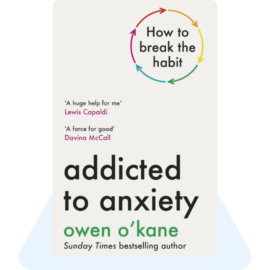
That familiar pattern sits at the centre of Addicted to Anxiety: How to Break the Habit by psychotherapist Owen O’Kane. The title is deliberately provocative. O’Kane is not saying anxiety itself is a formal substance addiction or that people consciously choose to feel distressed. His central argument is that we can become strongly attached to the thoughts and behaviours that surround anxiety because they seem to promise safety, certainty, control, or emotional protection. Worrying, checking, overanalysing, avoiding, rehearsing, seeking reassurance, and constantly preparing for the worst can feel useful in the short term even when they keep the anxiety cycle alive.
Penguin describes the book as a guide to understanding anxiety through the perspective of addiction, recognising triggers, breaking unhelpful habits, and replacing them with more productive behaviours. O’Kane brings more than twenty-five years of experience in physical and mental health, including work as a former NHS mental-health clinical lead. That clinical background matters because the book does not simply tell readers to “think positive”. It asks them to notice the entire system around anxiety: body sensations, beliefs, emotions, coping habits, avoidance, uncertainty, and the relationship they have developed with their anxious self.
This Readers Books Club summary explains the book in easy, practical language. It focuses on the ideas most useful for everyday life: why anxiety can become self-reinforcing, why worry feels protective, how avoidance creates temporary relief, how to build tolerance for uncertainty, how to calm the body without turning calmness into another obsession, and how to respond to anxious thoughts with more distance and compassion.
Because Readers Books Club audiences also explore meditation, spirituality, the Law of Attraction, coaching, and Amiett Kumar‘s personal-growth content, this summary includes clearly labelled editorial applications. They are not presented as themes written by O’Kane himself.
This summary is educational, not a diagnosis or treatment plan. Anxiety can range from ordinary worry to symptoms that significantly affect daily functioning; persistent or severe anxiety may need professional assessment and evidence-based care.
The question to carry through this summary is simple: what if the goal is not to eliminate every anxious feeling but to stop organising your life around it?
What Is Addicted to Anxiety About?
Addicted to Anxiety asks readers to look beyond the feeling of anxiety and examine the habits that grow around it. Anxiety itself is a normal protective process. It helps human beings notice possible threats, prepare for challenges, and respond quickly when danger is real. The problem begins when the protective system starts working harder than the situation requires and when our attempts to feel safe teach the brain that anxiety must always be obeyed.
Imagine that you are nervous about speaking in a meeting. You avoid volunteering. Immediately, you feel relief. That relief is powerful because it seems to prove that avoidance “worked.” But the brain may also learn a second lesson: speaking must have been dangerous, because escaping it made me feel safer. The next meeting becomes harder. In this way, a short-term coping behaviour can contribute to a long-term pattern.
The same mechanism can appear in reassurance-seeking. You worry that a relationship is in trouble, so you ask your partner repeatedly whether everything is okay. Their reassurance calms you for ten minutes. Then a new doubt appears, and you need reassurance again. The issue is not that reassurance is always wrong. The issue is that when it becomes the only way you can tolerate uncertainty, it may train you to trust external confirmation less and less.
O’Kane’s framing is that people can become “hooked” on the process of anxiety: not because anxiety feels pleasant, but because it offers a promise. It tells you that if you keep scanning, analysing, predicting, controlling, and preparing, you may prevent pain. That promise is extremely persuasive, especially for people whose earlier experiences taught them that vigilance was necessary.
The book therefore focuses on breaking cycles rather than fighting feelings. O’Kane encourages readers to change how they relate to thoughts, reduce behaviours that feed anxiety, increase tolerance for discomfort and uncertainty, regulate the body’s alarm response, and treat the anxious part of themselves with less hostility.
This makes Addicted to Anxiety different from books that simply offer relaxation hacks. It is less about creating a permanently calm state and more about becoming less dependent on anxiety-driven habits. Calm becomes a result of living differently, not a condition you must force before you are allowed to act.
About Owen O’Kane
Owen O’Kane is a specialist psychotherapist and mental-health expert with more than twenty-five years of experience in physical and mental health. Penguin notes that he previously worked as an NHS mental-health clinical lead and has written several bestselling books. His work is known for translating complex psychological ideas into practical language.
In interviews, O’Kane has also connected his thinking to growing up in Belfast during the Troubles and to experiences of fear and bullying. That history supports one of the book’s compassionate ideas: anxiety may have learned to protect you in an earlier environment, even when the same level of vigilance is no longer needed.
The Big Idea: Anxiety Is Protective, but Its Habits Can Become Self-Reinforcing
The title Addicted to Anxiety can be misunderstood if read too literally. Anxiety is not classified simply as an addiction, and feeling anxious does not mean a person is choosing or enjoying distress. O’Kane uses the language of addiction to highlight reinforcement: certain behaviours provide short-term relief or a sense of control, so we repeat them even when they create long-term problems.
The pattern often looks like this:
1. Something triggers uncertainty, threat, discomfort, or an unwanted thought.
2. The body becomes activated, and the mind starts predicting danger.
3. You respond with a safety behaviour: avoid, check, analyse, seek reassurance, control, overprepare, or mentally rehearse.
4. The behaviour produces temporary relief.
5. The brain interprets the relief as evidence that the behaviour was necessary.
6. The same trigger becomes more powerful next time.
This cycle is similar to the logic behind many cognitive-behavioural approaches to anxiety: thoughts, feelings, body sensations, and behaviours influence one another. Avoidance may reduce fear immediately while preserving it over time. The NHS similarly explains that avoiding feared situations can make them harder to face later and that CBT helps people recognise unhelpful cycles and respond differently.
O’Kane’s contribution is to make the cycle emotionally understandable. The anxious mind is not trying to ruin your life. It is trying to protect you with strategies that may have become outdated, exaggerated, or overused. That is why attacking anxiety often backfires. If you treat it like an enemy, you add another layer of fear: now you are anxious about being anxious.
Breaking the habit starts when you stop automatically treating every anxious signal as an instruction.
Lesson 1: Anxiety Makes a Powerful Promise of Safety
The first key lesson is that anxiety becomes persuasive because it offers something every human being wants: safety. The anxious mind says, “If you think about this long enough, you will be prepared.” It says, “If you predict every possibility, you will not be surprised.” It says, “If you avoid that situation, you will not be embarrassed.” It says, “If you check one more time, you can finally relax.”
The problem is that the promise has no natural finish line. There is always another possibility to consider, another message to interpret, another symptom to search for, and another risk to calculate. Anxiety can therefore turn preparation into a lifestyle.
O’Kane’s framework asks you to notice the bargain you are making. What is the anxiety promising you? Certainty? Control? Protection from rejection? Protection from making a mistake? Protection from feeling grief, shame, conflict, or disappointment?
Once you identify the promise, you can test it. Has worrying for three hours actually created certainty? Has checking ten times made you trust yourself more? Has avoiding difficult conversations made relationships safer? Has controlling every detail made life more predictable, or has it made you more afraid of anything outside the plan?
This is not an argument for recklessness. Healthy preparation is useful. The difference is whether preparation leads to action or endless monitoring. Useful preparation has a point at which you say, “I have done enough; now I will live.” Anxiety-driven preparation keeps asking for one more guarantee.
A practical exercise is to write down one recurring worry and complete the sentence: “My anxiety believes that if I keep doing this, it will protect me from…” Then write: “The actual cost of this habit is…” You might notice lost sleep, reduced concentration, repeated conflict, avoidance of opportunities, or dependence on reassurance.
The goal is not to mock the anxious system. It is to understand why it has become convincing. When you see the promise clearly, you can begin to decide whether you still want to pay the price.
Lesson 2: Worry Can Feel Like Action Even When Nothing Is Being Solved
One reason anxiety becomes habitual is that worrying can create the sensation of doing something. The mind stays busy, and busyness feels responsible. You replay the problem, imagine consequences, prepare explanations, and mentally test scenarios. Because the mind is active, it can feel as if progress is happening.
But worry and problem-solving are not the same. Problem-solving usually becomes more concrete over time. It identifies what is known, what is unknown, what can be controlled, and what action is available. Worry often becomes more repetitive. It multiplies possibilities without creating a decision.
A useful distinction is to ask: “Is there an action here?” If yes, define it. Make the appointment. Ask the question. Prepare the presentation. Check the bank statement once. Write the plan. Have the conversation. If no action is available, continuing to rehearse the uncertainty may not create more control.
This is where the book’s emphasis on letting go becomes practical. Letting go does not mean pretending the concern is unimportant. It means refusing to use endless mental repetition as a substitute for either action or acceptance.
The NHS recommends structured approaches such as distinguishing between worries you can act on and hypothetical worries you cannot solve right now. That idea complements O’Kane’s message well. You do not need to eliminate the thought before returning to life. You can acknowledge it, decide whether action is possible, and then redirect attention.
Readers Books Club readers can use a simple three-column page:
- What am I worried about?
- What action is actually available?
- What uncertainty must I allow?
The third column is often the most important. Many anxious loops exist because we are trying to convert uncertainty into certainty using thought alone. Life does not offer that bargain. Learning to act without complete certainty is not giving up; it is becoming more psychologically flexible.
Lesson 3: Identify the Behaviours That Keep the Anxiety Cycle Going
Most people know their anxious thoughts. Fewer people know their anxiety behaviours. That matters because behaviour is often where the cycle becomes reinforced.
Common patterns include checking messages repeatedly, searching symptoms online, asking multiple people for reassurance, avoiding driving, cancelling social plans, overpreparing, delaying decisions, monitoring a partner’s mood, rereading emails, mentally rehearsing conversations, keeping yourself excessively busy, or refusing to delegate because control feels safer.
Each behaviour can make sense in context. Checking a locked door once is reasonable. Checking it fifteen times because the feeling of uncertainty is unbearable is different. Preparing for an interview is wise. Rehearsing every possible question until 3 a.m. may be anxiety trying to buy a guarantee that does not exist.
O’Kane invites readers to observe what happens immediately before and after the behaviour. Before it, there is often discomfort. After it, there is usually relief. That relief is the reward that keeps the habit alive.
Try a trigger-behaviour-relief log for one week. Each time you notice an anxiety-driven habit, write three lines:
Trigger: What happened, or what did I think?
Behaviour: What did I do to feel safer?
Relief: What changed for the next few minutes?
Then add a fourth line: Long-term cost. Did the behaviour strengthen avoidance, waste time, increase dependence on others, or make the next episode more intense?
This exercise is powerful because it removes mystery. Anxiety can feel like weather that simply arrives. The log shows that some parts of the cycle are behaviours you can gradually change.
Do not try to stop every safety behaviour overnight. Choose one pattern that creates a meaningful cost. Reduce it carefully. If the behaviour is linked to severe anxiety, trauma, obsessive-compulsive symptoms, panic, or another mental-health condition, professional guidance may be safer and more effective than attempting exposure or behaviour change alone.
Lesson 4: Stop Treating Every Thought as Information
Anxious thoughts often arrive with urgency. “Something is wrong.” “They are upset with me.” “I am going to fail.” “What if I become ill?” “What if I lose control?” The intensity of the thought can make it feel important, and importance can be mistaken for truth.
O’Kane encourages readers to create more distance from thoughts. Instead of immediately asking what a thought means, notice that it is a mental event. A thought can be present without being a prediction, command, diagnosis, or fact.
This is especially useful when the mind produces repetitive “what if?” questions. Some questions deserve action. Others are the mind’s attempt to eliminate uncertainty through imagination. If you answer every “what if?” with another five minutes of analysis, the brain learns that anxious thoughts deserve unlimited attention.
A practical phrase is: “I am having the thought that…” The difference seems small, but it changes perspective. “I will embarrass myself” becomes “I am having the thought that I will embarrass myself.” You have not argued with the thought. You have placed it in context.
The NHS uses a related technique in CBT: step back, examine the evidence, and consider alternative explanations instead of automatically accepting an anxious prediction. The goal is not forced optimism. A neutral, evidence-based response is often more useful than a positive slogan.
For example, instead of “Everything will definitely be fine,” you might say: “I cannot know exactly how this will go. I have prepared, I have handled difficult situations before, and I can respond if something unexpected happens.”
The lesson is that mental noise does not deserve automatic obedience. Thoughts can be noticed, checked, and sometimes allowed to pass without further investigation.
Lesson 5: Build Tolerance for Uncertainty Instead of Demanding Guarantees
O’Kane repeatedly returns to uncertainty because anxiety often grows where certainty is impossible. Relationships, health, careers, parenting, money, and the future all contain unknowns. An anxious mind tries to remove those unknowns before it will permit calm.
But the more you demand certainty, the more fragile you become. If you need to know exactly how someone feels before you can relax, every delayed message becomes a crisis. If you need absolute certainty about health, every normal sensation can become a threat. If you need to guarantee success before acting, you may avoid opportunities that matter.
The alternative is not to become indifferent. It is to practise saying, “I do not know, and I can handle not knowing right now.”
This is a skill. Start with low-stakes uncertainty. Send a normal message without rereading it five times. Let someone take longer to reply without immediately asking what is wrong. Make a small decision without surveying six people. Leave one minor task at “good enough”. Notice the discomfort, and allow it to rise and fall.
The Times interview with O’Kane highlights a similar idea: comfort grows when people become more able to tolerate difficult emotions, rejection, unpredictability, and the ordinary ups and downs of life. The anxious question “What if?” becomes less powerful when your answer shifts from “I must prevent everything” to “I will deal with what actually happens.”
That is a more realistic form of confidence. Confidence is not knowing the future. It is trusting your capacity to respond.
Lesson 6: Avoidance Works Quickly, Which Is Why It Can Become a Trap
Avoidance is one of anxiety’s most effective short-term strategies. If you cancel the presentation, you do not have to feel nervous. If you avoid the crowded place, your body calms. If you refuse to make the phone call, you escape the possibility of awkwardness.
Because the relief is immediate, avoidance can feel like wisdom. But repeated avoidance may teach the brain that the situation was too dangerous to face. The feared experience remains untested, so the fear has no reason to update.
The NHS makes this point directly: avoiding what you fear may feel easier at first but can make it harder to face over time. Evidence-based therapies often use carefully planned exposure to help people learn that distress can be tolerated and that feared outcomes may be less likely or less catastrophic than expected.
For everyday anxiety, the Readers Books Club version of this lesson is to ask: “What is my anxiety preventing me from practising?” Maybe you need to practise speaking even when your voice shakes, attending a social event without knowing exactly how it will go, submitting work before it feels perfect, or having an honest conversation without controlling the other person’s response.
Do not turn this into a challenge to overwhelm yourself. Courage is not flooding yourself with the hardest possible situation. The safer principle is gradual practice. Choose a manageable step and repeat it until your brain has new evidence.
If anxiety is severe, connected to trauma, panic, obsessive-compulsive symptoms, eating problems, or another clinical condition, do not design your own intense exposure plan from a book summary. A qualified mental health professional can tailor support to your situation.
The deeper lesson is that relief and recovery are not always the same thing. Some behaviours feel better now while making tomorrow harder. Breaking the anxiety habit means learning to recognise that difference.
Lesson 7: Calm the Body Without Making Calmness Another Requirement
Anxiety is not only a thought problem. It is physical. Heart rate changes, breathing becomes shallow, muscles tighten, the stomach churns, the throat feels narrow, and the body prepares for action. When the body signals danger, the mind often searches for a story to explain the sensations, creating a feedback loop.
O’Kane therefore encourages readers to work with the body as well as the mind. Slowing down, dropping the shoulders, regulating breathing, grounding attention, and visualising a calming place can help reduce the sense of immediate threat.
The important detail is not to turn these tools into rituals that must “work” before you continue. If you tell yourself, “I cannot go into the meeting until my heart rate is completely normal,” you may accidentally create another dependency. The goal is not perfect calm; it is enough regulation to stay present and choose your next action.
Try a brief body reset:
1. Put both feet on the floor.
2. Notice where you are holding tension.
3. Let the exhale become slightly longer than the inhale without forcing the breath.
4. Look around and name three neutral objects.
5. Remind yourself: “My body is activated. Activation is uncomfortable, but it is not automatically danger.”
This kind of grounding fits with the book’s practical tone. You are not arguing with the body. You are giving it updated information.
For Readers Books Club audiences interested in meditation, this also explains why meditation can be useful as a supporting practice. Mindfulness trains the ability to notice bodily sensations and thoughts without immediately reacting. Research reviewed by NCCIH suggests mindfulness-based approaches may help some people with anxiety, though results vary and meditation is not a replacement for professional treatment when an anxiety disorder is significantly affecting life.
Lesson 8: Treat the Anxious Part of You as an Ally That Is Overworking
People often develop a hostile relationship with anxiety. “I hate this.” “Why am I like this?” “I need to get rid of it.” “I cannot cope if this comes back.” The battle adds a second problem: now the presence of anxiety itself becomes threatening.
O’Kane offers a more compassionate frame. Think of anxiety as the scared, protective part of you. It is not always accurate, but its intention is often protection. It is working too hard because it believes danger is everywhere.
This can sound soft, but it has a practical effect. If you relate to anxiety as an enemy, you are likely to fight, suppress, avoid, or monitor it. If you relate to it as a protective system that needs updating, you can respond with clearer information.
Before a difficult event, you might say internally: “I know you are trying to protect me. Thank you. I have prepared. I can handle discomfort. You do not need to run the whole situation.”
Self-compassion does not mean believing every anxious story. It means refusing to shame yourself for having a nervous system. The tone changes from “Stop this now” to “I understand why this is happening, and I will choose what we do next.”
This lesson is especially important for people who have carried anxiety for many years. If vigilance once helped you survive an unsafe environment, it may continue long after the environment has changed. Compassion creates enough safety to update the pattern.
Lesson 9: Update Old Safety Strategies That No Longer Match Your Life
O’Kane’s personal story illustrates a powerful principle: anxiety can be appropriate in one environment and excessive in another. A child growing up around instability may learn to scan constantly for danger. A person who experienced criticism may learn to rehearse every sentence. Someone who was betrayed may monitor relationships for signs of rejection.
These strategies can be intelligent adaptations. The problem is that the brain does not always automatically update them when circumstances improve.
Ask yourself: “What did this habit help me survive or avoid?” Then ask: “Is the same level of protection necessary now?”
For example, maybe overpreparing once protected you in a harsh workplace. In a healthier team, it may now create exhaustion. Maybe people-pleasing helped reduce conflict in childhood. In adult relationships, it may prevent honesty. Maybe checking everything repeatedly once created a sense of order during chaos. Now it may consume time and reinforce doubt.
Updating does not erase your history. It acknowledges it. You can thank an old strategy for what it did and still decide that you need a new one.
This is where therapy can be particularly helpful, especially when anxiety is connected with trauma or longstanding patterns. A book can help you recognise the map; professional support can help you navigate the most difficult territory safely.
Lesson 10: Use the SIMPLY Method to Interrupt the Anxiety Cycle
In interviews about the book, O’Kane describes a six-part technique using the acronym SIMPLY. It is designed as a practical circuit-breaker when anxiety is active.
S – Space. Create a little distance from the immediate swirl of thoughts and feelings. This may mean stepping outside, pausing a conversation, sitting somewhere quieter, or simply imagining that you are taking one mental step back.
I – Identify. Ask what is actually happening. Are you overwhelmed, frightened, ashamed, uncertain, lonely, angry, or physically overstimulated? Naming the experience is different from becoming absorbed in the story around it.
M – Meet. Turn toward the anxiety with curiosity rather than instantly escaping it. What is it trying to protect you from? What does it believe is about to happen?
P – Pacify. Help the body reduce its alarm level. Use slower breathing, grounding, relaxed posture, or another safe regulating practice.
L – Let go. Recognise the old habit and practise releasing the need to keep analysing, controlling, checking, or avoiding. Letting go may need to be repeated many times.
Y – You. Remember your role. Anxiety is present, but you are the person choosing the response. The aim is to return agency to you rather than letting the anxious system make every decision.
The value of SIMPLY is its sequence. It does not start with “stop being anxious”. It starts with space and identification. First create room; then understand; then respond.
Readers Books Club readers can write the six letters in a notebook or phone note and use them during a recurring trigger. With practice, the acronym can become a reminder that you have more options than automatic reaction.
Lesson 11: Use HEART to Respond to Difficult Emotions Instead of Escaping Them
O’Kane also describes a five-step emotional process called HEART: Help, Embrace, Accept, Respond, Trust. The framework reflects one of the book’s broader themes: emotions become harder when we either fight them or let them dictate everything.
Help. Assume the emotion has appeared because some part of you needs attention.
Embrace. Turn toward the feeling instead of immediately distracting, numbing, analysing, or suppressing it.
Accept. Allow the emotion to exist for the moment. Acceptance does not mean approval; it means ending the argument with the fact that the feeling is already here.
Respond. Decide what support or action is appropriate. That may be rest, a conversation, a boundary, a practical task, or simply allowing the feeling to move through without creating a bigger story.
Trust. Trust that emotions change. You do not have to hold onto them to prove they mattered, and you do not have to eliminate them before you can continue living.
This framework is especially useful for people who confuse anxiety with a command. The feeling can be real without the prediction being true. You can respect the emotion and still choose behaviour based on values, evidence, and context.
Lesson 12: Letting Go Is a Practice, Not a Single Decision
“Let it go” is easy advice to give and difficult advice to use. If letting go were simply a decision, people would stop worrying the first time someone told them to relax.
O’Kane’s approach is more realistic. Letting go is a repeated practice of not feeding the same loop. A thought returns; you notice it and choose not to investigate it again. The urge to check appears; you delay or reduce the checking. The desire for reassurance rises; you remind yourself that uncertainty can be tolerated. The body feels activated; you regulate without demanding total calm.
This is why progress can feel uneven. Breaking an anxiety habit is not the same as never feeling anxious again. The thought may still appear. The body may still react. What changes is how much time, attention, and behaviour you give the anxiety.
A useful measure of progress is not “Did I feel anxious today?” but “What did I do when anxiety appeared?” Did you still attend? Did you avoid fewer things? Did you recover faster? Did you ask for reassurance one time instead of six? Did you notice the thought without searching for proof?
That is behavioural freedom. The anxious system may still knock on the door, but it is no longer automatically invited to run the house.
A Practical 7-Day “Break the Anxiety Habit” Reset
This Readers Books Club reset is inspired by the book’s broader principles. It is not a medical protocol. Keep it gentle, and seek professional support if anxiety is severe or significantly affecting daily functioning.
Day 1: Map Your Anxiety Cycle
Choose one recurring anxiety pattern. Write the trigger, the thought, the body sensation, the behaviour, the short-term relief, and the long-term cost. Do not try to change it yet. The purpose is awareness.
Day 2: Identify the Promise
Ask what anxiety promises if you keep obeying the habit. Safety? Certainty? Approval? Prevention of embarrassment? Write one sentence beginning, “My anxiety believes that if I…, then I can avoid…”
Day 3: Reduce One Safety Behaviour
Choose a small habit that is safe to reduce. Check once instead of three times. Wait ten extra minutes before asking for reassurance. Send one low-stakes message without rereading it repeatedly. Notice the discomfort and stay with it.
Day 4: Practise Uncertainty
Use the sentence, “I do not know, and I can handle not knowing right now.” Choose one ordinary uncertainty and resist the urge to solve it immediately.
Day 5: Use SIMPLY
When anxiety appears, work through Space, Identify, Meet, Pacify, Let go, You. Keep the process brief. The goal is not perfect execution; it is interrupting autopilot.
Day 6: Do One Thing Anxiety Has Been Delaying
Choose a manageable action you have avoided: making a call, sharing an idea, attending a meeting, driving a familiar route, or having a small honest conversation. Keep the step realistic.
Day 7: Review What Actually Happened
What did anxiety predict? What happened? Which behaviour created the most temporary relief? Which new response gave you more freedom? Choose one practice to continue for the next 30 days.
Meditation and Addicted to Anxiety: Training the Pause
Meditation fits naturally beside the book because both practices ask you to notice internal experience without immediately reacting to it. During meditation, a thought appears and you notice it. The body becomes restless, and you notice it. You do not have to solve every thought, and you do not have to turn every sensation into a story.
For someone caught in anxiety habits, this can strengthen the pause between trigger and behaviour. You may notice the urge to check your phone before checking it. You may feel the impulse to seek reassurance before sending the message. That fraction of awareness is where choice becomes possible.
A simple five-minute practice is enough:
Sit comfortably and notice the breath. When a thought appears, label it softly as “thinking”. If anxiety appears in the body, label it “activation” or “tension”. Return to the breath or the feeling of your feet on the floor. The goal is not to empty the mind. The goal is to practise staying present without automatically following every internal signal.
NCCIH notes that mindfulness-based practices may help some people with anxiety, although effects vary and negative experiences can occur for some practitioners. Meditation should be treated as a supportive practice, not proof that you should manage serious anxiety alone.
Spirituality, Acceptance, and the Need to Control
For readers interested in spirituality, Addicted to Anxiety can be read through one grounded spiritual question: how much of my suffering comes from demanding that life be completely controllable?
Spirituality often includes themes of surrender, presence, trust, compassion, and acceptance. Anxiety often moves in the opposite direction: predict more, control more, rehearse more, guarantee more. This does not make anxiety “unspiritual”. It makes it human.
A healthy spiritual application is not to shame yourself for fear or tell yourself that low vibration caused it. Instead, spirituality can become a practice of meeting uncertainty with humility. You take responsible action, and then you recognise the limits of control.
The practical sentence is: “I will do what is mine to do, and I will stop demanding control over what is not mine.”
That attitude fits the book better than forced positivity because it respects reality. You can be afraid and still be present. You can want a good outcome and still accept uncertainty.
Addicted to Anxiety and the Law of Attraction: A Grounded Readers Books Club Connection
Addicted to Anxiety is not a Law of Attraction book. O’Kane does not present anxiety as a manifestation failure, and readers should not assume that feeling worried will magically attract bad events. Anxiety is a normal human process, and people should never be blamed for difficult circumstances because they felt fear.
Still, Readers Books Club audiences who study the Law of Attraction can draw one useful behavioural connection: attention influences behaviour. If your attention is constantly organised around danger, you may make decisions from avoidance rather than values. You may decline opportunities, delay conversations, seek excessive reassurance, or spend so much energy predicting problems that less energy remains for meaningful action.
A grounded Law of Attraction practice therefore focuses less on “never think negatively” and more on alignment between intention and behaviour. If you want a healthier relationship, practise honest communication rather than anxiety-driven testing. If you want career growth, take the next useful action even if uncertainty remains. If you want peace, build routines that reduce compulsive checking rather than repeating affirmations while continuing the same fear-based habits.
For people who follow Amiett Kumar, manifestation, meditation, visualisation, and personal-growth content, the book offers an important balancing lesson: inner work should increase your capacity to live, not make you afraid of your own thoughts. You do not need perfect emotional control to move toward a goal.
Affirmations: Use Them to Support Action, Not to Argue With Reality
Although affirmations are not the central method of Addicted to Anxiety, readers interested in manifestation often ask how positive statements fit with anxiety. The most helpful answer is to avoid using affirmations as a fight against unwanted thoughts.
If you feel intense uncertainty and repeat “Everything is perfect, nothing can go wrong,” the statement may feel unbelievable. A more grounded affirmation can support the book’s principles:
- “I can handle uncertainty one step at a time.”
- “An anxious thought is not automatically a fact.”
- “I do not need complete certainty before I act.”
- “I can feel discomfort and still choose what matters.”
- “I am learning to trust myself more than the urge to check.”
- “My body can feel activated without being in immediate danger.”
These statements are useful because they do not promise impossible certainty. They reinforce a new relationship with anxiety.
Coaching and Life Coach Support: Where It Helps and Where It Does Not Replace Therapy
The book’s lessons connect naturally with coaching when the main challenge is implementation: setting boundaries around reassurance, building routines, taking action despite ordinary uncertainty, clarifying values, and creating accountability for behaviour change.
A life coach can help a client identify where anxiety-driven habits are interfering with goals. For example, someone may repeatedly delay publishing content because they keep seeking certainty that it will succeed. Coaching can help define a realistic standard, deadline, and action plan.
But coaching has limits. Anxiety disorders are mental-health conditions, and severe or persistent symptoms may require assessment and treatment from qualified mental-health professionals. A responsible coach should not diagnose, treat trauma beyond their scope, tell clients to stop medication, or promise that mindset alone will cure anxiety.
For Readers Books Club and Amiett Kumar audiences interested in coaching, this distinction is valuable. Coaching can support action and accountability. Therapy can address clinical anxiety, trauma, and deeper psychological patterns. Sometimes people benefit from both, but the roles are not interchangeable.
Common Anxiety-Habit Mistakes to Avoid
Mistake 1: Trying to Eliminate Every Anxious Feeling
If your goal is zero anxiety, normal nervousness can feel like failure. The book encourages a different goal: live more freely even when anxiety sometimes appears.
Mistake 2: Treating Reassurance as the Only Route to Calm
Reassurance can be comforting, but if you cannot tolerate uncertainty without repeated confirmation, the habit may become stronger.
Mistake 3: Avoiding Everything That Creates Discomfort
Avoidance brings quick relief. Over time, your life can become smaller. Gradual, safe engagement builds new evidence.
Mistake 4: Overanalysing Every Thought
A thought can be noticed without being solved. Repeated analysis often creates more material for anxiety.
Mistake 5: Using Meditation Only to Make Anxiety Disappear
Meditation is more useful when it trains awareness and acceptance. If you judge every session by whether anxiety vanished, meditation itself can become another control ritual.
Mistake 6: Turning the Book’s “Addiction” Metaphor Into Self-Blame
The point is not that you chose anxiety. The point is that reinforced habits can be changed with awareness, practice, and, when needed, professional support.
Mistake 7: Confusing Self-Help With Treatment
Books can be valuable. They are not substitutes for diagnosis, psychotherapy, or medical care when symptoms are severe.
How Addicted to Anxiety Compares With Other Popular Books
Addicted to Anxiety fits naturally beside several books already relevant to Readers Books Club audiences.
Stop Overthinking by Nick Trenton focuses directly on repetitive thinking, stress, and practical tools for getting out of mental loops. Addicted to Anxiety goes further into the reinforcing relationship between anxious beliefs and safety behaviours.
How to Stop Worrying and Start Living by Dale Carnegie is a classic built around practical worry reduction, living in the present, and problem-solving. O’Kane’s book feels more contemporary in its language and more explicitly psychological in its focus on avoidance, uncertainty, body activation, and reinforced coping patterns.
The Let Them Theory is useful when anxiety is connected with trying to control other people’s reactions. Its core message of returning attention to your own choices can complement O’Kane’s emphasis on reducing control-seeking behaviours.
Stop Letting Everything Affect You focus on emotional reactivity, boundaries, overthinking, and self-sabotage. Readers who liked that book may appreciate Addicted to Anxiety for its deeper focus on why the nervous system and mind keep returning to protective patterns.
For a reading sequence, start with Addicted to Anxiety if anxiety and uncertainty are central. Move to Stop Overthinking for thought-management tools, The Let Them Theory for control and relationships, and Atomic Habits if you want a broader system for turning new behaviours into routines.
Who Should Read Addicted to Anxiety?
This book may be especially useful for readers who:
- worry even when they know worrying is not helping;
- repeatedly seek reassurance;
- avoid situations because uncertainty feels intolerable;
- overprepare or overanalyse in an attempt to feel safe;
- struggle to trust decisions after they make them;
- feel physically activated by ordinary uncertainty;
- are tired of fighting anxiety as if it is an enemy;
- enjoy practical psychology and self-improvement books;
- want to understand why some coping behaviours provide relief but keep the cycle going.
It can also be useful for partners, parents, coaches, and friends who want a more compassionate understanding of anxiety patterns.
The book is not a replacement for professional care. If anxiety is severely affecting daily functioning, sleep, relationships, school, work, eating, substance use, or safety, seek appropriately qualified support.
Frequently Asked Questions
What is Addicted to Anxiety by Owen O’Kane about?
It is a self-help and psychology book that explores anxiety through the idea of reinforcement and habit. O’Kane argues that thoughts and behaviours such as worry, checking, reassurance-seeking, avoidance, and control can feel protective in the short term while helping maintain anxiety over time.
Is anxiety really an addiction?
The book uses addiction as a framework for understanding how anxiety-related habits can become strongly reinforced. Anxiety itself is not simply classified as an addiction, and the title should not be interpreted as a formal diagnosis.
What is the main lesson of Addicted to Anxiety?
The central lesson is that you can change your relationship with anxiety. Instead of fighting every anxious feeling, identify the thoughts and behaviours that feed the cycle, tolerate more uncertainty, regulate the body, and make decisions based on values rather than fear.
What is the SIMPLY method?
O’Kane describes SIMPLY as Space, Identify, Meet, Pacify, Let go, You. It is a step-by-step way to create distance from anxiety, understand what is happening, soothe the body, release old habits, and return agency to yourself.
What is the HEART method?
HEART stands for Help, Embrace, Accept, Respond, and Trust. It is a compassionate framework for meeting difficult emotions instead of suppressing or clinging to them.
Can meditation help with anxiety?
Meditation and mindfulness may help some people manage anxiety and become more aware of thoughts and body sensations. Evidence varies, and meditation is best treated as a supportive tool rather than a replacement for evidence-based treatment when anxiety is severe.
Does the book connect with spirituality or the Law of Attraction?
Not as a primary focus. The spirituality and Law of Attraction connections in this Readers Books Club summary are editorial applications for readers interested in those subjects. The book itself is focused on anxiety, habits, emotional regulation, and behaviour change.
Final Thoughts: The Goal Is Freedom, Not Perfect Calm
The most useful idea in Addicted to Anxiety is not that anxiety is bad. It is that the relationship you build with anxiety matters.
Anxiety is a protective system. It can warn you, prepare you, and help you respond to real risk. But when every signal becomes a command, the protective system begins to run too much of your life. You check instead of trust. You avoid instead of practise. You analyse instead of decide. You seek certainty where certainty does not exist.
Owen O’Kane’s framework offers a different path. Notice the promise of safety. Identify the habit. Create space from the thought. Calm the body enough to choose. Increase your tolerance for uncertainty. Meet the anxious part of yourself with compassion. Then take one action that proves you can live without obeying every alarm.
For Readers Books Club, this is what useful books can do: give language to invisible patterns and turn understanding into action.
For readers interested in meditation, spirituality, Law of Attraction, coaching, life coaching, manifestation, and the work of Amiett Kumar, the book also offers a valuable grounding principle: personal growth is not about becoming emotionally perfect. It is about becoming less controlled by automatic patterns. Meditation can train awareness. Spirituality can deepen acceptance. Coaching can support purposeful action. But none of these practices should become another way to fear ordinary human emotion.
You do not need to wait until anxiety disappears before you live. You can feel uncertain and still make the call. You can feel nervous and still enter the room. You can notice the urge to check and choose not to. You can carry an anxious thought without building your whole day around it.
That is what breaking the anxiety habit ultimately means: anxiety may still speak, but it no longer gets the final vote.
Contents