A Cindra Kamphoff Book Summary by Readers Books Club
“Confidence is not about never feeling doubt. It is a skill you can learn.” This is the heart of Cindra Kamphoff’s new book, and it might change how you see yourself.
Have you ever walked into a room, a meeting or an exam and felt your inner voice whisper, “You don’t belong here”? Have you ever held back an idea, skipped an opportunity or stayed quiet when you had something important to say, simply because self-doubt got there first?
If you said yes, you are in very good company. And here is the best news you will read today: confidence is not a gift handed out to a lucky few. It is a habit. And habits can be built.
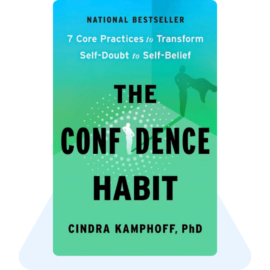
Welcome to the Readers Books Club summary of The Confidence Habit: 7 Core Practices to Transform Self-Doubt to Self-Belief by Dr. Cindra Kamphoff. If you have been searching for a clear, honest and practical The Confidence Habit summary, you have landed in the right place. In this long-form guide we break down the big ideas, the seven core practices, the five confidence traps and the simple actions you can start using today.
Whether you are a student, a working professional, a creator, an athlete, a parent or someone rebuilding after a hard season, this The Confidence Habit book summary is designed to be easy to read and easy to use. Grab a cup of chai or coffee, and let’s begin.
Meet the Author: Who Is Cindra Kamphoff?
Dr. Cindra Kamphoff is a mental performance coach and performance psychologist who has spent about two decades helping high performers think, feel and perform at their best. Her client list includes professional athletes, Olympians and business leaders. She has worked with organizations such as the Minnesota Vikings, USA Track & Field, Target and Verizon, and she is the founder of the Mentally Strong Institute.
If her name sounds familiar, you may know her earlier books, Beyond Grit: Ten Powerful Practices to Gain the High Performance Edge and Beyond Grit for Business. In those books she explored what it takes to build a high-performance mindset. In The Confidence Habit, she zooms in on one skill that sits underneath nearly every goal we chase: believing that we are capable.
Why does her background matter? Because most confidence advice online is built on slogans. “Just believe in yourself.” “Fake it till you make it.” “Stand in a power pose.” Kamphoff comes from a world where results are measured. A sprinter either hits the mark or doesn’t. A leader either handles the pressure or struggles. That world forces you to ask a hard question: what actually works to build confidence, and what is just noise?
Her answer, shaped by research and decades of coaching, is a system. Not a mood. Not a slogan. A system.
Why The Confidence Habit Matters in 2026
We live in a time of constant comparison. We scroll through other people’s highlights, hear about overnight successes and quietly measure ourselves against strangers. It is no surprise that many people feel they are falling short.
According to research shared by Kamphoff, 67 percent of people believe we are in a confidence crisis, and one in two Gen Z adults consistently or frequently feels like they are not enough. Those numbers will not shock anyone who has ever stared at a blank screen, a job application or a mirror and wondered, “Am I good enough?”
This is exactly why the book has struck a chord. It arrived as a national bestseller and has been welcomed by athletes, leaders and everyday readers who want a way out of the self-doubt loop. Many of us are told to “be more confident” without anyone explaining how. The Confidence Habit answers the “how.”
For readers who follow the Readers Books Club channel, this fits perfectly with the themes we talk about again and again: personal growth, motivation, disciplined mindset transformation and the quiet power of daily habits. If you enjoy our lists of the best books 2026 has to offer, this one deserves a place on your shelf.
The Big Idea: Confidence Is a Habit, Not a Trait
Let’s start with the shift that holds the whole book together.
Most of us secretly believe confidence is a personality trait. Some people have it. Others don’t. The confident ones seem to float through life, speak up easily, take risks and recover quickly from mistakes. The rest of us are left thinking, “I was just born this way.”
Kamphoff challenges that belief head-on. In her view, confident people are not fearless and not doubt-free. They feel nervous. They question themselves. The difference is that they rebound faster. They move through doubt more quickly and return to action while others stay stuck in the loop of overthinking.
And because confidence is made of parts that can be trained, anyone can build it at any age and at any stage of life: before a promotion, after a setback, during a career change, in a new city, or when facing tough feedback.
Confidence Is Four Things
One of the most useful ideas in the book is the way Kamphoff breaks confidence into four connected parts. Think of them as four doors into the same room.
1. Confidence is a feeling. Sometimes confidence shows up as a warm, steady sense that “I’ve got this.” It is real, and it is lovely when it arrives. But it is also unreliable. Feelings rise and fall with sleep, stress, hormones and the news. If you wait to feel confident before you act, you may wait forever.
2. Confidence is a decision. This is the empowering part. You can decide to act with confidence even when the feeling hasn’t shown up yet. You decide how you will speak, how you will prepare, how you will respond to a mistake. Confidence becomes something you choose, not something you wait for.
3. Confidence is a skill. Skills can be practiced. Just like learning to drive, play cricket, cook a perfect biryani or speak on camera, confidence grows with repetition, coaching and feedback. You are not “bad at confidence.” You are simply early in the practice.
4. Confidence is a belief in yourself. Underneath all the strategies is a deeper conviction about your worth and your capability. This is self belief, and it shapes what you try, what you avoid and how long you keep going when things get hard.
When you see confidence this way, something shifts. It is no longer a verdict on who you are. It becomes a set of levers you can pull.
Readers Books Club insight: If confidence is a feeling only, you are at its mercy. If it is also a decision, a skill and a belief, you are in the driver’s seat.
Why Do We Lose Confidence? The Five Confidence Traps
Before building confidence, the book helps you spot what is quietly tearing it down. Kamphoff names five confidence traps: fear, limiting beliefs, judgment, comparison and perfectionism. Almost everyone falls into at least one. Many of us fall into all five on a Monday morning.
Let’s look at each trap and what it feels like in real life.
Trap 1: Fear
Fear is the trap Kamphoff says she sees trip people up the most, because it wears so many disguises. It can look like procrastination, avoidance, over-preparing or saying “I’m not ready yet.” It can also look like what she calls FOPO, the fear of other people’s opinions. FOPO is the voice that asks, “What will they think?” before you post the video, share the idea or apply for the role.
One of the most memorable lines in the book’s ideas is a simple acronym for fear: Future Events Aren’t Real. Fear is a future-based emotion. It lives in “what if” and “what might happen.” Your body reacts as if the danger is here now, but most of the time the event hasn’t happened and may never happen.
The antidote is to come back to the present moment and ask a grounding question: “What can I control right now?” That single question moves you from spinning in imagination to taking one small, real step. It is a brilliant, practical tool for self doubt that strikes before a presentation, interview or big conversation.
Trap 2: Limiting Beliefs
Limiting beliefs are the stories we repeat until they feel like facts. “I’m not a numbers person.” “I’m too old to start.” “People like me don’t succeed at this.” Often they were planted years ago by a teacher’s comment, a family expectation or one failure we never reexamined.
The danger is not that these beliefs exist. It is that we stop questioning them. They quietly set a ceiling on what we try. This is where the idea of the subconscious mind becomes useful in everyday language: the beliefs running in the background shape your choices more than your conscious goals do. Change the belief, and the behaviour follows.
Trap 3: Judgment
Judgment is the harsh inner critic. It labels, generalizes and punishes. One mistake becomes “I always mess up.” One awkward conversation becomes “I’m terrible with people.” Judgment does not stop at what you did. It attacks who you are.
Kamphoff encourages readers to notice when they are labeling or generalizing, because those two habits are the engine of self-criticism. Awareness is the first step. Once you catch the label, you can question it.
Trap 4: Comparison
Comparison is the thief of confidence in the social media age. You compare your behind-the-scenes with someone else’s highlight reel, and of course you lose. Comparison also hides the fact that every person you admire has their own doubts, struggles and unseen failures.
The shift the book points toward is moving from “Am I better than them?” to “Am I growing compared to who I was?” That small change turns envy into information and competition into motivation.
Trap 5: Perfectionism
Perfectionism looks like high standards, but it often behaves like fear in a nice suit. It delays the launch, avoids the risk and demands a flawless outcome before you are allowed to feel proud. Perfectionists often struggle to celebrate because the goalpost keeps moving.
The cure is not lower standards. It is a healthier relationship with progress. The book’s practices, especially capturing your wins, help you notice what is going right instead of only what is imperfect.
Quick reflection: Which of the five traps shows up most in your life right now: fear, limiting beliefs, judgment, comparison or perfectionism? Hold on to your answer. It will help you choose where to start with the seven practices.
The 7 Core Practices of The Confidence Habit
Now we reach the heart of the book. Kamphoff offers seven core practices for building confidence. Each practice is a habit you build, supported by tools and exercises you can apply in real situations. Across the book she shares nineteen confidence-boosting strategies that sit inside these seven practices.
Here is an important note: the practices are not a strict step-by-step ladder. You do not have to start at number one and finish at number seven. You can begin wherever you need the most support right now. She even offers a free confidence assessment at confidencetools.com to help readers see which practices they most need to grow.
The seven practices are:
- Craft your inner coach
- Clear your past
- Clarify your future
- Create your identity
- Capture your wins
- Claim your emotions
- Compose your winning team
Notice something clever? All seven start with the letter C. That makes the framework easy to remember on a busy day. Let’s walk through each one.
A quick note on how to read the sections below: we explain what each practice means and what it looks like in daily life, and we add a “Try this” action step from the Readers Books Club team to help you apply it. For the author’s full exercises, tools and stories, pick up the book itself.
Practice 1: Craft Your Inner Coach
The core idea: The voice in your head is either your biggest fan or your toughest critic. This practice is about deliberately shaping that voice into a coach.
Think about how a great coach speaks. They are honest about mistakes, but they never humiliate you. They point to the next step. They believe in your potential even when you don’t. Now compare that to how you talk to yourself after a bad day. Most of us would never speak to a friend the way we speak to ourselves.
Crafting your inner coach means becoming aware of your self-talk and training it. It is a core piece of performance psychology, because elite athletes learn early that what you say to yourself in a high-pressure moment decides how you perform. This is also where Kamphoff’s “truth meter” comes in. When a harsh thought appears, you test it with three questions:
- Is this thought true?
- Is it serving me?
- What would be a more empowering thought?
That last question matters most. You are not forced to pretend everything is wonderful. You simply replace a false and unhelpful thought with a truer and more useful one. For example, “I’m terrible at public speaking” becomes “I’m still learning to speak in public, and I get better every time I practice.”
Try this: For the next three days, write down your three harshest self-talk lines. Run each one through the truth meter. Then write a coach-style replacement and read it aloud each morning.
Practice 2: Clear Your Past
The core idea: You cannot move forward with full strength if you are dragging yesterday behind you.
Many of us carry an invisible backpack. Inside are old failures, embarrassing moments, harsh words from someone who doubted us and mistakes we replay at night. We may not talk about it, but it quietly shapes how safe it feels to try again.
Clearing your past does not mean pretending it didn’t happen. It means looking at it honestly, learning what it has to teach, and releasing the grip it has on your present. A setback is data, not a definition.
This practice ties closely to limiting beliefs. Often the voice that says “I can’t” is just an old memory wearing a new outfit. When you clear the past, you begin to see that one failed exam, one lost job or one painful rejection was an event, not an identity.
It also ties to mental strength. Mentally strong people don’t avoid pain. They process it, extract the lesson and keep moving. Think of it as emotional housekeeping: you clear the clutter so there is space for something better.
Try this: Write down one past moment that still stings. Under it, write: “What happened,” “What I learned” and “What I choose to carry forward.” Then close the notebook. You are not erasing the past. You are updating its meaning.
Practice 3: Clarify Your Future
The core idea: Confidence grows when you know where you are going.
Have you noticed how doubt rushes in when we feel directionless? When the goal is blurry, every step feels risky. But when you can picture where you are heading and why it matters, small obstacles lose their power.
Clarifying your future means getting specific about what you want, the kind of person you want to become and the purpose behind it. The book connects this with something bigger than ego. A clear vision tied to purpose helps you move through fear because the reason you are acting is larger than the discomfort you feel.
This practice has a lot in common with what many readers call manifestation and the law of attraction, though the approach is more grounded. Where some manifestation ideas stop at wishing and visualizing, a performance-psychology approach pairs the vision with preparation and action. Seeing your goal is powerful. Taking the next measurable step toward it is what makes it real.
Try this: Write a short “future snapshot” describing your life one year from now: your work, your health, your relationships and how you feel. Then choose one action you can take this week that moves you toward it.
Practice 4: Create Your Identity
The core idea: Lasting confidence comes from who you believe you are, not only from what you achieve.
You might have seen people who achieve a lot but still feel like a fraud. That is because results alone cannot hold up confidence. If your sense of self is tied only to wins, a single loss can shake it. Identity-based confidence is steadier.
Creating your identity means deciding on the values, strengths and qualities you want to stand on, and then acting in line with them. Instead of saying “I want to be confident when I speak,” you say, “I am someone who shares ideas with courage.” The action follows the identity, and the identity strengthens with every action.
This is where self belief truly takes root. It also lines up with what life coaching and coaching programs often teach: your habits become proof of who you are. Every small action is a vote for the identity you are building.
It’s also a powerful antidote to comparison. When you know your values and your strengths, you stop measuring yourself against someone else’s story. You are writing your own.
Try this: Complete this sentence in three different ways: “I am someone who…” Choose qualities you want to grow, not only the ones you already feel. Then take one small action today that matches each sentence.
Practice 5: Capture Your Wins
The core idea: Your brain notices what is missing more easily than what is working. You have to train it to notice progress.
Human brains have a built-in negativity bias. We remember the one critical comment and forget the nine kind ones. We focus on how far we still have to go instead of how far we have come. Over time, that makes us feel like we are never doing enough.
Capturing your wins is the simple, practical fix. You deliberately record your progress, big and small, so your confidence has evidence to stand on. This is positive psychology in action: noticing what is going right strengthens motivation and resilience.
One story linked to this practice has stayed with readers. During a period when her father was in intensive care for 51 days, Kamphoff and her family created a win wall, a tri-fold poster where they wrote down one small win each day, even something as simple as a little piece of good news. They kept adding to it for as long as they could. It is a gentle reminder that win-tracking is not about bragging. It is a way to hold on to hope and notice light even in hard seasons.
You can use a win wall at home, in your workplace, or even to open a team meeting by naming recent progress. It costs nothing and takes less than two minutes.
Try this: Start a win wall, a notebook page or a notes-app list today. Each night, write one win. It can be tiny: “I spoke up in the meeting,” “I went for a walk,” “I finished a chapter.” After thirty days, read the whole list and see what it tells you about yourself.
Practice 6: Claim Your Emotions
The core idea: Confidence is not the absence of emotion. It is the ability to feel your emotions and still choose your actions.
Many people believe that confident people never feel nervous. The truth is the opposite. They feel nerves, too, but they have learned how to relate to those feelings. They don’t push emotions away or let them drive the car.
Claiming your emotions means naming what you feel, understanding what it is telling you and responding with intention. Anxiety before a big moment can be reframed as energy and readiness. Disappointment can become information. Frustration can point to something you care about.
This practice is closely linked to meditation and mindfulness. Simple breathing, a few quiet minutes or a short body scan can help you notice emotions without being swept away by them. If you are drawn to spirituality, you may find that this practice feels familiar: pausing, observing and returning to the present moment. It also connects back to the “Future Events Aren’t Real” idea, because staying present is one of the fastest ways to calm fear.
Try this: Before a stressful event, take two minutes. Inhale slowly for four counts and exhale for six. Name the emotion you feel in one word. Then ask, “What is this emotion trying to tell me, and what is the next helpful action?”
Practice 7: Compose Your Winning Team
The core idea: Nobody builds lasting confidence alone.
We often treat confidence as a solo project, but the people around us either lift or lower it. Composing your winning team means choosing who you listen to, who you learn from and who you let into your inner circle. It might include a mentor, a supportive friend, a coach, a family member, a colleague who tells you the truth and a community that shares your goals.
This is the practice that connects most clearly to the idea of changing your environment. Your surroundings quietly shape your mindset. If you spend most of your time with people who criticize every dream, your confidence will shrink. If you spend time with people who encourage growth, ask good questions and celebrate your wins, your belief grows.
It also means being that kind of person for others. Confidence is contagious. When you lift someone, you strengthen your own sense of capability too.
Try this: Draw a circle and write the names of five people you spend the most time with. Next to each name, write whether they lift you, drain you or are neutral. Then decide one way to spend more time with those who lift you, and one way to set a healthier boundary with those who drain you.
Confidence vs. Arrogance: Where Is the Line?
A common fear stops many people from building confidence: “What if I come across as arrogant?” Kamphoff speaks openly about this. She has shared that early in her career she held back her own confidence because she did not want to seem arrogant.
Her distinction is clear. Arrogance sounds like having all the answers and being unwilling to be coached. It is built on ego and the need to be seen as better. Confidence is a true belief in yourself and your worth. It stays curious, keeps learning and welcomes feedback.
Here is a simple way to remember it:
- Arrogance says, “I know everything.”
- Confidence says, “I can figure this out, and I’m open to help.”
Once you see the difference, you can stop shrinking yourself out of fear of being “too much.” Real confidence is humble enough to learn and strong enough to try. It is also tied to purpose. When your confidence serves something bigger than yourself, whether that is your family, your community or your mission, it feels less like ego and more like responsibility.
Imposter Phenomenon, Not Imposter Syndrome
If you have ever felt like a fraud in a role you earned, this section is for you.
The term was originally coined in 1978 by researchers Suzanne Imes and Pauline Rose Clance, and the original wording was imposter phenomenon. Kamphoff prefers that term over “imposter syndrome,” and the reason is thoughtful. The word “syndrome” suggests that something is wrong with you, like a condition to be fixed. “Phenomenon” simply names something observable and very human.
That small change in language is freeing. You are not broken. You are experiencing something many capable people experience, especially when they are growing, taking on new challenges or stepping into spaces where they have never been before.
Her practical advice returns to the truth meter. When you notice yourself generalizing (“I don’t belong here”) or labeling (“I’m a fraud”), pause and ask:
- Is this thought actually true?
- Is it serving me?
- What would be a more empowering thought?
You might replace “I don’t belong here” with “I was chosen for this role for a reason, and I’m growing into it.” You are not lying to yourself. You are choosing the more accurate and more helpful story.
How to Build Confidence Using The Confidence Habit: A 30-Day Plan
A summary is useful, but action is where change happens. Here is a simple 30-day plan from the Readers Books Club team that blends the seven practices into a daily routine. You do not need to be perfect. You only need to be consistent.
Week 1: Know Where You Stand (Practices 1 and 2)
- Day 1: Take the free confidence assessment at confidencetools.com, or write down where you feel least confident.
- Days 2 to 4: Notice your self-talk. Write down critical thoughts and run them through the truth meter.
- Days 5 to 7: Choose one past moment that still holds you back. Write what happened, what you learned and what you choose to carry forward.
Week 2: Find Your Direction (Practices 3 and 4)
- Days 8 to 10: Write your one-year future snapshot.
- Days 11 to 12: Choose three values you want to live by.
- Days 13 to 14: Write three “I am someone who…” identity statements and take one matching action for each.
Week 3: Build Evidence and Emotional Control (Practices 5 and 6)
- Days 15 to 21: Start your win wall. Write one win every night. In the mornings, practice two minutes of slow breathing and name your emotion for the day.
Week 4: Strengthen Your Support System (Practice 7) and Review
- Days 22 to 24: Map your circle and identify who lifts you.
- Days 25 to 27: Reach out to one mentor, friend or community. Ask for support or feedback.
- Days 28 to 30: Review your win wall, rewrite your future snapshot and choose the one practice you want to keep strengthening.
At the end of thirty days, you may not feel like a different person, but you will have a different set of habits. And habits, as the title says, are where confidence lives.
The Science Behind the Habit: Performance Psychology, Neuroscience and Positive Psychology
Part of what makes The Confidence Habit stand out among personal growth books is that it is not built on hope alone. The framework draws from three research-backed areas.
Performance psychology studies how people perform under pressure. It is the discipline behind mental training for athletes and executives, and it focuses on self-talk, focus, routines and recovery. The truth meter and the inner coach come straight from this tradition.
Neuroscience helps explain why habits are so powerful. Repeated thoughts and behaviors strengthen neural pathways in the brain. When you practice a new response, such as questioning a harsh thought or capturing a win, you are helping your brain build a new default. This is why the book can talk about rewiring and building habits instead of simply “trying harder.”
Positive psychology studies strengths, optimism and what helps people flourish. Practices like capturing wins, creating identity and composing a supportive team fit squarely in this space.
The book also draws on a national study on confidence conducted by the Mentally Strong Institute, which gives it an evidence base beyond personal stories. That blend of research and real-life coaching is a big reason the book feels both credible and usable.
Connecting The Confidence Habit to Mindset, the Subconscious Mind and Manifestation
Many Readers Books Club viewers love topics like meditation, spirituality, the law of attraction, manifestation and the subconscious mind. So it’s fair to ask: where does a performance-psychology book fit in that world?
Here is our honest take. The Confidence Habit is not a book about the law of attraction, and it does not promise that thinking about something will magically deliver it. It is grounded in research, coaching and action. But there are real bridges between the two worlds.
The subconscious mind. Your self-talk, beliefs and identity run largely in the background. By crafting an inner coach and questioning limiting beliefs, you are effectively reprogramming the mental scripts that guide your choices. In everyday language, you are working with your subconscious mind.
Manifestation. Clarifying your future and creating your identity echo the visualization that manifestation practices emphasize. The difference is that this book pushes you to pair vision with measurable action, which is what turns a wish into a result.
Meditation and spirituality. Claiming your emotions asks for presence and awareness. If you already meditate or follow a spiritual practice, you will find it supports confidence in a very direct way. A calm mind makes better decisions and recovers from setbacks faster.
Coaching and life coaching. The structure of the book resembles a good coaching journey: awareness, clarity, identity, evidence, emotional skill and support. If you ever work with a life coach, these seven practices make an excellent framework for your sessions.
In short, if you enjoy inner-work books, this one adds a practical, science-informed layer. It gives your mindset work a spine.
Key Lessons and Takeaways
If you remember nothing else from this summary, remember these:
- Confidence is a habit. It is built through repetition, not born through luck.
- Confidence has four parts. It is a feeling, a decision, a skill and a belief in yourself.
- Confident people still feel doubt. They simply rebound faster.
- Watch for the five traps. Fear, limiting beliefs, judgment, comparison and perfectionism drain your self-belief.
- Future Events Aren’t Real. Return to the present and focus on what you can control.
- Use the truth meter. Ask if a thought is true, whether it serves you and what a more empowering thought would be.
- Capture your wins. Your brain needs evidence of progress, so start a win wall.
- Choose your environment. Compose a team that lifts you and set boundaries with what drains you.
- Confidence is not arrogance. Real confidence stays humble, curious and coachable.
- Start where you need it most. The seven practices are not a ladder. Begin with the one that fits your life right now.
Who Should Read The Confidence Habit?
This book is a strong fit if you:
- Struggle with self doubt, overthinking or fear of judgment
- Are entering a new role, school, city or phase of life
- Lead a team and want to build confidence in others
- Are an athlete, creator, entrepreneur or performer who wants a stronger success mindset
- Enjoy self improvement books that mix research with practical exercises
- Want a clear framework instead of vague pep talks
Pros
- A simple, memorable framework of seven practices that all begin with the letter C
- Backed by performance psychology, neuroscience, positive psychology and original research
- Practical exercises and takeaways to apply right away
- A free assessment tool to help you choose where to begin
- Short at 224 pages, which makes it easy to finish and revisit
Things to Keep in Mind
- It is a practice book, not a quick fix. You will only see results if you do the exercises.
- If you prefer purely spiritual or philosophical reading, the science-and-coaching tone may feel more structured than you expect.
- Deep trauma or clinical anxiety needs professional support. This book is a powerful tool, but it is not a replacement for therapy.
Our Final Verdict: Is The Confidence Habit Worth Reading?
At Readers Books Club, we read a lot of books on motivation, mindset and growth, and we are always asking one question: does it help people take action? The Confidence Habit does.
What we love most is how it changes the conversation. Instead of telling you to “be more confident,” it shows you how, step by step. Instead of treating doubt as a flaw, it treats doubt as a normal part of being human and gives you tools to move through it. And instead of making confidence feel like a mystery, it turns confidence into something you can practice every single day.
If you are building a library of the best books 2026 has to offer, add this one to your list. If you are going through a season of doubt, start with the practice that speaks to you most. And if you simply want to feel a little more at home in your own skin, begin with one tiny win tonight.
Our rating: Highly recommended for anyone who wants practical, research-backed self-belief.
Frequently Asked Questions About The Confidence Habit
What is The Confidence Habit about?
The Confidence Habit by Cindra Kamphoff is a self improvement book that teaches readers how to build confidence through seven core practices. It uses performance psychology, neuroscience and positive psychology to show that confidence is a learnable habit instead of a fixed personality trait.
Who is Cindra Kamphoff?
Dr. Cindra Kamphoff is a mental performance coach and performance psychologist, founder of the Mentally Strong Institute, and the author of Beyond Grit, Beyond Grit for Business and The Confidence Habit. She has coached professional athletes, Olympians and business leaders, including work with the Minnesota Vikings and USA Track & Field.
What are the 7 core practices in The Confidence Habit?
The seven practices are: craft your inner coach, clear your past, clarify your future, create your identity, capture your wins, claim your emotions and compose your winning team.
What are the five confidence traps?
The five confidence traps are fear, limiting beliefs, judgment, comparison and perfectionism.
How do I know which practice to start with?
The practices are not meant to be followed in strict order. You can take the free assessment at confidencetools.com to see which of the seven you most need to grow, or simply choose the one that matches your current challenge.
Is The Confidence Habit good for beginners?
Yes. The language is clear, the framework is simple and each chapter includes practical takeaways and exercises. You do not need any background in psychology to benefit from it.
How is this different from other confidence books?
Many confidence books rely on motivation and slogans. This one is built on a defined system, original research and decades of coaching experience with high performers, and it comes with an assessment tool and guided exercises.
Is this book part of the law of attraction or manifestation genre?
No. It is rooted in performance psychology rather than the law of attraction. However, readers who enjoy manifestation, meditation and mindset work will find ideas such as clarifying your future, shaping self-talk and building identity very complementary.
Is this one of the best books of 2026 for personal growth?
It is certainly one of the most practical new personal growth books of the year. Published on September 1, 2026, it has already been welcomed as a national bestseller, and its clear, usable approach makes it a strong pick for any self improvement reading list.
How long does it take to read?
At 224 pages, most readers can finish it in a few days. The real value, though, comes from practicing the exercises over weeks.
Watch, Listen and Keep Growing with Readers Books Club
If you enjoyed this The Confidence Habit book summary, there is plenty more waiting for you. Readers Books Club is a YouTube and podcast community built around books, book suggestions and ideas that help you grow. With more than one million subscribers, we share video summaries and conversations on personal growth, motivation, mindset transformation, spirituality and more.
Here is how you can stay connected:
- Watch our video summaries on the Readers Books Club YouTube channel
- Listen to our podcast conversations on books and mindset
- Subscribe so you never miss a new list of the best books
- Comment with the practice you want to work on first. We read every message
Confidence is not something you find one day. It is something you build, one small decision at a time. We hope this summary gives you a clear place to begin.
Until the next book, keep reading, keep growing and keep believing in yourself.
With love from Amiett Kumar and the Readers Books Club team
Disclaimer: This summary is an original educational overview created by Readers Books Club for discussion and review purposes. It is not a substitute for reading the full book. For the author’s complete exercises, tools, research and stories, please read The Confidence Habit by Dr. Cindra Kamphoff.
Contents