Introduction: Why Are You Still Waiting?
Be honest. How many times have you said, “I’ll start on Monday,” “I’ll begin when I feel ready,” or “Once things calm down, I’ll finally do it”? Most of us carry a quiet list of things we mean to do: change careers, repair a relationship, build better habits, speak up, start the project, and finally take control of our lives. And many of us have already read the books, watched the videos and repeated the mantras, only to feel exactly where we started.
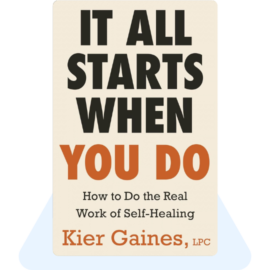
That frustrating gap between knowing and doing is where Kier Gaines begins in It All Starts When You Do: How to Do the Real Work of Self-Healing, one of the most talked-about personal development books of 2026. Gaines is a licensed therapist, keynote speaker and hugely popular content creator, and his message is refreshingly direct. Mantras and toxic positivity will not solve your problems. What will help is knowing yourself better, a lot better than you do now, and then acting on what you learn.
Welcome to the Readers Books Club summary of this powerful book. If you are new here, Readers Books Club is the YouTube channel and podcast, followed by over one million subscribers, where Amiett Kumar and the team share book suggestions, book summaries, finance lessons, visualisation practices and ideas for personal growth. Our goal is to turn great books into clear, practical lessons you can use today.
In this It All Starts When You Do summary in English, you will find:
- The ten key lessons from the book, explained in simple language
- Practical “try this” steps for each lesson so you can stop procrastinating and take action
- How the book connects with the subconscious mind, meditation, spirituality and the law of attraction
- A 7-day action plan, related book suggestions and a detailed FAQ
It All Starts When You Do at a Glance
- Book: It All Starts When You Do: How to Do the Real Work of Self-Healing
- Author: Kier Gaines, LPC
- Publisher: Little, Brown Spark (US); Vermilion (UK edition)
- Release date: 1 September 2026
- Length: About 270 pages; the audiobook is narrated by the author
- Genre: Self improvement, personal growth, emotional healing, psychology
- Core idea: Real change begins when you get honest about yourself and take action, not when you find the perfect mantra or the perfect moment
- Best for: Anyone who feels stuck, keeps procrastinating, struggles with self-doubt or wants to build confidence and take control of their life
- Reading time of this summary: About 25 to 30 minutes
A note on this summary: This is an original educational overview of the book’s core ideas, built from the publisher’s description, the author’s public interviews and the themes the book is known for. We have organised them into ten easy lessons, and the “try this” steps are Readers Books Club suggestions inspired by those ideas. For the full stories, exercises and depth, please read the book itself.
About the Author: Who Is Kier Gaines?
Kier Gaines is a licensed professional counselor (LPC), keynote speaker and one of the internet’s most recognisable therapists. Through short videos and social media, he has encouraged millions of people to take a more active role in their mental health. He also hosts the podcast Learned the Hard Way, where he talks about struggle, progress, guilt, comparison and the messy reality of growth.
Gaines grew up in Washington, D.C., and has spoken openly about a childhood in a tough neighbourhood where he did not expect to live a long life. That background shapes the way he talks about blame, responsibility and identity. He does not offer sugar-coated advice. He offers the kind of honest, compassionate push you might get from a good therapist who also happens to be great at explaining things in plain language.
The book has already drawn praise from well-known voices in the mental health and self-development space, including Dr Nicole LePera, Dr Becky Kennedy and Nedra Glover Tawwab. Many of them highlight the same strength: Gaines makes you feel seen while still challenging you to grow.
Why This Book Stands Out Among Self Improvement Books
The self-help shelf is crowded with promises of quick transformation. Wake up earlier, repeat this phrase, adopt this ten-step routine, and your life will change. Gaines works with real clients every day, and he has noticed what happens after the excitement of a quick fix fades. People arrive in his office unprepared for the question that follows: “And then what?”
That is the gap this book tries to fill. Instead of offering shortcuts, It All Starts When You Do focuses on the slower, deeper work of understanding yourself. Gaines is openly critical of toxic positivity, the habit of covering serious pain with cheerful slogans. He compares it to putting a bandage on something that needs real care.
The title carries the book’s central message. Nothing changes while you are waiting. It starts the moment you do something, whether that is telling the truth, setting a boundary, asking for help, starting the habit or finally having the conversation. The “doing”, however, is not random hustle. It is aligned action that comes from knowing who you are and what you truly want.
The Big Idea: The Biggest Obstacle Is Often a Blind Spot
Here is the question that sits at the heart of the book: what if the biggest obstacle to your happiness is not your environment, your past or other people, but a blindness to some uncomfortable truths about yourself?
That is a bold and slightly uncomfortable idea. It does not say your circumstances do not matter or that your past did not hurt. It says that the one thing you have the most power to change is how you understand and respond to yourself. When your career feels stuck, your family drives you crazy or love keeps slipping away, Gaines invites you to look inward before you look outward.
According to the publisher, the book walks you through how to begin healing from inner wounds you may not know you have, conquer unconscious emotional hijacking, align your actions with your true desires, build self-esteem based on evidence and effort rather than empty affirmations, stop feeding on negative self-talk, and overcome the illusion of comfort that keeps you stuck. We have turned these promises into ten lessons.
Let’s begin.
Lesson 1: Quick Fixes and Toxic Positivity Won’t Heal What’s Really Hurting
The idea: Lasting change needs honest work, not just good vibes.
We live in a world of 30-day transformations, viral morning routines and endless motivational quotes. Gaines does not say these things are worthless. He says they are incomplete. When someone is dealing with deep patterns such as fear of rejection, low self-worth or old emotional wounds, a catchy mantra can feel like a coat of paint over a cracked wall.
He has described how clients who consume fast fixes often feel worse when the quick high wears off. They believed the right slogan would rescue them. When it does not, they conclude something is wrong with them. In truth, the method was never built for the size of the problem.
This is not an argument against a positive mindset. It is an argument for a real positive mindset, one that makes room for pain, frustration and doubt, and still chooses to move forward. Forced positivity says, “I shouldn’t feel this way.” Healthy positivity says, “I feel this, and I can still take the next step.”
A note for manifestation and law of attraction fans: If you love affirmations, visualisation and manifestation, you do not have to abandon them. Gaines’s point is that no mantra can replace honesty and action. Visualise the life you want, but also look at what you are doing, and avoiding, today.
Try this: The next time you repeat an affirmation, ask yourself, “What action or evidence supports this today?” If you cannot answer, take one small action that gives the words some weight.
Key takeaway: Positive thinking works best when it walks hand in hand with truth and action.
Lesson 2: Know Yourself Better, a Lot Better Than You Do Now
The idea: Self-awareness is the foundation of personal growth.
This is the book’s promise in a single sentence: you need to know yourself better than you do now. Most of us are experts on other people’s behaviour. We can explain exactly why our boss, partner or friend acts the way they do. Turning that same sharp attention inward is much harder.
We often hope that changing our environment will fix everything: a new city, a new job, a new relationship, a fresh start. A change of environment can genuinely help, especially if your surroundings are unhealthy. But if the same blind spots travel with you, the same patterns tend to show up in the new place. Gaines’s message is that you cannot outrun what you have not understood.
Self-knowledge is not about overanalysing yourself or becoming obsessed with your flaws. It is about getting curious. What do I avoid? What triggers me? What do I say yes to when I mean no? What do I say no to before anyone else can say it to me? What do I actually want, as opposed to what I am supposed to want?
This kind of clarity is the real beginning of mindset transformation. You cannot change what you cannot see, and you cannot build a purpose in life from a map you have never read.
Try this: Spend ten minutes journaling with three questions: What am I avoiding right now? What am I afraid will happen if I try? What do I really want here? Write without editing.
Key takeaway: Curiosity about yourself is the first step to changing your life.
Lesson 3: Face Your Uncomfortable Truths Without Beating Yourself Up
The idea: Honesty and self-compassion must go together.
Gaines describes an uncomfortable truth as a part of your lived reality that you are afraid to accept. Early in the book, he introduces examples of these truths, and one of the most relatable is simply this: I don’t believe in myself. Many people carry that thought quietly for years, covering it with busyness, perfectionism, humour or constant comparison.
Why do we avoid these truths? Because facing them can feel like confirming our worst fears. If I admit I do not believe in myself, does that mean I am doomed? The surprising answer is no. Naming the truth is usually the moment the grip begins to loosen. Avoidance takes energy. Honesty frees it.
One endorsement of the book praises Gaines for making people confront the truths they spend their lives avoiding without condemning them in the process. That balance matters. If you meet your truths with harsh criticism, you will run from them again. If you meet them with curiosity and kindness, you can actually work with them.
This lesson is crucial for anyone working on self-belief. You cannot build genuine confidence on top of denial. You build it by accepting where you are, then taking small, honest steps forward.
Try this: Complete this sentence in your notes: “The truth I’ve been avoiding is…” Then add: “And I can still take one small step, which is…”
Key takeaway: The truth stings less than avoiding it, especially when you face it with compassion.
Lesson 4: Heal the Inner Wounds You Don’t Even Know You Have
The idea: Many of your patterns are old survival strategies, not personal failures.
The publisher describes the book as a guide to beginning healing from inner wounds you might not even be aware of. Think about how you learned to handle criticism, disappointment, conflict or rejection. Most of those lessons were absorbed long before you had words for them. You may have learned to stay quiet to stay safe, to achieve to earn love, or to keep people at a distance to avoid being hurt.
Those strategies helped once. The trouble comes when they keep running in the background of adult life, shaping your career choices, relationships and self-image without your permission. This is the territory of the subconscious mind, the part of us that runs habits, reactions and beliefs below our everyday awareness.
The book’s approach to healing is hopeful. One of its endorsers, Dr Becky Kennedy, describes the patterns that get in our way as invitations rather than signs that we are broken, and notes that healing is not about becoming someone new but about understanding yourself with more honesty, curiosity and compassion. Gaines has also pushed back on the idea that healing has a finish line. It is not a destination you arrive at. It is a way of living with awareness.
A gentle reminder from us: this book is a personal growth guide, not a replacement for professional support. If your wounds feel heavy, overwhelming or tied to trauma, a licensed therapist can walk beside you in a way no book can.
Try this: Choose one recurring pattern, such as always saying yes or avoiding conflict, and ask, “When did I first learn to do this, and what was it protecting me from?”
Key takeaway: Your patterns make sense. Understanding them is how you begin to change them.
Lesson 5: Conquer Unconscious Emotional Hijacking
The idea: Emotions can take over before you have a chance to choose.
Have you ever snapped at someone you love over something small? Frozen before a big opportunity? Scrolled for an hour to avoid a task that scared you? These are moments of what the book calls unconscious emotional hijacking: an emotion grabs the steering wheel, and only afterwards do you ask yourself, “Why did I do that?”
The path to freedom is not to suppress emotion. It is to notice it sooner. Here is a simple four-step practice, inspired by the book’s ideas:
- Notice the body signal. A tight chest, hot face, knot in the stomach or sudden urge to escape is often the first clue.
- Name the emotion. Try, “I’m feeling anxious,” or “I’m feeling disrespected.” Naming an emotion often reduces its intensity.
- Pause. Even three slow breaths create a gap between feeling and reacting.
- Choose. Ask, “What response would the person I want to be choose right now?”
This is where meditation and spiritual practices become valuable. Sitting quietly and watching your thoughts trains the very skill you need: noticing before reacting. Over time this builds real mental strength and a calmer, steadier kind of self discipline, one based on awareness rather than force.
Try this: For one day, notice three moments when you feel a strong emotion. Write down the trigger, the feeling and what you did next.
Key takeaway: You cannot control every emotion, but you can learn to notice it before it drives.
Lesson 6: Self-Sabotage Often Starts as Self-Protection
The idea: The habits that hold you back were usually built to keep you safe.
One of the most freeing ideas in Gaines’s work is that self-sabotage is not laziness or weakness. In his words, “Sometimes self sabotage, it starts off as self protection.” That single sentence changes how you see your own behaviour. Instead of asking, “What is wrong with me?” you can ask, “What am I trying to protect myself from?”
Gaines gives everyday examples. Self-sabotage can look like staying silent in a meeting because you fear being rejected or feeling stupid. It can look like talking yourself out of an opportunity before anyone else has the chance to say no. It can look like avoiding a task, a conversation or a feeling because it might confirm your worst suspicions about yourself. It is rarely dramatic. It is usually quiet, reasonable-sounding and very convincing.
The goal is not to delete your protective instinct. That instinct has kept you going through hard times. The goal is to catch the moment when it flips and begins working against you. Protection that once kept you safe may now be keeping you small.
This lesson is especially helpful if you have been trying to stop procrastinating. Procrastination is often not a time-management problem. It is an emotion-management problem. You are avoiding the discomfort attached to the task, such as fear of failure, fear of judgement or fear of finding out you are not good enough.
Try this: Think of something you keep putting off. Ask, “What feeling am I avoiding by not doing this?” Then name the feeling and take a five-minute step anyway.
Key takeaway: Understand what your habits are protecting, and you can choose a braver option.
Lesson 7: Break the Illusion of Comfort and Stop Waiting for the Perfect Moment
The idea: Comfort can feel like safety while quietly costing you your life.
The publisher calls it the illusion of comfort, the familiar routine, relationship or story that feels safe simply because you know it well. The cost is rarely obvious. Nothing dramatic goes wrong. You just wake up years later in the same place, wondering where the time went.
In conversations about the book, Gaines talks about people who freeze right at the moment they have prepared for, and about the habit of waiting for conditions to feel perfect. The perfect moment is a clever excuse because it always sounds sensible. You will start when you have more money, more time, more confidence or a clearer plan. The truth is that readiness usually arrives after you begin, not before.
This is the heart of the title. It all starts when you do. Not when you feel motivated, not when you have perfect clarity, and not when everyone around you approves. Motivation is unreliable. It rises and falls with sleep, stress and mood. Action creates momentum, and momentum creates motivation, not the other way around.
If you want to know how to stop waiting and how to take action, shrink the first step until it is almost embarrassingly small. Write one paragraph. Make one phone call. Put on your shoes. Open the document. Starting is the hardest part, and tiny starts make it easier.
Try this: Pick one thing you have been postponing and set a timer for five minutes. You are allowed to stop when it rings, but most people keep going.
Key takeaway: Perfect conditions are a myth. Begin imperfectly and let momentum do the rest.
Lesson 8: Build Self-Esteem on Evidence and Effort, Not Empty Affirmations
The idea: Real confidence is earned through action, not borrowed from slogans.
Gaines offers a simple way to think about self-esteem: it is basically how much you like yourself. And you do not grow that liking by repeating “I am confident” in the mirror while your actions say otherwise. You grow it by keeping promises to yourself, doing hard things and collecting proof that you can rely on yourself.
The publisher describes this as building self-esteem on solid evidence and effort rather than empty affirmations. It is a practical, grounded approach to confidence building. Every time you say you will do something and then do it, you add a brick to your self-trust. Every time you break a promise to yourself, you remove one.
In his conversation with Mel Robbins, Gaines also touches on a common trap: constantly looking outside yourself for approval, always checking what other people think, and ignoring what you think of yourself. Outside approval can feel good, but it is a shaky foundation. When your sense of worth depends on applause, you will always be anxious about the next audience.
This is a powerful message for anyone working on self-belief or trying to overcome self doubt. You do not need to wait until you feel confident. You can build confidence by acting, one small, honest step at a time.
Try this: Start an evidence log. At the end of each day, write down one thing you did that you said you would do, however small. Read the list every Sunday.
Key takeaway: Self-belief grows from proof. Keep small promises and your confidence follows.
Lesson 9: Stop Eating the Empty Calories of Negative Self-Talk
The idea: The way you talk to yourself shapes what you are willing to try.
The book uses a memorable image: negative self-talk as empty calories. It feels familiar, even comforting, but it gives you nothing useful and slowly drains your energy. “I always mess things up.” “I’m not the type of person who can do that.” “What’s the point?” You may have repeated these lines so many times that they sound like facts.
The answer, however, is not to flip to forced cheerfulness. Telling yourself “I’m amazing” when you feel the opposite rarely convinces anyone. A better approach is accurate, kind and useful self-talk. Instead of “I always fail,” try, “That did not go well. What can I learn, and what will I try next?”
Gaines also discusses how a thought is not the same as a verdict. In one podcast conversation, he notes that you can feel happy for someone and still feel sad for yourself when their success makes you examine your own life. The problem is not always having the thought. It is what you let that thought convince you about yourself.
If you tend to overthink, this lesson matters twice. Overthinking feels like preparation, but often it is fear in disguise. To stop overthinking and start doing, give your thinking a time limit. Set a timer for ten minutes, write down your concerns, choose the next action and move.
Try this: Catch one negative thought today. Write it down, ask, “Is this true, helpful and kind?” and rewrite it into something that is at least two of the three.
Key takeaway: Change the script you rehearse and you change the actions you allow yourself.
Lesson 10: Align Your Actions With Your True Desires and Take Ownership
The idea: Real change comes when your daily choices match what you truly want, and you take responsibility for them.
This final lesson ties everything together. After you have faced uncomfortable truths, understood your patterns, calmed your emotional reactions and built genuine self-esteem, the final step is alignment: making your actions match your real desires.
Many of us live out of sync. We say we value health but skip sleep. We say we want a close family but stay glued to our phones. We say we want a purpose in life but never block time to pursue it. Gaines invites you to notice that gap without shame and begin closing it.
Taking ownership is central here. In a conversation about the book, Gaines explores the difference between blame and responsibility, and how victimhood can feel like the safest story to tell even when it keeps you stuck. Anger can feel like armour until it quietly becomes the thing holding you back. Responsibility does not mean everything is your fault. It means that, regardless of what happened to you, you are the one who can choose the next move.
This is also where goal setting, consistency and build better habits come in. Once you know what you truly want, break it into small, repeatable actions. Show up even when you do not feel like it. Gaines also pushes back on the idea that healing has a finish line, which means you do not need to wait until you have it all figured out. You grow while you move.
Try this: Write down your top three values. Then choose one action this week that matches each. Review them on Sunday and adjust.
Key takeaway: When your actions match your values, life starts to feel like yours again.
The 10 Lessons at a Glance
- Lesson 1: Quick fixes and toxic positivity cannot heal deep pain.
- Lesson 2: Know yourself better, a lot better.
- Lesson 3: Face uncomfortable truths with compassion.
- Lesson 4: Understand inner wounds and old survival patterns.
- Lesson 5: Notice emotional hijacking and create a pause.
- Lesson 6: Self-sabotage often begins as self-protection.
- Lesson 7: Break the illusion of comfort and stop waiting.
- Lesson 8: Build self-esteem on evidence and effort.
- Lesson 9: Replace negative self-talk with accurate, kind thoughts.
- Lesson 10: Align actions with your values and take ownership.
How to Stop Procrastinating and Take Action: Putting the Lessons to Work
Reading is the easy part. Here is a simple, practical way to turn the book’s ideas into everyday momentum. These tips are Readers Books Club suggestions inspired by the lessons.
- Make the first step tiny. Aim for five minutes, not five hours. This is the easiest way to start when you want to take action and stop procrastinating.
- Change your environment to support you. Your surroundings are not the root of every problem, but they can make action easier or harder. Remove friction from habits you want and add friction to habits you do not.
- Build self discipline through small promises. Discipline is not punishment. It is keeping your word to yourself, repeatedly.
- Track proof, not perfection. A simple daily tick or note builds consistency and productivity better than occasional bursts of intensity.
- Review weekly. Ask what worked, what did not, and what you will adjust. This keeps your success mindset realistic and flexible.
If you want to know how to become more disciplined or how to take control of your life, these small, repeatable actions are where the real change happens.
Subconscious Mind, Manifestation and the Law of Attraction: Where They Meet This Book
Here is something worth being upfront about. It All Starts When You Do is not a manifestation or law of attraction book, and Gaines is openly sceptical of mantras as a stand-alone solution. As a licensed therapist, he focuses on self-knowledge, emotional honesty and action. So how does it connect with the world of manifestation, meditation and spirituality that many Readers Books Club viewers love?
The subconscious mind. Many manifestation teachers talk about subconscious beliefs shaping results. Gaines approaches the same territory through the lens of psychology: patterns, wounds and emotional reactions that run below awareness. The common ground is that you cannot change what you do not see.
Visualisation plus action. Picturing your goal can clarify what you want. The book’s lesson is to pair that picture with honest steps today. A vision without action is wishful thinking, and action without direction is exhausting.
Meditation and spirituality. Stillness, reflection and self-inquiry are powerful ways to build the awareness this book asks for. A short daily meditation can help you notice emotional hijacking and self-sabotage earlier.
Affirmations with evidence. Rather than abandoning affirmations, you can make them truthful. “I am someone who keeps my word,” becomes much stronger when you have the evidence log to prove it.
Coaching and therapy. A life coach can support goal setting, accountability and mindset transformation. A licensed therapist supports deeper emotional healing and mental health. They are different roles, and for many people the combination is very powerful.
In short, the book does not replace manifestation practices. It gives them a foundation of honesty, evidence and action.
Your 7-Day Action Plan
Pair each day with five minutes of quiet meditation or reflection in the morning.
- Day 1 – Name the truth: Complete the sentence, “The truth I’ve been avoiding is…”
- Day 2 – Track your emotions: Note three moments when a strong feeling took over.
- Day 3 – Catch your self-talk: Write down and rewrite three negative thoughts.
- Day 4 – Do the five-minute start: Begin one task you have been postponing.
- Day 5 – Keep a promise to yourself: Choose one small commitment and complete it. Start your evidence log.
- Day 6 – Audit your environment: Change one thing in your space or routine that makes the right action easier.
- Day 7 – Review and align: Write your top three values, one weekly goal and one habit to repeat.
Who Should Read It, and What to Keep in Mind
This book is a great fit if you:
- Feel stuck and cannot figure out why
- Keep procrastinating or overthinking
- Struggle with self-doubt, low confidence or people-pleasing
- Are tired of motivational quotes that do not last
- Want an honest, therapist-informed approach to personal growth
Keep in mind:
- It is not a shortcut. The work is ongoing and sometimes uncomfortable.
- It is a self-help book, not a replacement for therapy or medical care. If you are struggling with your mental health, please reach out to a qualified professional or someone you trust.
- If you are looking for a purely mantra-based or manifestation-only approach, this book will challenge that mindset.
If You Like This Book, Try These Personal Development Books
- Atomic Habits by James Clear: A practical guide to build better habits and consistency.
- The 5 Second Rule by Mel Robbins: A simple method to act before doubt takes over.
- Set Boundaries, Find Peace by Nedra Glover Tawwab: Helpful for people-pleasing and healthy relationships.
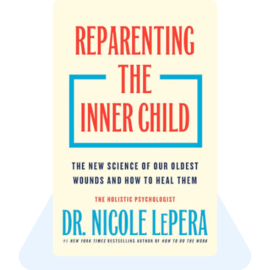
- How to Do the Work by Dr Nicole LePera: A deeper look at patterns, healing and self-awareness.
- Feeling Good by David D. Burns: A classic on negative thinking and how to change it.
- Man’s Search for Meaning by Viktor E. Frankl: A timeless read on purpose in life.
Frequently Asked Questions
What is It All Starts When You Do about? It is a self-healing and personal growth book by therapist Kier Gaines. It argues that real change begins with honest self-knowledge and action, not quick fixes or toxic positivity.
Who is Kier Gaines? Kier Gaines is a licensed professional counselor, keynote speaker, podcast host and popular content creator known for making mental health tools accessible and practical.
How can I stop procrastinating and take action? Start by understanding what feeling you are avoiding, then make the first step very small, such as five minutes. Build consistency with small promises and track your progress. The lessons above explain this step by step.
Is this a manifestation or law of attraction book? No. It is grounded in psychology rather than manifestation. However, its ideas about the subconscious, self-awareness and aligned action pair well with visualisation, meditation and goal setting.
Is It All Starts When You Do one of the best books of 2026? It is one of the notable self improvement releases of 2026, especially for readers who want honest, practical advice instead of hype. Whether it is the best for you depends on what you need right now.
How do I stop overthinking and start doing? Give your thinking a time limit, write down your concerns, choose one action and begin. Action usually reduces anxiety more than extra analysis.
Can this book replace therapy? No. It can be a helpful companion, but it does not replace professional mental health care.
Where can I find more book summaries? You can find more book suggestions, summaries, finance lessons and visualisation talks on the Readers Books Club YouTube channel and podcast, and at www.readersbooksclub.com.
Final Thoughts: It All Starts When You Do
The biggest gift of this book is its honesty. It does not promise overnight transformation. It tells you the truth: you cannot heal what you refuse to look at, and you cannot change what you never start. At the same time, it is deeply encouraging. Your patterns are not proof that you are broken. They are invitations to understand yourself better.
You do not need to apply all ten lessons at once. Choose one. Maybe it is naming a truth, catching a negative thought or taking a five-minute step on something you have delayed. Then do it today. Combine it with a few quiet minutes of meditation or reflection, and you will be surprised how quickly small actions add up to a different life.
If you enjoyed this summary, we recommend reading or listening to the full book to experience Gaines’s stories, insights and exercises in his own voice.
About Readers Books Club and Amiett Kumar
Readers Books Club is a YouTube channel and podcast with over one million subscribers, known for book suggestions, book summaries, finance education, visualisation practices and personal growth conversations. Amiett Kumar is a manifestation coach and life coach whose work covers meditation, spirituality, the law of attraction and practical coaching to help people build self-belief, mindset transformation and confident action. Explore more at www.readersbooksclub.com.
Contents