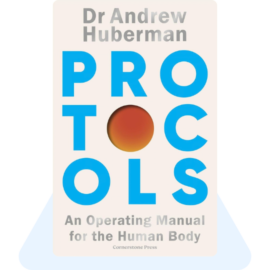
Why Everyone Is Talking About Huberman’s First Book
If you have ever felt tired even after eight hours in bed, distracted by your phone every ten minutes, or stuck in a stress loop you cannot switch off, you are not alone. Millions of people are searching for practical answers, and that is exactly why the Andrew Huberman Protocols conversation has exploded across YouTube, podcasts and social media. Now that his first book, Protocols: An Operating Manual for the Human Body, has arrived on shelves in September 2026, the question on everyone’s lips is simple: what is actually inside, and what can I start doing tomorrow morning?
That is what this Protocols book summary is for. At Readers Books Club, we read, we test, and we translate big ideas into plain language, so you do not need a science degree or a spare weekend to benefit. Whether you found us through our YouTube channel, our podcast, or a late-night search for the best self improvement books, this guide will walk you through seven core tools for better sleep, more energy, calmer nerves and sharper focus.
Here is the promise: by the end of this post you will understand the big ideas behind the Protocols Andrew Huberman summary, you will have a clear checklist of simple habits, and you will know which other books to read next if you want to go deeper into personal growth, mindset transformation and a stronger mind-body connection.
Quick note before we begin: this article is an educational summary and reading guide from Readers Books Club. It is not medical advice. Please speak with a qualified doctor before making major changes to your exercise, nutrition, supplements or sleep routine, especially if you have a health condition.
What You Will Learn in This Andrew Huberman Book Summary
- Tool 1: Sleep. How to fall asleep faster and wake up more refreshed, the foundation of every other habit.
- Tool 2: Exercise. A simple weekly structure for getting stronger, fitter and more resilient at any age.
- Tool 3: Stress control. Breathing and nervous system regulation techniques you can use in real time.
- Tool 4: Nutrition. Practical eating principles that support brain health and steady energy.
- Tool 5: Light. How sunlight and evening lighting quietly set your body clock, mood and alertness.
- Tool 6: Focus, motivation and learning. How to manage dopamine, protect attention and learn faster.
- Tool 7: Personal growth. How to build self-belief, visualise your goals and turn intentions into action.
About the Book: Protocols, An Operating Manual for the Human Body
Protocols: An Operating Manual for the Human Body is the first book by Dr. Andrew Huberman, a neuroscientist and tenured professor at Stanford School of Medicine and the host of the Huberman Lab podcast. According to the publisher, the book is an essential guide to improving brain function, enhancing mood and energy, optimising physical health and performance, and rewiring the nervous system so you can learn new skills and behaviours. It is published by Simon Element (an imprint of Simon & Schuster) in the United States and by Cornerstone in the United Kingdom, with a release date of 15 September 2026 and around 512 pages.
The publisher’s description explains that the book is built on two complementary ideas. First, there are foundational behaviours: core daily practices that lift your baseline mental and physical state. Second, there are targeted behaviours: specific tools you can reach for when you face a particular challenge, such as a stressful meeting, a poor night of sleep or an afternoon energy crash. Put together, they form the “protocols” of the title. The protocols are organised across seven areas: sleep, exercise, stress control, nutrition, light, focus/motivation/learning, and personal growth.
This is why the book is landing on so many lists of the best books 2026. It does not ask you to overhaul your life in a weekend. Instead, it offers small, science-informed adjustments that you can customise. Think of it as a reference manual you keep on your desk, not a novel you read once and forget.
Transparency note: the seven-tool structure in this post follows the seven areas the publisher lists for the book. The specific tips are drawn from the widely shared protocols Dr. Huberman has taught publicly through his podcast and research collaborations. For exact instructions, dosages and citations, always go to the book itself.
Who Is Andrew Huberman, and Why Do People Trust His Approach?
Andrew Huberman is a professor in the departments of neurobiology and ophthalmology (and, by courtesy, psychiatry and behavioural sciences) at Stanford. His lab has studied how the eyes and brain communicate, how the brain develops, and how neural plasticity, the brain’s ability to change, works. Outside the lab, he became famous because he does something rare: he explains complicated biology in a way that ordinary listeners can apply.
His format is the reason his ideas spread so quickly. Each episode or chapter tends to follow the same pattern: explain how a system in the body works, then give a simple action step. Understanding the mechanism makes you far more likely to stick with the habit. When you know why morning sunlight matters for your body clock, you are much more likely to step outside than if someone simply tells you to.
As with any popular health voice, it is smart to stay curious rather than blindly convinced. Some protocols rest on strong evidence, some on emerging research, and some on smaller studies that need more testing. A healthy approach is to start with the low-risk basics such as sunlight, sleep timing, walking and breathing, and to check with a professional before trying anything more intensive. That balanced, practical attitude is exactly how we approach every book on our channel.
How to Read a Protocols Book Summary the Smart Way
Before we dive into the seven tools, here is a mindset shift that will save you from overwhelm. The biggest mistake people make with any health or self improvement books is trying to do everything at once. They buy a stack of supplements, wake at 4:30 a.m., take an ice bath, block their phone, and quit by Thursday.
Instead, treat the protocols like a menu, not a mandate. Pick one or two habits from Tool 1 and Tool 5 (sleep and light), because they influence everything else. Practise them for two weeks. Once they feel automatic, add one more. This is the same principle behind many great books on habit formation: small, repeatable actions beat heroic bursts of willpower.
Ready? Let us walk through the seven tools one by one.
Tool 1: Sleep Optimization, the Foundation of Everything
If you only take one lesson from this Andrew Huberman book summary, let it be this: sleep is the base layer of brain health. Mood, memory, motivation, appetite, immunity and focus all depend on it. No supplement, productivity app or morning routine can fully make up for chronically poor sleep. That is why sleep optimization sits at the top of the protocols.
Get morning light and keep a steady wake-up time
The first sleep protocol actually happens after you wake up. Viewing natural light soon after waking helps anchor your body’s internal clock, which in turn helps you feel alert earlier in the day and sleepy at the right time at night. The publisher’s own description of the book highlights this exact idea: a simple sleep protocol that includes viewing sunlight as soon as possible after waking.
Pair that with a consistent wake time, even on weekends. Your body loves rhythm. Sleeping in until noon on Sunday may feel like a treat, but it can leave you jet-lagged by Monday morning.
Be smart about caffeine
A commonly shared suggestion is to wait around 90 to 120 minutes after waking before your first coffee or tea, and to avoid caffeine in the late afternoon and evening so it does not interfere with sleep. If you cannot wait that long, that is fine. Start by pushing your first cup back by 20 or 30 minutes and see how you feel.
Make your evening dim and your bedroom cool
As evening approaches, lower the intensity of your lights, especially the bright overhead ones. Use lamps, warm bulbs and night-mode settings on screens. Keep the bedroom cool, dark and quiet, since a slight drop in body temperature is part of how we fall asleep.
Use a reset when your night goes badly
Everyone has a bad night now and then. One tool Dr. Huberman has popularised is NSDR, or Non-Sleep Deep Rest, a category of guided relaxation practices similar to yoga nidra. A 10 to 20 minute session in the afternoon can help you feel calmer and more restored, and it is a wonderful alternative to a third cup of coffee. Many people also find that these practices help them wind down before bed.
Try this tonight
- Get outside for a few minutes of daylight tomorrow morning.
- Choose a wake-up time you can keep every day this week.
- Set a “lights low” alarm one hour before bedtime.
- Keep your phone out of arm’s reach when you go to sleep.
If you love the science of rest, pair this section with a classic sleep book like Why We Sleep by Matthew Walker. The two together make a powerful reading combination.
Tool 2: Exercise, Building a Stronger Body and a Sharper Brain
Movement is medicine for the mind as well as the body. When we think of exercise, most of us picture six-pack abs or weight loss, but the deeper benefit is brain health. Regular physical activity supports mood, energy, stress resilience and long-term cognitive performance. The publisher notes that the exercise section covers protocols for getting stronger and leaner at any age.
A simple weekly structure
Rather than chasing the perfect programme, Dr. Huberman has often described a well-rounded week built from a few ingredients. Treat the numbers below as starting points to discuss with a coach or doctor, not strict rules.
- Steady, easy cardio (often called Zone 2). Sessions where you can still hold a conversation but feel you are working. Many people aim for a couple of hours a week in total, split into manageable sessions such as brisk walks, cycling or swimming.
- Resistance training. Lifting weights or using your body weight two to four times a week builds muscle, protects your bones and supports metabolic health.
- Short, hard efforts. One or two brief high-intensity sessions per week can boost fitness, but only once you have built a base and have medical clearance.
- Everyday movement. Walk after meals, take the stairs, stretch during phone calls. These “movement snacks” add up.
Why this matters for your mind
Exercise is a natural stress management tool. It burns off tension, improves sleep quality and gives you a sense of achievement that feeds your self-belief. Every time you keep a promise to yourself, such as a 20-minute walk when you did not feel like it, you send your subconscious mind a message: I am someone who follows through. That message is the quiet engine behind real mindset transformation.
Start small
If you are new to exercise, ignore the fancy numbers and begin with a 10-minute walk after your largest meal. Consistency is far more important than intensity in the first month. Later you can layer in strength training, ideally with guidance from a certified trainer so you learn good form and avoid injury.
Reader challenge: put a 15-minute walk in your calendar for the next seven days. Treat it like a meeting with your future self.
Tool 3: Stress Control and Nervous System Regulation
This is the section many readers find most life-changing, because it gives you tools you can use in the moment. Stress is not simply “in your head.” It shows up as a racing heart, shallow breathing, tight shoulders and scattered thoughts. The good news is that your breath is one of the fastest levers you have to influence your nervous system regulation.
The physiological sigh
The publisher’s description mentions “a single breathing pattern to reduce stress in the moment,” and the most famous candidate is the physiological sigh. Here is how it works:
- Take a deep inhale through your nose.
- Without exhaling, take a second, shorter sip of air through the nose to top up your lungs.
- Exhale slowly and fully through your mouth, longer than the inhale.
- Repeat one to three times.
Most of us do this automatically when we sob or sigh with relief. Doing it on purpose can help you shift from feeling wound up to feeling steadier within a minute or two. A 2023 study involving Stanford researchers, including Dr. Huberman, found that a few minutes a day of structured breathing, particularly cyclic sighing with longer exhales, improved mood and lowered breathing rate more than mindfulness meditation in the study group.
Build a daily calm habit
Real-time tools are useful, but the goal is to lower your baseline stress too. Here are simple, low-risk options:
- Five minutes of slow breathing each morning or evening.
- NSDR or yoga nidra for deep rest.
- Meditation. Even a short daily sitting practice builds awareness of your thoughts. Many readers on our channel tell us this is where meditation and spirituality meet science: the same quiet attention that ancient traditions taught is now being studied in labs.
- Time in nature and good company. Human connection is a powerful stress buffer.
- Journaling. Writing down worries gets them out of your head and onto paper.
A word on cold exposure
Cold showers and ice baths are popular in the wellness world, and Dr. Huberman has discussed them at length. They can feel invigorating, but they are not for everyone. If you have heart problems, high blood pressure or any medical condition, ask your doctor first, and never start with extreme temperatures.
For an inner-peace companion to this chapter, pick up The Untethered Soul by Michael A. Singer or The Power of Now by Eckhart Tolle. They approach the same territory of calm and awareness from a spiritual angle.
Tool 4: Nutrition for Brain Health and Steady Energy
Nutrition advice is famously confusing, so it helps that the protocols aim for practical principles over rigid diets. Instead of asking “What is the perfect diet?” the more useful question is “What eating pattern can I actually maintain, and does it support my energy and focus?”
Core principles worth remembering
- Prioritise whole, minimally processed foods. Vegetables, fruit, legumes, eggs, fish, nuts, seeds and whole grains are simple building blocks for a healthy brain.
- Get enough protein. Adequate protein supports muscle, satiety and recovery. Your ideal amount depends on your body, age and activity level, so a doctor or dietitian can help you find it.
- Stay hydrated. Even mild dehydration can make you feel foggy and irritable. Keep water within reach during the day.
- Include fermented foods. Curd or yoghurt, kefir, kimchi and similar foods have been linked in research, including a Stanford study, to greater diversity in the gut microbiome, which is increasingly connected to overall health and mood.
- Go easy on ultra-processed snacks and alcohol. They may be enjoyable in moderation, but they tend to disrupt sleep and energy when they become daily habits.
Timing matters as much as content
Big, heavy meals late at night can interfere with sleep, while a balanced breakfast or lunch can steady your energy through the afternoon. Pay attention to how you feel two hours after eating. Are you alert and calm, or sleepy and irritable? That simple feedback loop is more helpful than most diet rules.
What about supplements?
Supplements are a huge topic in the wellness space. Our honest advice from Readers Books Club: food, sleep, movement and light come first. Supplements, if used at all, are the last five percent, and they should be chosen with a qualified healthcare professional, especially if you take medication.
If food is your next area of curiosity, explore books on habits and eating psychology so you build a healthy relationship with meals, not a fearful one. Good nutrition should make you feel free, not anxious.
Tool 5: Light, the Free Habit That Sets Your Body Clock
Light might be the most underrated tool in the entire book. It costs nothing, takes minutes, and influences your sleep, mood, alertness and hormones. Your eyes contain specialised cells that sense brightness and send timing signals to the brain’s master clock. In plain words: the light you see, and when you see it, tells your body what time it is.
Morning: get bright natural light
Step outside soon after waking. On a clear day, a few minutes can be enough; on a cloudy day, staying out a little longer is commonly suggested, because even an overcast sky is far brighter than indoor lighting. Do not stare directly at the sun, and never look at it if it is uncomfortable or unsafe for your eyes. Simply be outdoors with your eyes open to the sky, ideally while you walk, stretch or drink your water.
Daytime: work near windows and take breaks outdoors
If you work indoors, sit near a window when you can and take a short outdoor break at midday. Daytime brightness helps you stay alert and supports better sleep at night.
Evening: dim the lights
As the sun sets, mimic nature. Switch off harsh overhead lights and use warm, low lamps. Reduce screen brightness or use night mode. Late-night bright light can push your body clock later and make it harder to fall asleep. If you must get up at night, use the dimmest light possible.
Simple light checklist
- Outside within an hour of waking, even for a few minutes.
- Sunlight or bright light during the day.
- Lamps instead of overheads after sunset.
- Screens dimmed and, ideally, off before bed.
This is one of the easiest ways to add healthy habits without feeling like you are adding more to your to-do list. It also fits beautifully with a morning meditation or gratitude practice: step outside, breathe, and set an intention for the day.
Tool 6: Focus, Motivation and Learning
In a world of endless notifications, the ability to concentrate is a superpower. This section of the protocols deals with how to improve focus, manage dopamine and motivation, and learn faster. It sits at the heart of mental performance.
Understand dopamine the right way
Dopamine is often described as the “pleasure chemical,” but a better description is that it drives motivation and pursuit. It helps you want things and go after them. Constant quick rewards, like endless scrolling, sugary snacks and notification pings, can train your brain to expect frequent hits and make slower, meaningful work feel boring by comparison.
Practical takeaways:
- Do not stack rewards on top of every task. If you always listen to stimulating content while working, tasks may feel dull without it.
- Celebrate effort, not just outcomes. Reward the process of showing up, and you build a healthier motivation loop.
- Keep your rewards unpredictable and occasional. Not every good moment needs a treat.
- Create phone-free stretches. Keep the device in another room during focused work.
For a deeper look at this topic, Dopamine Nation by Dr. Anna Lembke is an excellent companion read.
Train your attention like a muscle
Focus is a skill. Here is a simple routine inspired by widely shared Huberman-style advice:
- Pick one task and write it on a sticky note.
- Warm up your attention. Spend a minute looking at a single spot or object in front of you, then start.
- Work in a focused block of roughly 60 to 90 minutes, with your phone out of reach.
- Take a short break with no screen: walk, breathe, stretch.
- Repeat once or twice a day, ideally when you feel naturally most alert.
Do not worry if your mind wanders; every time you notice it and return, you are strengthening your attention muscle. It is the same mental skill trained in meditation, which is why the two practices support each other so well.
Learn faster with neuroplasticity
Neuroplasticity means the brain can change with experience. Huberman-style learning advice often includes three ideas:
- Focus is the doorway to plasticity. You need attention to signal to the brain that something matters.
- Mistakes are part of learning. The slight frustration of getting things wrong tells your brain to pay attention. Do not quit when it feels hard.
- Rest locks it in. Sleep and short deep-rest sessions after study help the brain consolidate what you practised.
If you want to explore how deliberate practice builds mastery, try Deep Work by Cal Newport and Atomic Habits by James Clear. Together they make a superb pair for anyone serious about personal growth.
Tool 7: Personal Growth, Where Science Meets Self-Belief
The final area of the book brings everything together. Sleep, movement, breathing, food, light and focus are the hardware. Personal growth is how you use that hardware to build the life you want. It is also where our community at Readers Books Club feels most at home, because it connects neuroscience with the themes many of you love: mindset, self-belief, manifestation and the power of the subconscious mind.
Your brain believes what you repeatedly rehearse
Your thoughts, habits and daily actions leave tracks in your nervous system. Repeatedly telling yourself “I always fail” and then avoiding challenges strengthens that pattern. Repeatedly taking small, brave steps strengthens a different one. This is the scientific echo of an idea spiritual teachers have described for centuries: what you consistently focus on shapes who you become.
Visualisation plus action, not wishful thinking
Many readers ask us how the law of attraction and manifestation relate to neuroscience. Here is our balanced view. Simply imagining a dream life and waiting is not a strategy. However, mental rehearsal, clearly picturing the steps you will take and the person you want to become, can prepare your brain and body to act. Athletes, speakers and performers have used visualisation for years to build confidence.
So the practical formula is: clarify the goal, visualise the process, take a small action today. In that sense, manifestation becomes something powerful and grounded. It shifts your attention toward opportunities you would otherwise miss, and it strengthens the self-belief you need to keep going when things get hard.
Change your environment, change your behaviour
Willpower is limited, but design is powerful. If you want to read more, leave the book on your pillow. If you want to scroll less, charge your phone outside the bedroom. If you want to exercise, lay out your shoes the night before. Changing your environment removes friction from good habits and adds friction to bad ones. It is the simplest form of mindset transformation, because your surroundings quietly tell your brain who you are.
Reflect, review and get support
Growth accelerates when you reflect. Set aside ten minutes each week to ask three questions: What went well? What drained me? What one thing will I change next week? Do not be afraid to seek help, either. A good therapist, mentor, life coach or accountability partner can help you see blind spots and stay consistent. Good coaching is not about someone telling you what to do; it is about someone asking the questions that help you find your own answers.
Build a gratitude and purpose practice
Spend two minutes each night writing three things that went well. It sounds simple, but it trains your brain to notice progress instead of only problems. Add a short daily reflection on your purpose: why do you want better health? For your kids, your work, your spiritual path? A strong “why” turns protocols from chores into meaningful choices.
For inspiration in this area, we love The Power of Your Subconscious Mind by Joseph Murphy, Mindset by Carol Dweck and Think and Grow Rich by Napoleon Hill, each offering a different lens on belief, habit and possibility.
How the Seven Tools Work Together
One of the most useful ideas behind the Protocols approach is that the seven areas are not separate boxes. They feed each other, like gears in a machine. Morning light improves your sleep. Better sleep improves your mood and your willingness to exercise. Exercise lowers stress and helps you sleep even better. Lower stress makes it easier to focus, and focused work builds the confidence that fuels personal growth. When one gear turns, the others move a little too.
This is great news if you feel overwhelmed. You do not have to fix everything at once. Improving just one area often creates a positive ripple across the rest of your life. If you had to pick a single starting point, most people would be wise to begin with sleep and morning light, because they cost nothing and influence nearly everything else, from cravings to concentration.
It is also worth remembering that your body sends you feedback all day long. Energy dips, irritability, brain fog and restlessness are not personal failures; they are information. Protocols give you a way to respond to that information with a tool instead of with self-criticism. That shift, from blame to experimentation, is powerful. It is the same attitude that great coaches, teachers and mentors bring to their work: curiosity first, judgement later.
Protocols for Different Lifestyles
No two people live the same day. Here is how you might adapt the seven tools to your own situation. Treat these as ideas to experiment with, not fixed prescriptions.
If you are a student
Exams and deadlines make sleep the first thing to be sacrificed, but that is the exact moment it matters most. Study in focused blocks, take short breaks without your phone, and test yourself rather than just re-reading. After a heavy study session, give your brain time to rest with a walk, a short deep-rest practice or a proper night of sleep. Morning light and regular movement will also help you stay alert without relying on endless caffeine.
If you work a desk job
Long hours sitting under artificial light can drain energy. Try to sit near a window, step outside for a short break at midday, and walk during phone calls. Batch your email and messages instead of checking them constantly, and protect at least one distraction-free focus block each day. When a stressful meeting is coming, a few physiological sighs beforehand can help you enter the room with a steadier mind.
If you are a parent or caregiver
When your schedule is unpredictable, perfection is impossible, so aim for consistency in the small things. Get outside with your children in the morning, which helps everyone’s body clock. Keep bedtime routines calm and lights low. Grab a short walk or a few minutes of slow breathing whenever you can. Even two minutes of quiet can reset your nervous system between tasks.
If you are an entrepreneur or creator
Many creators, founders and YouTubers work irregular hours and carry a heavy mental load. Protect your sleep window, set boundaries around screens, and schedule your deepest creative work when you feel naturally sharpest. Use exercise and outdoor time as productivity tools, not luxuries. Remember that a rested mind produces better ideas in less time.
If you are over fifty
The principles remain the same, but the emphasis shifts. Strength training, balance work and daily walking become even more valuable for independence and bone and muscle health. Good sleep, social connection and lifelong learning keep the brain active. Always check with your doctor before beginning a new exercise programme, and progress gradually.
Myth vs Fact: Clearing Up Common Confusions
Myth: You need a complicated routine to see results
Fact: Some of the most effective protocols take only a few minutes. Stepping outside in the morning, taking a walk, breathing slowly and going to bed at a regular time are easy, and they are the foundation of most of the advice in this post.
Myth: More discipline is the answer
Fact: Design beats discipline. When your environment supports the habit you want, you need far less willpower. Move your phone, prepare your clothes, put the book where you can see it, and let the setup do the work.
Myth: A single tool will fix everything
Fact: There is no magic bullet, whether it is a supplement, a cold plunge or a breathing trick. Health comes from the combination of sleep, movement, food, light, stress management and relationships, practised over time.
Myth: If a protocol works for someone else, it will work identically for me
Fact: People respond differently. That is why the book emphasises customisation. Track how you feel, adjust slowly and be willing to drop what does not suit you.
Myth: Mindset alone can replace healthy behaviour
Fact: A positive mindset is powerful, but it works best alongside action. Believing you can improve your health is the first step; sleeping, moving and eating well are the steps that follow. Belief and behaviour together create lasting change.
Meditation, Spirituality and the Science of Inner Calm
Many people who follow Readers Books Club are drawn to the spiritual side of self-development. They meditate, journal, reflect on purpose and are curious about ideas like the law of attraction and the subconscious mind. So where does a neuroscience-based book like Protocols fit into that world?
We believe it fits beautifully. Ancient contemplative traditions taught practices like slow breathing, silence, gratitude, time in nature, simple living and the discipline of attention. Modern science does not replace those traditions, but it increasingly helps explain why they can feel so powerful: they influence the nervous system, the stress response and the way the brain directs attention. When you sit quietly and breathe, you are not just being peaceful; you are training your mind.
This is also where spiritual seekers and science lovers can meet in the middle. You can enjoy the meaning, ritual and inner stillness of meditation and spirituality, while also valuing evidence, humility and practical testing. You do not have to choose between heart and head. The most balanced readers we meet do both: they nourish their inner world and take care of the biology that carries them through each day.
If you want a simple way to combine the two, try this five-minute morning ritual:
- Step outside and look at the sky for a few minutes.
- Take three slow physiological sighs.
- Sit or stand quietly and set one intention for the day.
- Say one sentence that supports your self-belief, such as “I show up for my growth today.”
It is short, free and surprisingly grounding. Over weeks, rituals like this can gently reshape how you see yourself, which is the essence of mindset transformation.
Your 7-Day Starter Plan From the Protocols
Here is a gentle way to start without overwhelm. Do only what feels realistic, and repeat a week before moving on.
- Day 1 (Light): Step outside for a few minutes within an hour of waking.
- Day 2 (Sleep): Choose a fixed wake-up time and set a “lights low” alarm in the evening.
- Day 3 (Stress): Practise three physiological sighs when you feel tense, and try five minutes of slow breathing at night.
- Day 4 (Exercise): Take a 20 to 30 minute brisk walk, ideally in daylight.
- Day 5 (Nutrition): Add one whole-food meal, a glass of water on waking and one serving of a fermented food.
- Day 6 (Focus): Do one 60-minute phone-free work block on your most important task.
- Day 7 (Personal growth): Reflect for ten minutes, write three wins from the week, and choose one habit to keep.
After a week, notice what changed. Do you fall asleep faster? Feel calmer at work? Even small wins are evidence, and evidence builds self-belief.
Common Mistakes to Avoid
- Doing too much too soon. Start with one or two habits.
- Chasing perfection. Missing a day does not erase progress. Simply continue the next day.
- Ignoring medical advice. Protocols are general tools, not personalised treatment.
- Comparing yourself to influencers. Your body, schedule and budget are unique.
- Skipping the basics for trendy tools. Sleep, light, movement and food beat gadgets every time.
Why Protocols Belongs on Your Best Books 2026 List
Every year, thousands of new titles compete for your attention, so a fair question is why this one deserves a place among the best books 2026 has to offer. There are three reasons.
First, it is practical. Many health and personal growth books inspire you for a weekend and then gather dust. A manual-style book invites you to dip in, try one thing and return later. That structure suits real life, where nobody has time to memorise 500 pages.
Second, it is integrated. Instead of treating sleep, fitness, stress, food and focus as separate worlds, it shows how they connect. That big-picture view is what helps readers move from scattered tips to a coherent way of living.
Third, it is accessible. Dr. Huberman’s strength is explaining the “why” in plain language. Readers who enjoy the science behind habit and behaviour books will feel right at home, and readers new to the subject will not be left behind.
Of course, no single book is perfect for everyone. Some readers will want more references, others will want more stories, and a few may prefer to learn by listening rather than reading. That is why we always suggest building a small library of complementary titles instead of relying on one voice. Read widely, test gently and keep what works.
Books to Read After This Protocols Summary
One of the best ways to make new habits stick is to keep learning. Here are some books we recommend at Readers Books Club to pair with the ideas above. Many are perennial favourites among self improvement books readers.
- Protocols by Andrew Huberman: the main manual for practical, science-informed daily tools, and a strong contender on any best books 2026 list.
- Atomic Habits by James Clear: how tiny changes compound into remarkable results.
- Why We Sleep by Matthew Walker: a deep dive into the science and importance of sleep.
- Breath by James Nestor: a fascinating look at how we breathe and why it matters.
- Deep Work by Cal Newport: strategies for focus in a distracted world.
- Dopamine Nation by Anna Lembke: understanding balance in pleasure and motivation.
- Mindset by Carol Dweck: the psychology of growth versus fixed beliefs.
- The Power of Your Subconscious Mind by Joseph Murphy: a classic on belief, thought and inner change.
- The Power of Now by Eckhart Tolle: a spiritual guide to presence and calm.
You can find our in-depth video reviews and discussions of many of these titles on the Readers Books Club YouTube channel and podcast, hosted by Amiett Kumar and the team. If you enjoy this post, subscribe to the channel to join our community of readers who love learning, growing and reading together.
Key Takeaways From the Protocols Book Summary
- Start with the foundations. Sleep and morning light influence almost everything else.
- Use your breath. The physiological sigh is a quick, free tool for stress and nervous system regulation.
- Move regularly. A mix of walking, strength training and occasional harder efforts supports body and brain.
- Eat simply. Whole foods, hydration and sensible timing support steady energy.
- Protect your attention. Focus blocks and fewer digital rewards rebuild your motivation.
- Change your environment. Make good habits easy and distractions difficult.
- Combine belief with action. Visualisation and self-belief work best when paired with small daily steps.
- Stay flexible and safe. Customise the protocols and consult a professional when needed.
Contents