Why does one idea disappear while another becomes impossible to ignore? Why can a behaviour remain rare for years and then suddenly become normal? Why do some communities develop their own moral rules, some individuals influence thousands of people, and some stories become so powerful that they reshape what an entire group considers acceptable?
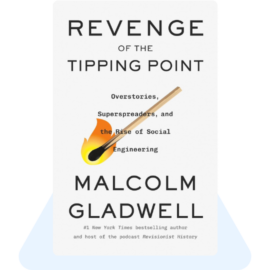
These are the questions at the heart of Malcolm Gladwell’s Revenge of the Tipping Point: Overstories, Superspreaders, and the Rise of Social Engineering. Published in 2024, the book returns to the subject that made Gladwell famous nearly twenty-five years earlier in The Tipping Point. But the mood is different this time. The earlier book was often read as an optimistic guide to how small ideas can spread. Revenge of the Tipping Point asks a darker and more complicated question: what happens when people learn how tipping points work and deliberately try to create them?
For the Readers Books Club audience, this makes the book especially relevant. We live in an age of viral reels, memes, slogans, political narratives, online communities, influencer culture, financial trends, self-improvement movements, health advice and rapidly changing public opinion. A message no longer needs years to travel through society. It can move from one person to millions in hours. Yet visibility alone does not explain why a message becomes a movement. Gladwell wants us to look beneath the surface at the networks, environments, proportions, storytellers and hidden rules that make social contagion possible.
The book is not a simple manual called “how to make something viral.” It is a collection of stories and social-science ideas about social epidemics, superspreaders, overstories, group thresholds and social engineering. Gladwell moves from Los Angeles bank robberies to Medicare fraud in Miami, from elite schools to minority representation, from COVID transmission to popular television, and finally to the opioid crisis. His central warning is that epidemics whether they involve disease, behaviour, beliefs or products are not always random. Some can be accelerated, redirected or manipulated.
That idea feels particularly timely in 2026. Recent youth-led movements in India have shown how an online identity can become offline mobilisation. Whatever one’s politics, the communication question is worth studying: how does recognition become identity, and identity become coordinated behaviour? Gladwell’s framework helps us analyse that transition through crowd psychology, social influence and the psychology of protests.
This Revenge of the Tipping Point summary explains ten practical lessons from the book and connects them with leadership, communication, marketing, personal growth, collective behaviour and mental clarity. Where useful, we will also distinguish Gladwell’s social-psychology ideas from spiritual concepts such as manifestation, law of attraction, affirmation and visualisation. The two can be discussed together, but they should not be confused: social contagion describes how human beings influence one another through networks and environments; manifestation is usually presented as an individual or spiritual framework for intention, belief and action.
About Revenge of the Tipping Point
Malcolm Gladwell is a journalist, author and podcaster known for turning social-science research into memorable stories. His books include The Tipping Point, Blink, Outliers, David and Goliath and Talking to Strangers. Revenge of the Tipping Point was published by Little, Brown and Company on October 1, 2024. The hardcover edition runs 368 pages and carries the subtitle Overstories, Superspreaders, and the Rise of Social Engineering.
The subtitle tells us almost everything about the book’s direction. An overstory is a shared narrative or set of norms that hangs over a community and influences behaviour, often without people consciously noticing it. A superspreader is an unusually influential source of transmission; depending on the context, that transmission may involve disease, crime, products or ideas. Social engineering, in Gladwell’s framing, concerns attempts to shape the conditions under which people think and behave so that an epidemic is more likely to move in a desired direction.
The book revisits a key claim from The Tipping Point: change is not always linear. A system may absorb small shifts for a long time and then suddenly transform when it crosses a threshold. But Gladwell is less interested now in the cheerful possibility that a clever marketer can popularise a shoe or a neighbourhood can reduce crime. He is more concerned with the moral consequences of understanding contagion. If we know where the levers are, who gets to pull them?
That question runs through the entire book.
Lesson 1: Big Social Changes Are Often Driven by a Very Small Number of People
One of Gladwell’s most memorable themes is that epidemics are often highly unequal. We instinctively imagine that widespread outcomes must be produced by widespread causes. If a city has a huge crime problem, perhaps thousands of offenders are contributing equally. If a virus spreads through a community, perhaps most infected people transmit it at roughly the same rate. If an idea becomes popular, perhaps everyone shares it equally.
The book repeatedly challenges that intuition.
Gladwell returns to a version of his earlier “Law of the Few” and pushes it further. In many epidemics, a surprisingly small number of people can account for a disproportionately large share of the spread. His discussion of Los Angeles bank robberies is designed to show that criminal activity can cluster around unusually prolific actors and a local culture that amplifies them. Later, the COVID discussion explores the public-health idea of a superspreader, where a small number of infected people can be responsible for an enormous number of downstream infections.
The practical lesson is not that one influential person always explains everything. It is that averages can hide the structure of a problem. If ten people each influence ten others, the solution looks very different from a system in which one person influences ninety people and the other nine influence almost nobody.
This matters in marketing and communication. A campaign may not need “everyone” at the beginning; it may need the right creators, community leaders or highly engaged early adopters. The same principle helps individuals think more clearly: a few habits, relationships or decisions often produce a disproportionate share of the result. Mental clarity improves when you stop treating every factor as equally important.
The deeper message is simple: find the people, behaviours or nodes that spread more than the rest. If you want to understand an epidemic, look for its concentration.
Lesson 2: Environment Can Change What People Consider Normal
The second lesson is about the invisible power of place.
Gladwell’s discussion of Medicare fraud in Miami raises an uncomfortable possibility: people do not carry a fixed moral operating system into every environment. Communities develop local norms, and those norms can make behaviour feel ordinary that would seem shocking elsewhere.
The book uses the term overstory for this larger cultural narrative. The word is borrowed from ecology, where an overstory is the upper layer of a forest canopy. Gladwell uses it metaphorically: above our individual choices sits a set of assumptions about what “people like us” do, what is tolerated, what is admired, what is embarrassing and what is possible.
An overstory is powerful partly because it is difficult to see from inside it.
Imagine joining a company where everyone replies to messages at midnight. No one formally orders you to do the same, but the cultural message is obvious. Within weeks, late-night work can feel normal. Join another company where people rarely contact colleagues after working hours, and the same behaviour may feel inappropriate.
Money has overstories too. Some families speak about investing, ownership and long-term planning from childhood. Other families repeatedly communicate that money is dangerous, scarce or morally suspicious. The individual grows up believing these attitudes are personal truths when they may partly be cultural inheritance.
This is where Readers Books Club themes such as personal growth and self improvement become relevant. We often ask, “What is wrong with my motivation?” when a better question might be, “What environment is repeatedly teaching me to behave this way?”
Changing yourself is difficult when every cue around you reinforces the old version of you.
This also explains why social media environments matter. A feed is not neutral. If you repeatedly see one interpretation of success, relationships, politics, health or wealth, that interpretation can begin to feel like common sense. Algorithms can create a personalised overstory by repeatedly presenting the same emotional and ideological patterns.
Gladwell’s framework therefore encourages a form of psychological awareness: before judging individual behaviour, inspect the surrounding story.
Lesson 3: Monocultures Are Efficient, but They Can Become Fragile
One of the book’s more sobering sections considers communities with too little meaningful diversity. Gladwell uses the idea of a monoculture a system in which people, norms or traits become highly similar to explain why some groups can be vulnerable to cascading problems.
He draws an analogy with captive cheetah populations, where low genetic diversity can make the entire population vulnerable to the same disease. His social example is a high-achieving community, called Poplar Grove in the book, with intense expectations around achievement. The town appears successful from the outside, yet the sameness of its pressures and values can make distress contagious rather than contained.
The lesson is not that achievement is harmful or that every community with shared values is dangerous. The point is that resilience often requires variation.
If everyone responds to pressure in the same way, follows the same status hierarchy, wants the same narrow outcome and receives the same message about what counts as success, there are fewer alternative narratives available when the dominant system fails someone.
The idea applies to teams and personal development alike. Similar groups may communicate quickly, but they can also share the same blind spots. If every source you consume tells you the same thing, repetition can begin to feel like proof. Reading across disciplines and listening to informed disagreement creates intellectual resilience.
For people interested in manifestation techniques, this is an important caution. Repeating an affirmation can help focus attention or reinforce a chosen intention, but repetition should not become an excuse to ignore contradictory evidence. A resilient mindset can hold a strong goal and still update its strategy when reality provides new information.
Confidence without feedback becomes fragility.
Lesson 4: The “Magic Third” Shows That Group Proportions Change Behaviour
One of the most discussed concepts in Revenge of the Tipping Point is the Magic Third.
Gladwell explores research and examples suggesting that minority influence can change qualitatively when a group approaches a critical proportion roughly a quarter to a third in several cases he discusses. Below that threshold, minority members may be treated primarily as representatives of a category. As their presence becomes substantial enough, group dynamics can change.
The phrase is memorable because it changes how we think about representation. We often ask whether a group is present or absent. Gladwell asks whether there are enough people present for the social experience to change.
One woman in a room of nine people is visible as “the woman.” Three women in a room of nine can change the social meaning of gender inside the room. A dissident view held by one person can be dismissed as eccentric. When a significant minority shares it, the majority may have to engage with the idea differently.
This has obvious relevance to social movements psychology. Movements frequently struggle during the stage when participants feel isolated. People may privately agree with a position but remain silent because they believe they are almost alone. Once enough visible supporters appear, the perceived social cost of joining can fall sharply.
That does not mean one-third is a magical number in every human situation. The examples in the book come from different contexts, and real-world thresholds vary. The useful insight is broader: proportion changes perception.
This matters in leadership too. If you want a new behaviour to become normal inside a team, asking one enthusiastic person to model it may not be enough. You may need a visible cluster. If a company wants a mentoring culture, psychological safety, or a new standard of customer service, the behaviour must become socially reinforced by enough people that it no longer feels exceptional.
For personal change, there is an interesting parallel. One isolated healthy habit may feel like an interruption. A cluster of reinforcing habits can form a new identity. Sleep, exercise, planning and reduced digital distraction support one another. The “threshold” in individual life is not the same as the Magic Third, but the general idea remains useful: change becomes easier when enough elements of the system point in the same direction.
Lesson 5: Social Engineering Can Be Used for Good or for Manipulation
The most important shift from The Tipping Point to Revenge of the Tipping Point is Gladwell’s concern with social engineering.
Once people understand the ingredients of an epidemic, they can try to manufacture one.
That possibility is morally neutral only in theory. In practice, the goal matters enormously.
Public-health campaigns can intentionally spread better behaviour. A company can design a system that makes safety easier. A school can create norms that reduce bullying. A creator can use storytelling to encourage reading, financial literacy or exercise. These are deliberate attempts to influence behaviour, and they can serve useful ends.
But the same knowledge can be used to manipulate.
A company may exploit social proof to make a risky product appear normal. A political campaign may repeat an emotionally charged claim until familiarity is mistaken for truth. A digital platform may optimise outrage because outrage keeps people engaged. A marketer may manufacture scarcity even when no real scarcity exists.
Gladwell’s book therefore asks us to become more sophisticated consumers of influence.
Whenever a message seems to appear everywhere, ask: Who benefits from this becoming normal? Which channels are amplifying it? Is the popularity organic, engineered, or some mixture of both? Is the claim supported by evidence, or is its power coming mainly from repetition?
This is especially relevant in the age of viral trends. A hashtag can create the feeling that “everyone is talking about this” even when a relatively small, highly active group is responsible for much of the volume. The lesson from superspreaders applies again: visible intensity is not always the same as broad consensus.
That distinction protects mental clarity.
Lesson 6: Viral Success Depends on Networks, Not Just on a Good Message
A common belief in content creation is that if an idea is good enough, it will naturally spread.
Gladwell’s work suggests that this is incomplete.
Ideas need pathways.
A brilliant message with no network may disappear. An ordinary message connected to powerful distribution can travel much further. Social epidemics depend on who is connected to whom, which communities overlap, what channels carry the message and whether the surrounding culture is ready to receive it.
This helps explain why some trends appear to explode “overnight.” Often the visible explosion is the final stage of a longer process. Networks have been forming, frustrations have been accumulating, symbols have been circulating, and a triggering event suddenly connects them.
For entrepreneurs and creators, this changes the growth question. Instead of asking only, “How can I make better content?” ask, “Where does this content travel after someone sees it?” A useful idea spreads more easily when people can repeat it, discuss it and carry it from one network to another. Readers Books Club works in the same way: a summary becomes more valuable when a viewer can apply or retell its central idea.
A message becomes socially powerful when people can carry it.
This is why simple language matters. So do memorable metaphors, stories, slogans and frameworks. They function like compression: they make a complex idea easier to transmit.
But simplicity carries risk. A slogan can help people understand an issue, and it can also erase nuance. The more portable a message becomes, the easier it is for context to disappear.
Good communicators therefore balance shareability with accuracy.
Lesson 7: Stories Can Change the Overstory Before Institutions Notice
Gladwell devotes part of the book to the role of media and popular culture in changing what society is ready to discuss. His examples include television and shifts in public conversation around subjects that were once difficult to speak about openly.
This is an important extension of the overstory idea.
Culture does not change only through laws, official speeches or policy documents. Sometimes it changes first through stories.
A television character, film, podcast, bestselling book or viral creator can make an unfamiliar experience emotionally understandable. Once enough people see the subject differently, institutional change may become more possible.
This is why storytellers can have influence far beyond entertainment.
Facts answer: “What happened?”
Stories answer: “What does this feel like?”
That emotional bridge matters in collective behaviour because people rarely mobilise around data alone. They mobilise around meaning.
A statistic may tell you that millions of people face a problem. A story can make one person’s experience vivid enough that the statistic becomes real.
For communication, coaching and leadership, the lesson is powerful: if you want an idea to be remembered, do not only present the conclusion. Create a narrative that helps people see themselves inside the change.
For Dr Amiett Kumar, Readers Books Club and other creators working in personal growth, books, meditation, visualisation or coaching, this principle is especially relevant. Audiences often remember a transformation story longer than a theoretical explanation. The story provides an emotional map: “This is where someone started, this is what changed, and this is what became possible.”
However, storytelling also creates responsibility. A moving story is not automatically representative. One dramatic case should not replace broader evidence. The ethical storyteller uses emotion to illuminate reality, not to hide it.
Lesson 8: Repetition Creates Familiarity, but Familiarity Is Not the Same as Truth
If one idea connects Gladwell’s book to modern online life, it is the power of repeated exposure.
People often interpret familiarity as importance. The more often a phrase appears, the more culturally available it becomes. Eventually, it can feel as if the phrase has always existed.
This is one reason viral narratives are so powerful. Repetition reduces cognitive friction. The audience no longer has to learn the message; they recognise it instantly. Recognition makes sharing easier, and sharing creates more recognition.
In personal development, repetition is also why practices such as affirmation can feel powerful. A repeated statement can direct attention toward a chosen identity or goal. Visualisation can make a future scenario easier to mentally rehearse. Meditation can create enough distance from automatic thoughts to choose a different response.
But Revenge of the Tipping Point gives us an important corrective: repetition can spread falsehoods and harmful norms just as efficiently as useful ideas.
Therefore, “I keep hearing this” should never become equivalent to “this must be true.”
This distinction is essential for law of attraction and manifestation content too. Repetition can influence attention, expectation and behaviour. It does not remove the need for evidence, skill, action, timing and external reality. An affirmation such as “I communicate with confidence” may support behaviour change if it encourages practice, preparation and better self-talk. It is not a substitute for developing communication skills.
Similarly, collective repetition can create social reality in a limited but meaningful sense. If enough people adopt a label, slogan or norm, institutions may have to respond to the behaviour that follows. But that is different from claiming that thoughts alone magically control events.
The useful bridge between psychology and manifestation is attention plus action.
What we repeatedly attend to can influence what we notice, what we practise, who we connect with and which opportunities we pursue. That is powerful enough without exaggeration.
Lesson 9: Hidden Incentives Often Explain Why an Epidemic Keeps Growing
When a trend looks irrational, Gladwell’s approach encourages us to ask what incentives are operating beneath the visible story.
This becomes especially important in the book’s treatment of the opioid crisis. The broader point is not merely that a dangerous product spread. It is that systems of incentives, professional networks, regulatory assumptions and targeted influence can work together to accelerate an epidemic.
Many harmful systems survive because different participants are rewarded for maintaining them.
A platform is rewarded for engagement.
A creator is rewarded for attention.
A salesperson is rewarded for volume.
A manager is rewarded for short-term targets.
A political actor is rewarded for mobilising supporters.
None of these incentives automatically produces harm. But when the reward structure ignores long-term consequences, the system can push ordinary people toward behaviour they would not have chosen in isolation.
This is why individual blame is often an incomplete explanation. If you want to change behaviour at scale, change the environment in which the behaviour is rewarded. The same applies personally: saving is harder inside a system designed to encourage spending, and focus is harder inside a system designed to interrupt. Personal responsibility matters, but good self improvement also includes system design.
Ask not only, “How can I become stronger?” Ask, “How can I make the better behaviour easier and the harmful behaviour harder?”
Lesson 10: Understanding Tipping Points Creates Responsibility
The final lesson is the moral centre of the book.
Knowledge creates responsibility.
If you understand how to create a tipping point, you also understand how easily people can be pushed.
That is why the word revenge in the title matters. The original fascination with tipping points carried an almost entrepreneurial excitement: discover the right leverage point and create change. The new book is more cautious. Once governments, corporations, campaigners, platforms and marketers understand the architecture of social contagion, tipping points can become tools of power.
The question is no longer simply, “Can we make this spread?”
It becomes:
“Should we?”
A creator who knows how to generate outrage can use that skill every day. A company that knows anxiety increases conversion can design its marketing around fear. A leader who knows people copy visible norms can manufacture the appearance of consensus.
But influence can also be used constructively.
Influence can also be used constructively: to make kindness visible, normalise asking for help, spread financial literacy, reduce mental-health isolation, or create content that gives people useful language rather than merely provoking anger.
The book therefore becomes a lesson in ethical influence. The more you understand crowd psychology, the more careful you should become about what you amplify.
What Revenge of the Tipping Point Teaches Us About Viral Movements
One reason this book is so relevant today is that modern movements operate simultaneously online and offline. A slogan may begin as a post, become a meme, turn into a shared identity and later appear on placards, T-shirts, speeches or protest sites.
The current Indian youth protest environment provides a contemporary example of this pattern. Reuters has reported on the rise of the Cockroach Janta Party movement from an online satirical identity into real-world youth mobilisation. The political disputes around the movement involve competing claims and should be evaluated through reliable reporting, legal processes and evidence. But from a communication perspective, the transition itself is worth studying.
Gladwell’s framework suggests several questions. Was there an existing overstory of youth frustration that made the message emotionally ready to spread? Were a small number of highly connected organisers acting as superspreaders? Did the slogan compress a complicated grievance into an identity that people could easily repeat? At what point did visible participation reduce the social cost of joining? Which online networks connected previously separate groups?
These questions do not tell us whether a movement is right or wrong. They tell us how to analyse its growth.
That distinction is important for Readers Books Club. A strong book summary can use a current event as a doorway into psychology without becoming propaganda. The goal is to help readers understand why movements spread, not to tell them which political side to support.
Revenge of the Tipping Point and the Psychology of Crowds
The word “crowd” often creates the impression that individuals lose all reason once they join a group. Gladwell’s work offers a more useful perspective. Groups do not simply erase individuality. They create new information about what is normal, safe, admired and possible.
If nobody around you takes an action, the action may feel risky.
If ten people take it, you notice.
If thousands take it, the action may begin to feel like a social fact.
This is social influence in everyday form.
Crowds therefore change the information available to each individual. Participation becomes evidence. Visibility becomes a signal. Repetition becomes familiarity. Shared language creates belonging.
This can produce courage, cooperation and positive reform. It can also produce conformity, panic and misinformation.
The practical lesson is to maintain two levels of awareness at once. Notice what the group is doing, but also ask what evidence supports the behaviour. Belonging is a human need, yet mental clarity requires the ability to remain psychologically separate enough to evaluate the crowd.
Meditation can be useful here not as a mystical shield against influence, but as a practice of observing thoughts and emotions before automatically acting on them. The pause between stimulus and response is where independent judgment becomes possible.
Can We Connect This Book with Manifestation and the Law of Attraction?
Yes, but carefully.
Revenge of the Tipping Point is not a manifestation book. Malcolm Gladwell is analysing social epidemics, cultural narratives and group behaviour, not teaching the law of attraction.
Still, there is a meaningful connection around attention, repetition, identity and action.
Manifestation practices often ask a person to repeatedly focus on a desired future through affirmation, visualisation, meditation or future-self thinking. Psychologically, repeated focus can influence salience: you become more likely to notice information related to what you are thinking about. A chosen identity can also influence behaviour. If you repeatedly think of yourself as a disciplined writer and then build a writing routine, the identity and action can reinforce one another.
Gladwell’s book examines a collective version of a related process. When a community repeatedly tells the same story, the story can become part of the environment. It affects what members expect, what they interpret as normal and what behaviour feels available.
The difference is crucial. Social contagion can be observed through human interaction, networks, institutions and behaviour. Claims that thoughts alone directly cause external events go beyond what this book establishes.
A grounded way to combine the ideas is:
Attention shapes perception. Repetition strengthens familiarity. Identity influences behaviour. Behaviour repeated across networks can shape culture.
That is a powerful chain without needing to claim supernatural certainty.
Readers who follow Dr Amiett Kumar, Amiett Kumar, meditation, spirituality, visualisation, coaching or manifestation techniques can therefore use Gladwell’s work as a reminder that inner belief becomes socially relevant when it changes communication and action.
How to Use These 10 Lessons in Your Own Life
You do not need to start a movement or run a multinational company to use the book’s ideas.
Begin by identifying the overstory around one area of your life. What does your family, workplace or friend group quietly teach you about money, ambition, health, relationships or success? Which assumptions feel “obvious” only because everybody around you repeats them?
Next, look for superspreaders in your personal environment. Which people, accounts, creators or conversations have an unusually large influence on your mood and decisions? If one source repeatedly pushes you toward fear, comparison or impulsive action, reducing that source may create more change than trying to control every thought afterward.
Then inspect your monocultures. Are all your inputs from people who think like you? Do you consume only one type of self-help advice? Do you treat one philosophy as the answer to every problem? Add diversity deliberately.
Look at thresholds too. If you are trying to change a family or team habit, you may need allies. One person modelling the new behaviour can look unusual. Several people practising it can create a new norm.
Finally, evaluate what you amplify. Every share, repost, recommendation and conversation is a small act of distribution. You may not control the whole network, but you participate in it.
The modern world makes all of us minor social engineers.
That is perhaps the most useful personal insight in the book.
Who Should Read Revenge of the Tipping Point?
This book is a strong choice for readers interested in psychology, sociology, communication, marketing, leadership, media, politics, public health, organisational culture and human behaviour. Entrepreneurs and content creators will find the discussions of networks and contagious ideas especially useful. Leaders can use the ideas to think about culture and norms. Students of crowd psychology and collective behaviour will find a highly readable introduction to several provocative concepts.
It is also useful for readers who enjoyed The Tipping Point but want a more cautious view of influence. Gladwell no longer treats virality as automatically exciting. The book repeatedly asks us to think about consequences.
Readers should also approach it critically. Gladwell is a storyteller, and his strength is making complex research memorable. That same strength can sometimes make a pattern feel more universal than the underlying evidence may justify. The “Magic Third,” for example, is best understood as a provocative framework drawn from multiple cases, not a guaranteed mathematical rule for every group. A thoughtful reader should enjoy the connections while remaining willing to examine the original research behind them.
That balance curiosity without blind acceptance is exactly what a good psychology book should encourage.
Is Revenge of the Tipping Point Worth Reading?
Yes, particularly if you want to understand why the modern world can change so suddenly.
The book’s value lies less in providing a single formula and more in giving you a new set of questions.
Who are the superspreaders?
What is the overstory?
Is this group resilient or monocultural?
Has a threshold been crossed?
Who is engineering the conditions?
What incentives keep the epidemic moving?
What story is becoming normal?
Once you start asking these questions, viral trends look different. So do workplaces, schools, online communities, markets and movements.
You become less impressed by raw popularity and more interested in structure.
That is a useful shift.
10 Lessons from Revenge of the Tipping Point – Quick Recap
- A small number of people can drive a large share of an epidemic. Look for superspreaders rather than assuming influence is evenly distributed.
- Environment changes behaviour. Overstories teach communities what feels normal, acceptable and possible.
- Monocultures can be fragile. Diversity creates alternative responses when the dominant system comes under pressure.
- Group proportions matter. The Magic Third illustrates how reaching critical mass can change how minorities and dissenting ideas are perceived.
- Tipping points can be engineered. Understanding contagion creates both opportunity and ethical risk.
- Networks matter as much as messages. Good ideas need pathways, connectors and communities through which they can travel.
- Stories can reshape culture. Popular media can change the overstory before institutions formally respond.
- Repetition creates familiarity, not truth. Viral visibility should never replace evidence and critical thinking.
- Incentives keep epidemics moving. To change behaviour at scale, understand what the system rewards.
- Influence creates responsibility. The real question is not only whether you can make something spread, but whether it deserves to spread.
Frequently Asked Questions
What is Revenge of the Tipping Point about?
Revenge of the Tipping Point is Malcolm Gladwell’s return to the subject of social epidemics. It explores why behaviours, ideas and crises reach tipping points and focuses especially on overstories, superspreaders, group thresholds and attempts to deliberately engineer social change.
Is Revenge of the Tipping Point a sequel to The Tipping Point?
It is best understood as a return to and reconsideration of the ideas in The Tipping Point. Gladwell revisits social contagion nearly twenty-five years later, with greater attention to manipulation, unintended consequences and the darker side of engineered epidemics.
What is an overstory in Revenge of the Tipping Point?
An overstory is the shared cultural narrative or set of norms that influences behaviour within a community. People may not consciously recognise it, yet it can shape what they consider normal or acceptable.
What is a superspreader?
A superspreader is a person or source responsible for a disproportionately large amount of transmission. The term is familiar from infectious disease, but Gladwell uses the broader principle to think about social epidemics as well.
What is the Magic Third?
The Magic Third is Gladwell’s term for a group threshold discussed through examples of representation and social influence. In several cases, dynamics begin changing as a minority approaches roughly one-third of a group, although this should not be treated as a universal mathematical guarantee.
What does the book say about social engineering?
The book explores how people and institutions can deliberately shape conditions that encourage certain behaviours or ideas to spread. Gladwell is interested both in the effectiveness of these strategies and in their ethical consequences.
How is Revenge of the Tipping Point relevant to social media?
Social media makes many of the book’s questions more urgent. A small number of accounts can generate disproportionate reach, repeated narratives can create local online cultures, and network structure can determine whether a message remains niche or becomes viral.
Can the book explain why protests and movements go viral?
It provides useful frameworks for analysing movement growth, including shared narratives, superspreaders, critical mass, network effects and social identity. It does not offer a single formula that predicts whether any particular protest will succeed.
Is Revenge of the Tipping Point related to manifestation?
Not directly. It is a book about social epidemics and human behaviour. A careful connection can be made through attention, repetition, identity and action, but the book does not claim that thoughts alone manifest external events.
Contents