Introduction: What If the Missing Piece Is Not Success, but Significance?
Imagine finishing a difficult workday. You have answered dozens of messages, attended meetings, solved problems and completed tasks nobody else wanted to handle. Yet on the way home, you feel strangely empty. You were useful all day, but did anyone notice you? Did anyone appreciate the care behind your work? And if you were absent tomorrow, would people miss you as a person or simply complain that a task remained unfinished?
Now imagine a different moment. A friend calls to say that a conversation with you helped them make an important decision. A parent tells you how much your presence means to them. A colleague explains that your patient guidance gave them the confidence to try again. The moment may be ordinary, but something inside you feels steadier. Your life has touched another life in a way that feels real.
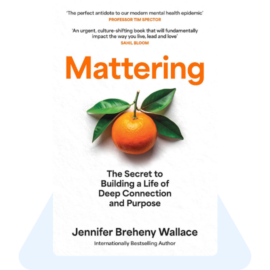
That contrast is the heart of Mattering: The Secret to a Life of Deep Connection and Purpose by Jennifer Breheny Wallace. Published in January 2026, the book asks a question that sits underneath our goals for money, achievement, love and recognition: Do I matter? Wallace argues that people need more than social contact or praise. They need to feel valued for who they are and know that their presence and contributions make a difference.
This Mattering Book Summary for Readers Books Club explains the author’s central framework, the lessons behind the book’s eight chapters and practical ways to bring mattering into relationships, work and ordinary routines. It also explores where these ideas connect with self-worth, personal growth, mindset transformation, meditation and a more thoughtful understanding of success. Those connections are RBC’s applications of the book, not claims that Wallace teaches the Law of Attraction or manifestation.
You do not need to be experiencing a major crisis to find the idea relevant. A student who feels invisible in class, a mother whose invisible labour goes unacknowledged, a successful professional who feels replaceable, and a retired person who misses being needed may all recognize a version of the same experience. This is why Mattering deserves attention among the best books 2026 for readers interested in human connection and finding purpose in life.
About the Book and Its Author
Jennifer Breheny Wallace is a journalist and the author of Never Enough: When Achievement Culture Becomes Toxic and What We Can Do About It. Her earlier work examined the pressure to perform and achieve, particularly among young people. In Mattering, she extends the conversation beyond achievement, asking what helps human beings feel securely valued across different stages of life. The book was published by Portfolio, an imprint of Penguin Random House, on January 27, 2026; the US hardcover edition lists 288 pages.
Wallace draws on interviews, research, lived experiences and reported stories. Rather than presenting mattering as a vague slogan, she describes situations in which people feel noticed, relied upon, prioritized, supported or deeply understood. Her examples reach beyond families to firefighters, employees, communities and people negotiating painful changes. Her writing is designed to show that significance is not reserved for people with impressive titles or extraordinary achievements.
An important distinction for any honest Mattering Book Review is that this is a book of popular psychology and social observation. It offers an interpretive framework supported by psychological research and illustrative stories; it is not a clinical treatment manual or a promise that every experience of loneliness has one simple cause. Readers dealing with persistent distress may need more than encouragement, community activities or mindset advice.
For Readers Books Club, the book belongs naturally alongside self improvement books about identity, psychology, leadership, belonging and meaningful work. Yet its message challenges the usual self-help formula. Instead of asking only how to become more productive, attractive or successful, it asks whether the systems around us allow people to feel that they count. That makes the book useful for students, parents, team leaders, entrepreneurs, care givers and anyone reconsidering the meaning of personal growth.
What Does Mattering Actually Mean?
Wallace defines mattering through two connected experiences: feeling valued and having opportunities to add value. This dual idea is essential. Receiving kindness and recognition matters, but so does knowing that your choices, presence and contributions affect other people. Conversely, being constantly useful while never appreciated may leave you depleted rather than fulfilled.
Consider a university student who has many followers and plenty of invitations but feels that no one really knows them. They appear socially connected, yet they may not feel significant. Or think of an employee whose work supports a large organization but who never hears how it helped a customer. They are contributing, but the connection between effort and impact has disappeared. Mattering asks us to notice both sides of the equation.
This is different from simple self-esteem. Self-esteem often concerns how positively you evaluate yourself; mattering includes how you experience your significance in relation to others. It is also different from belonging. You can belong to a team, class or family and still feel invisible within it. Purpose, meanwhile, gives direction to your activities, but mattering adds the felt sense that your contribution counts to somebody.
A useful way to understand the psychology of mattering is to think about a familiar scene at home. Someone prepares meals, remembers appointments, manages family schedules and quietly supports everyone else’s needs. If their work is treated as automatic, they may begin to feel unseen. The solution is not simply to assign them even more responsibility. It is to recognize the person behind the work, show appreciation, share the burden and invest in their wellbeing.
Mattering also should not become another demand to prove your worth. You do not earn the right to dignity by being endlessly helpful. The book’s strongest insight is that healthy mattering requires balance: recognition, meaningful contribution, reciprocal care and boundaries. It helps explain why people can feel exhausted by being needed too much and painfully empty when they are not needed at all.
The Mattering Core: Five Experiences That Help Us Feel Valued
Across the book, Wallace explores a cluster of experiences that make up what she calls the mattering core. In the discussion below, the terms recognition, reliance, importance, ego extension and attunement reflect the book’s chapter framework and reported explanations of its core elements. Her later public explanations also group related ideas into simpler categories such as significance, appreciation, investment and dependence. These are complementary descriptions rather than competing formulas.
Recognition means being noticed and acknowledged. A warm greeting, a colleague remembering your contribution, or someone thanking you for a thoughtful action can all communicate that you are visible. Recognition becomes especially powerful when it is specific. Telling a coworker that their careful preparation prevented a problem conveys more than a generic compliment. It links what they did to why it mattered.
Reliance involves being needed in a healthy way. People often feel purposeful when others trust them with something that matters. A grandmother who teaches a family recipe, a volunteer who checks in on elderly neighbours, or a teammate who supports a difficult project can experience the dignity of contribution. But reliance needs limits. When every request becomes an obligation, significance can turn into exhaustion.
Importance means experiencing that your needs, time and presence count. People feel important when others make room for them, remember what matters to them, and respond when their needs are expressed. Importantly, this does not mean being the centre of everyone’s attention. It means receiving reasonable care and consideration in relationships that claim to be meaningful.
Ego extension describes the experience of another person investing in your future and taking your success or hardship seriously. A teacher who believes you can recover after a setback, a friend who encourages your work, or a manager who helps you develop rather than simply evaluating you can provide this kind of support. You feel that your growth matters to someone besides yourself.
Attunement is the feeling of being understood. It arises when another person pays genuine attention, listens beyond the obvious words, and responds sensitively to your experience. A friend who realizes you need quiet company rather than immediate advice may offer more attunement than someone who delivers an impressive motivational speech. Being understood often requires less talking and more attention.
These dimensions reinforce one another. You might feel highly recognized at work yet lack attunement at home. You might be relied upon constantly but rarely prioritized. Reflecting on the core can help you identify which part of your social life feels strong and which needs attention. The aim is not to receive a perfect score in every area; it is to make relationships more humane, mutual and sustainable.
Lesson 1: Notice the Impact of What You Already Do
One of the book’s first lessons is that meaning grows when people can see the impact of their actions. Wallace’s discussion of firefighters offers an especially helpful example. Emergency workers may perform demanding tasks whose importance seems obvious from the outside, but even essential roles can become exhausting when people lose sight of how their efforts change lives. Connecting an action to its human effect can restore a sense of purpose.
This lesson applies to jobs that rarely receive public recognition. A receptionist may help a frightened visitor feel welcome. A delivery worker may ensure medication reaches someone on time. A teacher may influence a student long after the semester ends. A parent may shape a child’s sense of safety through hundreds of ordinary gestures. These contributions rarely become headlines, but their value does not depend on visibility.
Many people struggle because feedback concentrates on what is incomplete. At work, managers discuss targets, missed deadlines and mistakes; at home, families notice the meal that was delayed rather than the many meals prepared on time. Over time, a person may begin to experience life as an endless sequence of demands. The link between effort and meaning becomes harder to see.
A practical exercise is to trace one useful action to its effect. If you helped a colleague prepare a presentation, ask how it went and what was useful. If you supported a family member during a difficult week, notice how your presence eased their burden. If someone else helped you, explain specifically what changed because of their care. This is not about collecting praise. It is about making contribution visible.
For students, this could mean reflecting on how sharing study notes helped a classmate rather than measuring self-worth only through grades. For business owners, it could mean reading a thoughtful customer message instead of looking only at revenue dashboards. For people who create educational content, including Readers Books Club videos and podcasts, it might mean listening carefully to how an idea was actually used by a reader or viewer.
The deeper lesson is that human impact can be easy to miss when every day looks similar. Recognition does not require exaggeration; it requires accuracy. When people understand the difference they make, ordinary responsibilities can become connected to something larger than a checklist.
Lesson 2: Being Needed Can Be Meaningful But Only When It Is Balanced
It feels good to know someone can depend on you. A friend asks for advice because they trust your judgement. A colleague chooses you for a complex task because they know you will care about the outcome. A family member calls because you make difficult moments easier. These requests can communicate that you have something valuable to offer.
Yet Wallace does not romanticize endless usefulness. A central warning of Mattering is that people can matter too much in the wrong way. When a person becomes everyone’s default problem-solver, caregiver or emotional support system, the weight of being needed may exceed their available time and energy. What began as meaningful contribution turns into chronic pressure.
Think about a woman who manages her own job, her children’s schedules, an ageing parent’s appointments and nearly every household decision. Everyone depends on her, but few people ask what support she needs. Saying that she is indispensable may sound affectionate, yet it can conceal an unfair arrangement. Genuine mattering requires not only reliance but reciprocal concern.
The same problem appears in workplaces. A talented employee becomes the person who fixes every last-minute issue. Management praises their dedication, but keeps adding tasks without offering meaningful support or a chance to rest. Eventually the employee may feel valued only for the output they produce, not for their humanity. The company has confused dependence with care.
This is where boundaries become important. A boundary is not proof that you are selfish or unwilling to contribute. It is a way to make contribution sustainable. You might agree to help a friend for an hour without becoming available all night, or tell a teammate that you can review a draft tomorrow rather than immediately abandoning your own work.
Being needed in a healthy way should make you feel connected, not trapped. The best arrangement allows people to offer their abilities, accept help themselves and say no when the cost becomes unreasonable. The lesson is especially relevant to anyone interested in self-belief, emotional wellbeing and personal growth, because a stable sense of worth should not depend on being useful every minute.
Lesson 3: Stop Confusing Attention, Status and Money With Mattering
Modern life offers countless ways to become visible. We can collect likes, grow professional titles, compare salaries and track how many people react to our opinions. These signals sometimes reflect real accomplishment, but Wallace warns that they can become substitutes for the deeper experience of mattering. Attention is not identical to understanding; prestige is not identical to purpose; income is not identical to connection.
Imagine someone whose photographs receive thousands of likes but who has no one to call during a difficult evening. Online attention may bring excitement, business opportunities or creative satisfaction. It cannot automatically provide the security of being known and cared for. A person can be watched by many people and still feel unknown.
The same distinction matters in financial life. Money can provide safety, freedom, healthcare, education and opportunities for generosity. It would be unrealistic to deny those benefits. But when every achievement becomes another test of personal worth, the finish line keeps moving. A larger salary may feel satisfying for a moment without addressing isolation or emotional neglect.
Mattering changes the question from “How impressive do I look?” to “Where do I experience mutual significance?” You can celebrate success while asking whether your relationships allow you to show up honestly. You can pursue an ambitious career while remaining interested in the human impact of your work. You can enjoy recognition without depending on constant applause to feel real.
For readers exploring money psychology through Readers Books Club, this offers a valuable companion to books about wealth and habits. Financial goals are meaningful, but they are not a complete measure of a life. A person may have modest resources and rich relationships, or substantial resources and very little genuine connection. Neither example proves that money is good or bad; they show that different human needs cannot be collapsed into a single score.
One practical test is to imagine a day when no one could see your achievements. Which activities, relationships or contributions would still feel worthwhile? The answers may reveal values that were hidden beneath comparison. A meaningful life can include ambition, but it should not depend entirely on being admired from a distance.
Lesson 4: Become Someone’s Cornerman
A powerful idea in Wallace’s book is the “cornerman”: a person who stands beside someone during a difficult season, sees their potential and invests in their progress. The term evokes the support team beside an athlete, but the lesson is broader. Most of us need someone who can encourage us without pretending that challenges do not exist.
A cornerman may be a teacher who refuses to reduce a student to one poor result. It may be a senior colleague who explains an unwritten workplace rule, a neighbour who notices a new parent’s exhaustion, or a friend who checks in after a medical appointment. They may not solve the problem. Their presence communicates that the person facing it is not invisible.
The book uses personal stories to show how timely support can change a life. One widely discussed example concerns Rehan Staton, whose path toward Harvard Law School was influenced by people willing to recognize and support his potential. The broader lesson is not that every supportive gesture produces an extraordinary public success. It is that serious attention from another person can open a possibility that might otherwise remain closed.
Being a cornerman does not require wealth or a professional title. You may have time to listen, knowledge to share, an introduction to offer, or encouragement at a point when someone is discouraged. Wallace also discusses using one’s time, talent or treasure to respond to real needs. Those resources look different for different people; the important part is matching what you can offer with something that genuinely helps.
At the same time, support should respect the other person’s agency. A good cornerman does not take over someone’s choices or make their progress about the helper’s ego. They ask what support would be useful, remain honest and celebrate effort as well as outcomes. They recognize that encouragement can be both warm and practical.
Readers who enjoy life coaching and leadership books can apply this lesson immediately. Think of one person facing a transition, disappointment or difficult project. Instead of sending a generic motivational quote, offer one specific form of support. Sometimes the most powerful message is simply that you noticed what they are carrying and are willing to help in a way that respects their needs.
Lesson 5: Learn to Listen With Attunement, Not Just Attention
We often assume that listening is easy because we can remain quiet while another person speaks. But genuine attunement asks for more. It means trying to understand what an experience feels like to the other person rather than waiting for your turn to explain, fix or judge it. Wallace treats this sense of being known as an important ingredient of mattering.
Consider a friend who says they are tired of their job. A quick response might be to advise them to resign, work harder or think positively. Yet their actual problem could be a lack of recognition, unfair expectations, loneliness or fear about financial security. Without curiosity, advice may miss the experience that needs attention.
A more attuned response starts with questions. What has been especially difficult? When do you feel most unsupported? What would make the situation easier? The goal is not to interrogate someone; it is to show that their specific perspective matters. You may discover that they need practical help, space to think or simply a compassionate listener.
Attunement is relevant in families where people know one another’s routines but no longer ask meaningful questions. A parent may assume they understand a teenager because they see them every day. A partner may know the household schedule yet be unaware of what the other person worries about. Familiarity is not the same as understanding.
In a work meeting, attunement may involve noticing whose ideas are interrupted or overlooked. In friendships, it might mean remembering an upcoming event that matters deeply to someone. In a classroom, it could mean acknowledging that a quiet student may have important thoughts even if they rarely speak first. These examples are small, but they communicate inclusion.
The relationship to meditation is indirect but useful. Mindfulness practices can encourage a person to notice when they are distracted or preparing a response before listening. Meditation does not automatically make someone empathic, and Mattering is not a meditation manual. Still, practicing awareness may create room to respond more thoughtfully. The larger lesson is to replace the assumption that you know what people need with a willingness to learn.
Lesson 6: Protect Your Sense of Mattering During Life Transitions
Transitions can make people feel as if the ground beneath their identity has shifted. A new city, job loss, retirement, caregiving responsibility, divorce, bereavement or move away from home can change the roles through which we previously felt valued. Wallace examines how these changes disrupt not only routines but our experience of belonging and contribution.
Imagine someone who retires after decades in a profession. Their schedule suddenly becomes quiet. They may welcome the freedom, yet miss the daily evidence that people depended on their knowledge. The problem is not necessarily that work itself was perfect. It is that a familiar source of significance has disappeared, leaving a gap that needs attention.
A student moving to another city may experience something similar. At home, neighbours recognized them and family members understood their habits. In the new environment, no one knows their history. They may feel anonymous even while surrounded by classmates. This does not mean they made the wrong decision; it means the new setting has not yet developed the relationships that help people feel seen.
An important practical response is invitation. Wallace emphasizes how being invited into a group or activity can matter during a time of uncertainty. A person may hesitate to ask whether they are welcome. A direct invitation to lunch, a local event, a reading circle or a volunteering activity can make entry less difficult. Inclusion often begins with someone willing to notice an outsider.
Transitions also offer a chance to reconsider identity. If you lose a job, you lose a role, not your entire human value. If children grow older and need less daily care, your contribution changes rather than vanishes. Rebuilding mattering may involve learning, new relationships, service, rest and the slow discovery of what this stage of life can hold.
This is a useful form of mindset transformation: not a promise to eliminate grief or uncertainty through positive thinking, but a willingness to see that significance can take new forms. People are more than one title or responsibility. A meaningful life often requires rebuilding connections as circumstances change.
Lesson 7: A Workplace Should Make People Feel Human, Not Replaceable
Work is one of the places where the need for mattering becomes especially visible. People spend substantial time in organizations, yet many workplaces measure only speed, targets and output. Wallace argues that employees need to understand their impact, feel appreciated and have reasonable opportunities to contribute. When those experiences are missing, people may feel interchangeable even if their work is important.
A manager might assume that paying a fair salary is enough to make employees feel valued. Fair pay is essential, but it does not communicate everything. Employees also notice whether leaders listen, explain how decisions are made, respect personal time, share credit and recognize meaningful effort. Money and human dignity should not be treated as substitutes for one another.
A particularly damaging habit is giving feedback only when something goes wrong. If a team member hears nothing during months of careful work but receives immediate criticism after a single mistake, they may conclude that their presence is noticed only when it causes inconvenience. Specific appreciation can change that experience without reducing accountability.
Mattering at work also involves voice. People need opportunities to suggest improvements, ask questions and raise concerns without being dismissed. An organisation that praises “family culture” while discouraging disagreement may produce compliance rather than genuine trust. Healthy cultures allow workers to matter as thinking individuals, not merely as instruments of productivity.
Leaders can improve these conditions by connecting tasks to outcomes. Instead of saying only that a project was completed, explain whom it helped. Invite quieter contributors into the conversation. Ask employees which responsibilities are meaningful and which demands have become unsustainable. These practices do not eliminate structural problems, but they make it harder for individuals to become invisible.
For entrepreneurs and creators, this lesson has another dimension. A business can strengthen its community when customers feel heard and contributors understand their role. Readers Books Club, for instance, can treat the responses to its educational videos and book discussions as conversations rather than just engagement metrics. The emphasis is on understanding what people found useful and responding with care. That is a practical application of Wallace’s ideas, not a description of a specific RBC program.
Lesson 8: Build Mattering Spaces Around You
Wallace encourages readers to think beyond individual habits and help create environments where people routinely feel recognized, included and useful. These are sometimes called mattering spaces. A workplace, classroom, neighbourhood association, library, volunteer group or family gathering can become such a space when its norms make attention and contribution possible.
The design of a space affects behaviour. In one group, a newcomer may sit silently because everyone else knows each other and no one makes introductions. In another, a member welcomes them, asks about their interests and offers a small role in the next activity. The difference does not require an expensive program. It requires a pattern of noticing and including people.
In families, a mattering space can start with conversations that go beyond tasks and grades. Children may need to know they are loved independently of performance while also having age-appropriate opportunities to help. Older relatives may need more than polite respect; they may value being asked for advice or included in plans that affect them. Contribution should be welcomed, never extracted through pressure.
In a reading community, mattering might mean inviting different interpretations of a book rather than rewarding only the most confident speaker. Someone who is new to books should feel able to ask a simple question without embarrassment. Someone with years of experience should have space to share knowledge without dominating everyone else. A healthy learning environment makes curiosity and contribution accessible.
Social media groups present the same opportunity and risk. They can introduce people with shared interests, but they can also reduce members to numbers, reactions and popularity. A stronger community encourages thoughtful exchange, acknowledges different experiences and gives participants genuine reasons to return. Feeling connected to a space is more durable than collecting quick attention.
The important lesson is that mattering is not solely an internal mindset. It is also shaped by systems, cultures and opportunities. Telling an excluded person to believe in themselves will not automatically change an exclusionary environment. Sometimes the most helpful act is to redesign the invitation, share responsibility, remove a barrier or listen to people who have been ignored.
The Psychology of Mattering: Why Self-Worth Needs Connection
One reason Mattering stands out among self improvement books is its willingness to treat significance as relational. Popular advice often tells people to build confidence entirely from within. Inner self-respect matters, but the world around us can also support or undermine how safe, capable and valued we feel. We develop in interaction with people, institutions and communities.
Psychological research has explored the experience of mattering for decades, including the work of sociologist Morris Rosenberg. Wallace draws attention to an idea that can sound obvious until it is missing: people want to know their existence registers in another person’s life. A greeting, a sincere question or an invitation can carry meaning because it signals that someone has noticed you as an individual.
Feeling valued is not the same as demanding constant validation. If every decision depends on applause, the result may be insecurity rather than grounded self-worth. The healthier goal is reciprocal recognition within relationships that allow both people to have needs, preferences and limits. Mattering is strengthened by being able to contribute without sacrificing identity.
The concept also helps explain why lonely people may feel disconnected even when surrounded by others. Physical company is not always emotionally meaningful. A person may attend meetings, family gatherings and social events while rarely experiencing a conversation in which they are genuinely heard. Increasing the number of contacts may help, but the quality of those contacts matters as well.
At the same time, it is important not to turn the psychology of mattering into a universal diagnosis. Loneliness, burnout and depression can have multiple causes, including financial stress, discrimination, health conditions and difficult relationships. Feeling valued is one important dimension of wellbeing, not a substitute for professional care or structural change when these are needed.
The most practical insight is to ask better questions: Who helps me feel seen? Where can I contribute without being overused? Whom have I overlooked? Those questions shift the focus from isolated self-improvement toward the social conditions that help people grow.
Self-Belief, Mindset Transformation and the Subconscious Mind: An RBC Perspective
Readers Books Club often explores motivation, personal growth, self-belief, the subconscious mind and mindset transformation through its book summaries and educational discussions. Mattering offers a useful counterbalance to the idea that changing thoughts alone solves every life problem. Your inner narrative matters, but the relationships that surround you also shape how you see yourself.
Suppose a person repeatedly thinks, “I am not important.” That belief may affect how they speak, whether they ask for support and which opportunities they pursue. A constructive reflection practice can help them question the thought. Yet the solution should not stop at repeating “I matter” in front of a mirror. They may also need more reciprocal friendships, fair treatment at work and chances to offer their abilities in meaningful ways.
This distinction is useful when considering manifestation and the Law of Attraction. Some coaching approaches invite people to visualize a desired future or develop empowering beliefs. Those exercises may help clarify goals or encourage action, but there is no reliable scientific evidence that thoughts alone attract external events. Wallace’s framework offers something different: significance grows through concrete experiences of recognition, contribution and mutual care.
A reader interested in spirituality may still find these ideas deeply resonant. Many spiritual traditions encourage compassion, service and attention to others. Offering help without treating people as projects can be a meaningful practice. But it is important not to claim that Wallace’s book endorses a specific spiritual doctrine or teaches a manifestation method. Her emphasis is on researched psychological and social experiences.
The connection to meditation is similarly practical. Quiet reflection may help you notice patterns: when you feel overlooked, when you overcommit, and when someone else’s support has strengthened you. A few minutes of mindful attention can provide room to respond more deliberately. The next step, however, is relational communicating, setting boundaries, asking for help or offering it.
For an audience interested in Dr Amiett Kumar’s work as a coach and the wider Readers Books Club conversation, this book adds an important question to the usual focus on goals: Who benefits when I grow, and who helps me grow without requiring me to prove my worth? That question can guide a richer kind of self-improvement.
Mattering in Relationships: Love Is More Than Being Present
A relationship can exist on paper while leaving one or both people emotionally alone. Couples may share a house and responsibilities but rarely communicate appreciation. Friends may exchange memes every day without discussing what genuinely matters. Family members may assume that their support is obvious and therefore never express it. Wallace’s framework helps explain why connection requires more than proximity.
Recognition begins with noticing. Perhaps your partner has been carrying extra work while you were distracted. Instead of offering general praise, acknowledge what you observed and how it helped. Attunement begins with curiosity: ask what has felt difficult rather than assuming the answer. Investment means taking the other person’s hopes seriously, not only remembering their responsibilities to you.
At the same time, relationships can become unequal when one person is valued mainly for what they provide. If a friend calls only when they need a favour, you may feel relied upon but not cared for. If a parent always manages everyone’s emotions, they may feel central and invisible at the same time. The lesson is to cultivate reciprocity rather than constant rescue.
Healthy boundaries protect this balance. You can care about someone’s wellbeing while refusing unreasonable demands. You can love someone while expecting them to listen to your concerns. Being needed is not proof that a relationship is healthy; being respected while you have needs of your own is equally important.
A simple practice is to replace vague appreciation with impact-based appreciation. Instead of only saying “Thank you for everything,” tell someone what their action changed for you. Perhaps they made a stressful day easier, gave you courage to try again or helped you feel included. Specific language helps people see the influence they may otherwise overlook.
The principle works in both directions. Ask whether the important people in your life know that they matter to you, and whether you have given them space to express how they want to be supported. These conversations may feel unfamiliar initially, but they can make relationships less dependent on guesswork.
Is Mattering One of the Best Self Improvement Books of 2026?
The phrase “best books 2026” is subjective, because the right book depends on the question a reader brings to it. For someone searching for strategies to invest, manage debt or build a business, a specialised finance title may be more immediately useful. For someone asking why achievement has not produced a sense of fulfilment, Mattering may feel unusually relevant.
The book’s strength is that its central idea is easy to recognize but difficult to dismiss. Most readers can remember a moment when they felt invisible, or a conversation that made them feel deeply valued. Wallace gives language to those experiences and connects them to work, relationships, caregiving, transitions and community life. The framework encourages reflection that is both personal and social.
Another strength is the balance between giving and receiving. Some self-improvement books focus almost entirely on what an individual can do through discipline or thought. This book reminds readers that growth occurs through relationships as well. You can improve your habits and still need support; you can contribute generously and still deserve recognition and rest.
A fair Mattering Book Review should also acknowledge its limits. Readers seeking a rigorous academic textbook may want to consult the studies behind the book’s claims. Some may find that the broad idea repeats across multiple settings, even when the stories vary. Others may wish for more discussion of economic inequality, discrimination or institutions that systematically deny recognition and opportunity. Those concerns do not erase the book’s usefulness, but they keep the discussion grounded.
Our Readers Books Club verdict is that Mattering is a strong recommendation for readers interested in psychology, leadership, relationships, emotional wellbeing and finding purpose in life. It is not a quick formula for happiness. Its value lies in changing what you notice and how you treat people after the final page.
Frequently Asked Questions About Mattering by Jennifer Breheny Wallace
What is the main message of Mattering?
The main message of Mattering is that people need to feel valued and know they have opportunities to add value. Jennifer Breheny Wallace argues that this sense of significance affects how connected and purposeful people feel. The book explores practical ways to strengthen mattering in everyday relationships, workplaces and communities. It does not suggest that everyone must become famous or extraordinarily successful. Instead, it shows how recognition, meaningful responsibility, genuine support and attentive relationships can make ordinary life feel more human. The concept is relational: people benefit from being cared for as well as having a chance to contribute.
Who is Jennifer Breheny Wallace?
Jennifer Breheny Wallace is a journalist and author whose work examines achievement, wellbeing and the social conditions that shape people’s lives. She previously wrote Never Enough: When Achievement Culture Becomes Toxic and What We Can Do About It. Her 2026 book Mattering: The Secret to a Life of Deep Connection and Purpose develops the idea that human beings need both recognition and meaningful contribution. Wallace draws on interviews, research and personal stories to explore how mattering can be strengthened. Her book is published by Portfolio in the United States, and its release date was January 27, 2026.
How is mattering different from self-esteem and belonging?
Self-esteem often describes how you evaluate yourself, while belonging refers to feeling included in a group or relationship. Mattering includes a more specific experience: other people notice and value you, and you can make a meaningful contribution to their lives or to a shared goal. You may belong to an organization yet feel that your ideas are ignored. You may have high confidence but very few reciprocal relationships. Wallace’s framework encourages readers to consider the quality of recognition, reliance and support around them rather than treating membership or positive self-talk as sufficient by themselves.
Why do people feel invisible even when they are successful?
Success may increase income, status or attention without creating close relationships in which someone feels understood. A person can receive public praise but still lack friends who know their struggles. They may also be valued mainly for their output, becoming exhausted by constant expectations. Mattering invites readers to distinguish achievement from significance. Meaningful recognition connects a person’s actions and presence to their effect on others. The answer is not to reject ambition; it is to pursue goals while maintaining reciprocal care, boundaries and opportunities to contribute in ways that remain humane.
What are the key lessons from Mattering?
Key lessons include recognizing your impact, balancing meaningful responsibility with healthy boundaries, refusing to confuse attention with connection, supporting others as a cornerman, listening with attunement, rebuilding significance during life transitions, and creating workplaces and communities where people feel valued. Wallace also emphasizes that mattering involves both giving and receiving. These ideas are not a seven-step formula from the book; they are a practical synthesis of its larger themes for this Readers Books Club summary. The most useful application is to improve one ordinary interaction rather than wait for a dramatic life change.
Can meditation and spirituality help someone feel they matter?
Meditation and spirituality may support reflection, emotional awareness or a sense of connection for some people. For example, mindful attention may help you notice when you dismiss your own needs or fail to listen to another person. However, Mattering is not a meditation guide or a book that teaches the Law of Attraction. Its central focus is the psychological and social experience of being valued and contributing value. If meditation is useful to you, combine it with practical relationships: communicate honestly, show appreciation, ask for support and make room for others to contribute.
Is Mattering suitable for leaders and life coaches?
Yes, the book offers relevant questions for leaders, educators and people involved in coaching. It encourages them to consider whether individuals understand their impact, feel recognized, have appropriate responsibilities and receive meaningful support. A leader can apply these ideas by acknowledging specific contributions, sharing credit and creating space for thoughtful input. Coaches can encourage action without linking a client’s dignity to performance. These uses are practical applications of Wallace’s framework, not claims that her book provides a complete business leadership certification or a clinical coaching method.
Should I read Mattering or just a book summary?
A thoughtful Mattering Book Summary can help you understand the central argument and decide whether the book speaks to your needs. It is useful when you are exploring several self improvement books or want a quick orientation before buying a copy. Reading the full book offers more time with Wallace’s stories, distinctions and examples. Those details may challenge your first interpretation or help you recognize experiences you would otherwise overlook. A summary is a starting point, not a full replacement for the original author’s work.
Final Verdict: A Meaningful Life Begins With Mutual Significance
The most memorable idea in Mattering is not that everyone needs to feel important all the time. It is that human beings need relationships and environments where their existence counts. A life can look busy, ambitious and successful while leaving someone uncertain whether they are truly seen. It can also look ordinary from the outside while containing deep purpose through care, contribution and mutual trust.
Jennifer Breheny Wallace offers a language for this difference. Her book encourages us to notice people more carefully, connect effort to impact, offer meaningful help and protect ourselves from relationships that demand endless usefulness without care. It also invites schools, workplaces, families and communities to examine whether their habits create belonging with dignity or merely expect performance.
For Readers Books Club, the lesson fits a broader conversation about what books are ultimately for. Reading about self-belief, mindset, motivation or money can help us ask better questions, but transformation becomes visible in how we act. Do we thank the people whose work is unseen? Do we listen when someone is struggling? Do we make space for a newcomer? Do we know how to receive support without shame?
You may not be able to redesign your entire life this week. You can, however, tell someone how their actions helped you. You can invite someone who feels left out. You can set a boundary that protects your ability to care. You can identify one place where your contribution has meaning, even if it rarely attracts attention.
That is why Mattering is worth considering among personal growth and psychology books of 2026. It moves the question beyond “How can I become more successful?” toward “How can we build lives in which people are genuinely valued?” The answer begins with noticing that significance is both something we receive and something we help create for others.
Explore more thoughtful book summaries, videos and conversations about psychology, habits, self improvement books, motivation and meaningful living through Readers Books Club and content associated with Dr Amiett Kumar. Let this book be an invitation, not simply to feel more important, but to participate in a world where more people know they matter.
Contents